Events
"The biggest Riches: The Greatest Treasure Discoveries in History"
The Greatest Treasures Unearthed in History: A Journey of Riches and Legends Throughout history, humanity has been captivated by the allure of hidden treasures. From ancient civilizations that buried their wealth to protect it from enemies, to shipwrecks lying at the bottom of the oceans, treasure discoveries have sparked imagination, greed, and fascination. Some of these finds have reshaped our understanding of history, revealing the culture, trade, and craftsmanship of past civilizations. Let us explore some of the greatest treasure finds in history, their origins, and their estimated worth.
By Say the truth 10 months ago in History
The Elamites
Beneath the passage of time lies the ancient Elamites, one of history's most intriguing civilizations. Thriving in the rugged highlands of the Iranian plateau, they exerted influence that extended well beyond their own territory, significantly impacting the cultural and political dynamics of Mesopotamia and adjacent regions. However, despite their importance, the Elamites often remain eclipsed by their more renowned neighbors—the Sumerians, Babylonians, and Assyrians.
By A História10 months ago in History
Why Did Hitler Hate Jews?
In the context of the events of World War I, World War II and in particular the genocide, the Holocaust, in which Hitler murdered six million Jews, Hitler’s hatred of Jews also played a major role. Nazi ideology -- which drew on personal, political and social factors -- included his own anti-Semitic beliefs. This piece looks at the roots and causes of Hitler’s hatred for Jews and how it led to one of the darkest periods in history.
By Lightbringer 10 months ago in History
"Beneath the Sands of Time: The Controversial Discovery of a Subterranean Metropolis Under Egypt’s Pyramids"
The Eternal Allure of Egypt’s Mysteries The Great Pyramids of Giza, guardians of the desert for over 4,500 years, have long captivated humanity. These colossal structures, aligned with celestial precision, are testaments to the sophistication of ancient Egyptian civilization. Yet, as modern technology peels back layers of sand and stone, a provocative theory has emerged: beneath the pyramids and the Sphinx lies a sprawling subterranean network—a “hidden city” that could redefine Egyptology. This claim, however, has ignited fierce debate among experts, pitting traditional archaeologists against interdisciplinary researchers armed with radar scans and AI-driven simulations.
By Nada soliman10 months ago in History
The Forgotten Victims: How Animals Suffered Under European Colonialism
The Unspoken Misery: How Fauna Endured the Consequences of European Colonialism European colonialism is frequently linked to human exploitation, the looting of natural assets, and the alteration of cultures. Nevertheless, a frequently neglected facet of this historical period is the catastrophic effect it had on the animal realm. From Africa and Asia to the Americas, animals faced displacement, exploitation, and near-extinction as a result of colonial avarice. The colonial heritage left wounds not only on human communities but also on wildlife that had coexisted harmoniously with indigenous populations for centuries. This article examines the anguish suffered by animals under European colonialism, concentrating on hunting, habitat destruction, and the commercialization of wildlife.
By Say the truth 10 months ago in History
"Echoes of Colonial Wealth: A Historical Reflection"
The Expropriated Wealth: European Colonial Exploitation and Its Estimated Net Value During the colonial period, European nations harnessed extensive resources from their colonies, frequently with minimal concern for indigenous populations, ecosystems, or long-term viability. From Africa to Asia and the Americas, colonial powers appropriated valuable minerals, agricultural goods, and human labor, leaving in their wake a legacy of economic inequality, cultural erosion, and environmental destruction. Herein, we examine several of the principal natural resources appropriated by European nations, estimate their net value, and contemplate the broader ramifications of colonial exploitation.
By Say the truth 10 months ago in History
Çatalhöyük
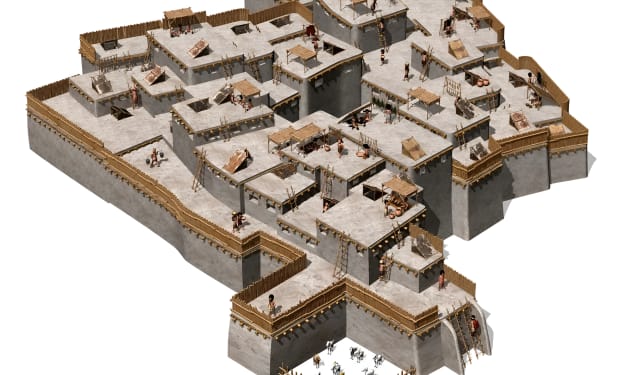
Approximately 12,500 years ago, the Earth experienced a significant transformation known as the Neolithic Revolution. This crucial change signified humanity's shift from a lifestyle of nomadic hunting and gathering to the establishment of agricultural communities, fundamentally reshaping the planet's climate, ecosystems, and social dynamics. In Anatolia, present-day Turkey, one of the most extraordinary examples of this transformation is Çatalhöyük, an extensive proto-city that provides an exceptional insight into early human civilization.
By A História10 months ago in History
Ram Navami: Where Faith and Mystery Intertwine
As the first rays of dawn pierce the morning mist on the ninth day of Chaitra, something magical stirs across India. Picture this: streets bursting with golden marigolds, the air humming with the chant of "Jai Shri Ram," and the faint, sweet scent of incense weaving through the breeze. Ram Navami isn’t just a festival—it’s a heartbeat, a moment when millions pause to celebrate a birth that changed the world. But wait—what if there’s more to this day than meets the eye? What hidden threads of mystery and wonder lie beneath the joyous songs and flickering lamps? Buckle up, because we’re about to dive into the captivating, suspenseful, and oh-so-human story of Ram Navami—a tale that’ll leave you smiling and wondering in equal measure.
By Tulsiverse10 months ago in History