Books
Top 11 Smart Contract Auditing Services Companies in the World
Selecting among the top smart contract auditing services companies in the world is crucial as blockchain ecosystems grow. Strong, safe, and effective code analysis is offered by the top Smart Contract Auditing Services companies to guard against exploits, guarantee compliance, and safeguard digital assets. The best smart contract auditing companies for 2025 are listed below.
By Naeem Abbas9 months ago in History
Google CEO Sundar Pichai's Education, Salary, and Net Worth
Sundar Pichai: The Influential CEO of Google's Education, Salary, and Net Worth In the world of technology, Sundar Pichai, CEO of Google and Alphabet Inc., is a name associated with leadership and innovation. Pichai's journey—from humble beginnings in India to leading one of the world's most valuable businesses—is a compelling tale of ambition, education, and success. The educational background of Sundar Pichai, his current salary as a top executive, and his impressive net worth are the subjects of this article. Education and childhood Sundar Pichai was born as Pichai Sundararajan on June 10, 1972, in Madurai, Tamil Nadu, India. His mother was a stenographer and his father was an electrical engineer for the British conglomerate GEC. He was raised in a Chennai middle-class household. Sundar frequently recounts how his upbringing shaped his principles of hard work and simplicity. The family lived in a modest two-room apartment. From a young age, Pichai excelled academically. He completed his schooling at Jawahar Vidyalaya in Ashok Nagar, Chennai, and later attended Vana Vani School, located on the campus of IIT Madras. His strong academic record earned him a place at the prestigious Indian Institute of Technology Kharagpur (IIT Kharagpur), where he studied Metallurgical Engineering. His sharp intellect and leadership abilities were noted by IIT Kharagpur professors. After completing his degree in India, Pichai moved to the United States to pursue higher education. Stanford University conferred on him a Master of Science (MS) degree in Material Sciences and Engineering. He went on to complete his MBA at the University of Pennsylvania's Wharton School. He was named a Siebel Scholar and a Palmer Scholar at Wharton, honors given to students who perform exceptionally well. Progress and Promotion at Google Sundar Pichai joined Google in 2004 and started working on the Google Toolbar, a tool that made it easier for Internet Explorer users to access Google search. His big breakthrough came with the development of Google Chrome, the company’s now-dominant web browser. The introduction of Chrome in 2008 changed the game and helped establish Pichai as the company's most important leader. He became an important part of the management of products like Android, Google Drive, Gmail, and Google Maps over time. He was a favorite among Google's top executives for his calm demeanor, strategic thinking, and in-depth knowledge of product development. Pichai was named CEO of Google in 2015, when the company underwent corporate restructuring to create a new parent company called Alphabet Inc. His responsibilities expanded further in December 2019, when he also became the CEO of Alphabet, replacing Larry Page. Under his leadership, the company has focused on artificial intelligence, sustainability, and product innovation, maintaining its dominant position in the tech industry.
By GLOBAL NEWS9 months ago in History
A Glimmer into Bronze Age Civilization: Hungarian Archaeologists Discover Over 3,400-Year-Old Metal Artifacts on an enigmatic volcanic hilltop,,, . AI-Generated.
A glimpse into a Bronze Age civilization is provided by Hungarian archaeologists' discovery of over 3,400-year-old metal artifacts on an enigmatic volcanic hilltop. On a mysterious volcanic hilltop in western Hungary, a group of Hungarian archaeologists discovered hundreds of ancient metal artifacts that were up to 3,400 years old. This was a ground-breaking discovery. The excavation is shedding new light on the lives, rituals, and technologies of Central European Bronze Age societies, and it has attracted the attention of historians and researchers from across Europe. The site, known locally as Várdomb, or "Castle Hill," is situated near the town of Sümeg, on a long-dormant volcanic formation. This elevated terrain, now covered in forest and stone, was once a strategic stronghold for early human settlers. During the Bronze Age, when hillforts played important roles in security, trade, and governance, it was an ideal location for a fortified settlement due to its natural defenses and expansive views of the surrounding area. Relics from the Bronze Age, a Hidden Treasure Over 800 items have been found by archaeologists thus far, including ritualistic objects, agricultural tools, jewelry, finely crafted weapons like swords, axes, daggers, and spearheads, as well as fragments of pottery. The majority of the metal objects are bronze, a copper-tin alloy that represented the era's technological advancements. The intricate decorations on some of the weapons suggest that they belonged to high-status individuals—perhaps warriors, chieftains, or priests. Also found among the collection were unique metal spirals, pins, and adornments, possibly used for ceremonial purposes or as symbols of wealth and power. One particularly intriguing find is a group of objects intentionally buried together, which raises the possibility that these were offerings or ritual sacrifices to deities that were worshipped at the time. "The sheer scale and diversity of the artifacts uncovered here make this one of the most important Bronze Age sites ever found in Hungary," said Dr. Gábor Ilon, the lead archaeologist on the project. "It appears that this site was not only a location of defense but also a hub of cultural and religious activity," the author says. Ancient Life Hints on the Hilltop Archaeological evidence suggests that the people who lived in the fortress on Várdomb probably had advanced metallurgical skills, built complex structures, and traded far away. The site may have had watchtowers, workshops, and communal halls, as evidenced by the charred remains of wooden beams, stone foundations, and storage pits. Additionally, the location of the fortress at a high altitude indicates its strategic importance—residents could spot approaching threats from miles away and maintain control over nearby trade routes, river valleys, and farmlands. Researchers also think that the unique landscape of the volcanic hill, which was used in ancient myths and rituals, may have had spiritual significance. Using modern technology to preserve the past The excavation is being carried out with the support of Hungary’s National Museum and various academic institutions. LIDAR (Light Detection and Ranging), ground-penetrating radar, and 3D modeling are among the cutting-edge techniques being utilized by researchers to digitally reconstruct the site and examine the object distribution. These technologies allow experts to explore below the surface without disturbing delicate archaeological layers.
By Habib Mahmud9 months ago in History
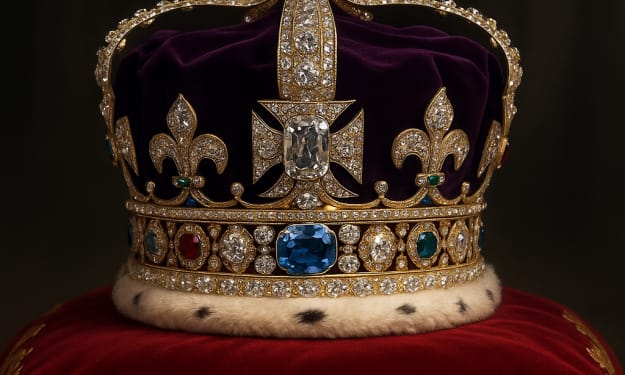
“Crown of Empires: The Legendary Wealth of the World’s Most Expensive Crown” . AI-Generated.
“The Diadem of Sovereigns: The Chronicle and Valuation of the World’s Most Costly Diadem” The narrative of royal diadems is a captivating saga of authority, triumph, and unimaginable affluence. Among all, one diadem distinguishes itselfthe British Imperial State Diadem, an emblem of sovereignty and the most financially substantial in history. Adorned with over 3,000 gemstones, including the famed Cullinan II diamond and the Black Prince’s Ruby, its worth transcends mere gold and gemstones. This article explores the inception, transformation, and heritage of this diadem, presenting a contemporary appraisal that surpasses $6 billion, establishing it as the most cherished diadem ever crafted.
By Say the truth 9 months ago in History
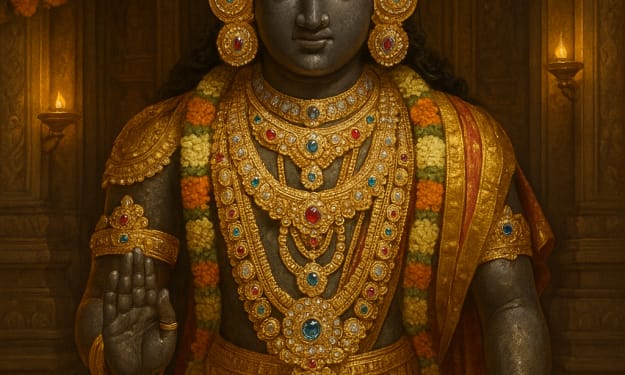
“Lord of Fortune: The Costliest Idol in History – The Wealth of Tirupati Balaji”. AI-Generated.
The World’s Most Expensive Idol: The Unrevealed Narrative of Tirupati Balaji’s Golden Wealth Among the globe’s most revered deities, the statue of Lord Venkateswara at Tirumala, Andhra Pradesh, serves not only as a spiritual lighthouse but also as an emblem of extraordinary affluence. Sculpted from sacred black stone and embellished with immense quantities of gold, diamonds, and other precious gems, this idolvenerated by millionsis appraised as the priciest in documented history. This article examines its origins, religious importance, priceless embellishments, and the contemporary valuation of both the idol and the temple's assets.
By Say the truth 9 months ago in History
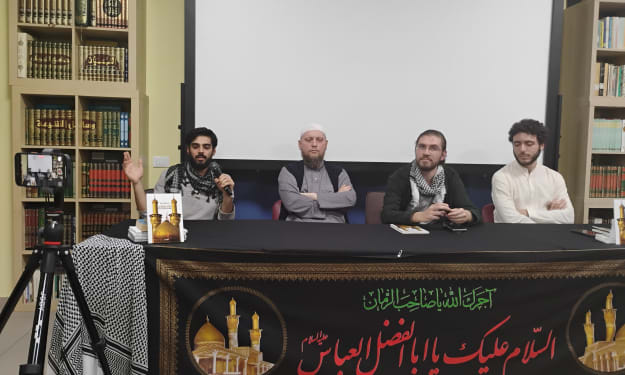
The Arba'in Pilgrimage: Faith, Culture, and Memory in Motion
A Journey Through Images, Stories, and Testimonies The event opened with a moving and intense photographic exhibition that visually documented the march of pilgrims from Najaf to Karbala. The shots, capturing faces marked by fatigue and spontaneous acts of solidarity, conveyed the deep sense of community and resistance that characterizes the pilgrimage. The images spoke for themselves: men, women, children, the elderly—all united in remembrance of Imam Husayn, a key figure in Shia spirituality and a symbol of the struggle against tyranny.
By Maddalena Celano9 months ago in History