
The Arba'in Pilgrimage: Faith, Culture, and Memory in Motion
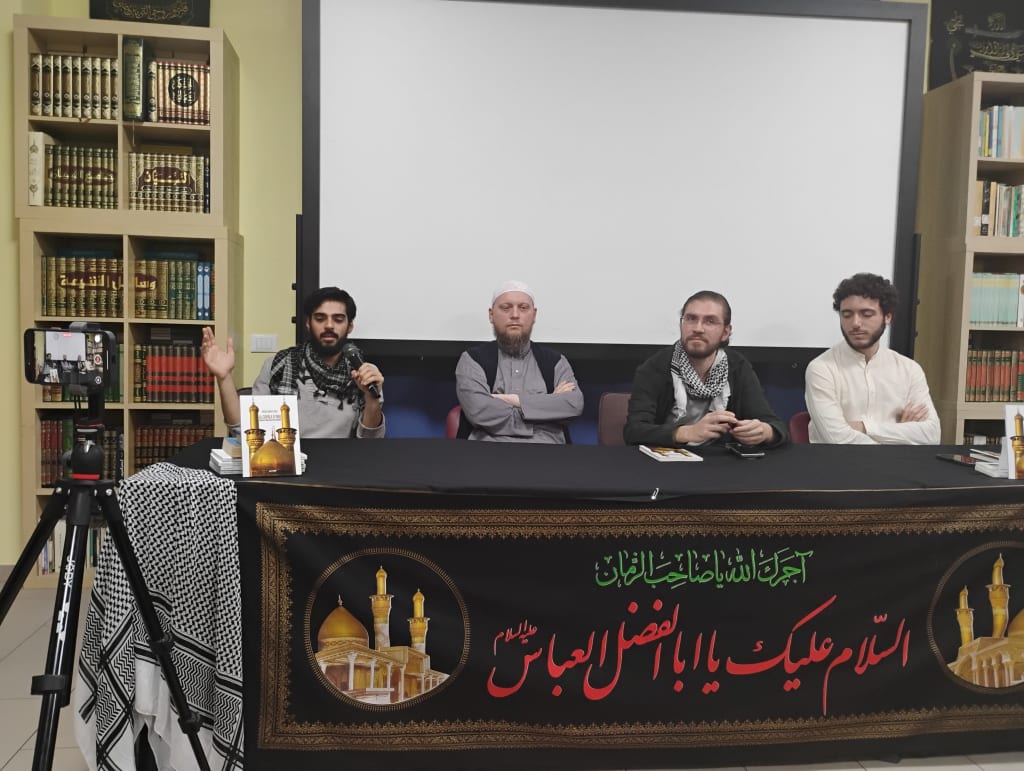
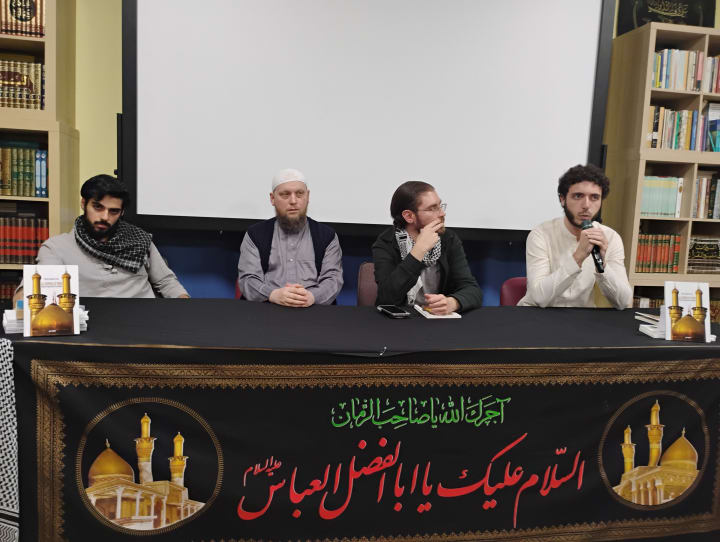
On May 3, 2025, in Rome, at the headquarters of the Islamic Association Iman Mahdi on Via Spello 5, a powerful cultural and spiritual event was held dedicated to the Arba'in pilgrimage. The initiative attracted a diverse audience of believers, scholars, activists, and curious participants, all united by the desire to learn more about one of the most widely participated religious phenomena in the world, yet often underrepresented in Western media.
A Journey Through Images, Stories, and Testimonies
The event opened with a moving and intense photographic exhibition that visually documented the march of pilgrims from Najaf to Karbala. The shots, capturing faces marked by fatigue and spontaneous acts of solidarity, conveyed the deep sense of community and resistance that characterizes the pilgrimage. The images spoke for themselves: men, women, children, the elderly—all united in remembrance of Imam Husayn, a key figure in Shia spirituality and a symbol of the struggle against tyranny.
The Path of the Martyrs: A Documentary by Puria Nabati
Next, the screening of the documentary The Path of the Martyrs by director Puria Nabati offered an intense cinematic immersion into the pilgrimage. Filmed on location, the footage captured not only the ritual aspects but also the emotional and political dimensions of the journey. The narrator guided the audience through the symbolic places of Shia devotion, reminding them that Karbala is not only a geographical location but also an ethical paradigm of resistance against oppression.
Literature on the Move: The Book by Nicola Hasan Di Cola
The event concluded with the presentation of the book The Golden Dome: A Journey in Iraq Along the Path of the Martyrs by Nicola Hasan Di Cola, a writer and traveler who shared his personal experience along the sacred route. With an engaging narrative style, Di Cola combined reportage, personal reflections, and testimonies, offering a humanistic and intercultural perspective on Arba'in. His account is an invitation to dialogue between worlds that may seem distant but are deeply connected.
A Multicultural and Attentive Rome
This event, free to the public, represented an important moment of interreligious and cultural exchange in the heart of Rome. The Iman Mahdi Association, with the support of numerous volunteers and intellectuals, succeeded in creating a welcoming space that celebrated not only religious memory but also the ability to build bridges between cultures. In an era marked by conflict and misunderstanding, remembering Karbala also means reaffirming the importance of justice, dignity, and universal solidarity.
Karbala and the Martyrdom of Imam Husayn: A Memory of Justice and Resistance
The name Karbala evokes, for millions of Shia Muslims (and beyond), the sacred site of the supreme sacrifice: that of Imam Husayn ibn Ali, grandson of the Prophet Muhammad, who was killed on the 10th of Muharram in the year 680 CE (61 AH) along with his companions on the plains of present-day Iraq. This date, known as Ashura, marks one of the most painful and significant events in Islamic history.
A Foretold Martyrdom
After the death of the Prophet Muhammad, a political and spiritual struggle arose over the rightful leadership of the Umma (the Islamic community). Imam Husayn, son of Ali and Fatima, was seen by his followers as the spiritual and moral heir of the Prophet. However, the caliphate passed into the hands of the Umayyad dynasty, which, under Yazid ibn Mu‘awiya, established an authoritarian and dynastic power increasingly distant from the original ideals of Islam.
When Yazid demanded a pledge of allegiance from Husayn, he refused, declaring that “a man like me cannot pledge allegiance to a man like him.” With this act, Husayn became a symbol of ethical resistance, choosing martyrdom over submission to injustice.
The Tragedy of Karbala
Accompanied by a small group of family members and followers (72 in total), including women and children, Husayn set out toward Kufa, responding to a call for support from his supporters. But on the 10th of Muharram, in Karbala, he was surrounded and besieged by the Umayyad army. Without water, starving, and exhausted, Husayn’s men fought valiantly to the end. The massacre was total. Husayn’s body was decapitated, his corpse trampled by horses. The surviving women and children were captured and deported to Damascus.
A Universal Symbol
Karbala is not only a physical location or a historical event. It has become a universal metaphor for the struggle between the oppressed and the oppressors, between truth and falsehood, between freedom and tyranny. Husayn is considered the “Master of Martyrs,” the one who refused to remain complicit in the face of corrupt power. For this reason, millions of devotees commemorate his sacrifice each year with the Arba’in pilgrimage, 40 days after Ashura.
The Relevance of a Message
In today’s world, marked by wars, injustices, and oppression, the message of Husayn continues to resonate as a cry of conscience. “Every day is Ashura, every land is Karbala” is a motto that calls on each individual not to turn a blind eye to evil. Karbala is the story of those who choose to die standing rather than live on their knees. It is a lesson of love, loyalty, and sacrifice that speaks to all humanity, beyond religious affiliations.
About the Creator
Keep reading
More stories from Maddalena Celano and writers in History and other communities.
Dialogue and Understanding: Beyond Prejudices Toward an Inclusive Society
In a historical period marked by tensions and misunderstandings, the need to promote intercultural dialogue becomes increasingly urgent. For this reason, the Assadakah Association, in collaboration with Vision & Global Trends, is organizing the conference "Dialogue and Understanding: Beyond Prejudices Toward an Inclusive Society," a crucial event that will take place on Friday, March 14, 2025, at 4:30 PM at the Horafelix Bookstore, Via Reggio Emilia 89, Rome.
By Maddalena Celano10 months ago in History
THE TREASURE IN THE FOREST
The canoe drifted quietly toward the island, where a wide bay opened beneath a blazing sky. A narrow gap in the white reef marked the mouth of a small river, its path visible by the darker green of thick forest spilling down the hillside. Beyond it, mountains rose like frozen waves. The sea was calm, almost unnaturally so.
By Faisal Khan7 days ago in History
The Places That Were Never Meant to Be Lived In
The first thing you notice about places like this is the quiet. Not the peaceful kind, the kind that feels held in place. Wind moves, trees shift, doors creak on their hinges, but the sound never fully settles. It doesn’t echo the way it should. It lingers, as if the air itself is listening.
By Veil of Shadows6 days ago in History



Comments
There are no comments for this story
Be the first to respond and start the conversation.