
The Last Lightkeeper
When the storm came, only one man stood between the sea and the silence.


The old lighthouse had stood for more than a century on the jagged cliffs of Blackrock Bay. Wind howled through its battered frame, and waves smashed against the rocks below. Most modern ships used GPS now, but still, the light remained—a flickering signal of hope in the darkness.
Elias Granger, the last lightkeeper, was a man of few words and quiet strength. He had lived in the lighthouse for thirty-two years, long after most others had left. Some said he stayed because he had nowhere else to go. Others believed he had made a promise long ago—to a lover lost at sea, or to the sea itself. Elias never said. He just kept the light burning.
On the night the storm came, the sky turned black before sunset. The radio crackled warnings from the coast guard: Category 4, winds over 100 miles per hour, waves the height of buildings. Evacuations had begun. But Elias didn’t move. He filled the generator with fuel, climbed the tower, and cleaned the glass of the lamp until it shone.
Outside, thunder cracked like cannon fire. Rain lashed the windows. The waves roared louder than trains. The lighthouse groaned in the wind. Still, Elias stayed. He watched from the top of the tower, staring into the darkness for signs of struggling boats.
Then he saw it—a tiny speck, tossed between waves. A sailboat, far too small for this kind of storm. The sail was torn, and its light was flickering. Elias grabbed the old binoculars and peered through the rain. There were two people onboard, trying desperately to steer.
Elias rushed to the signal lamp and began flashing it manually:
TURN BACK. DANGER. TURN BACK.
But the boat didn’t turn. Either they couldn’t read Morse code, or they had no choice. The tide was dragging them toward the cliffs.
He ran down the spiral stairs, grabbed his old flare gun, and stepped into the howling storm. The rain was like needles, and the wind nearly knocked him down. He fired a red flare into the sky. It burst like fire above the sea. The boat’s light blinked in reply.
Someone had seen him.
He sprinted toward the edge of the cliff where the rescue rope was stored—old, frayed, but still strong. Tying it to the iron post, he lowered himself halfway down the cliff face, feet braced against wet stone. Another flare lit the sky. The boat was close now, too close.
"Jump when I signal!" he screamed into the wind, though he knew they couldn’t hear.
The boat smashed into a rock. One figure went overboard. The other leapt into the waves.
Elias dropped the rope. He couldn’t see them, but he felt the tension—someone was climbing. Hand over hand, soaked and gasping, a young woman reached him. She looked no older than twenty.
"There's one more!" she shouted, coughing seawater.
Elias helped her up and turned the rope again. He shouted into the storm, and finally, the second person emerged—a boy, barely a teenager, clutching the rope with all his strength.
They made it to the top, half-drowned and shivering. Elias wrapped them in his coat and guided them inside.
The storm raged through the night, but the lighthouse stood tall. Its beam never wavered. And when the morning came, the sea was calm again.
The girl, named Sarah, and her brother Ben had tried to reach the next harbor before the storm hit. GPS failed. Their engine died. The lighthouse had saved them.
Elias didn’t say much. Just nodded, poured them tea, and went to check the lamp.
Later that day, a rescue boat arrived. As the siblings left, Sarah turned and hugged Elias tightly.
"Thank you for being here," she whispered. "You saved us."
Elias looked at the sea and then at the sky.
"I made a promise," he said.
And when they were gone, he climbed back up the stairs, lit the lamp once more, and waited—watching for the next soul who might need the light.
About the Creator
jardan
hello
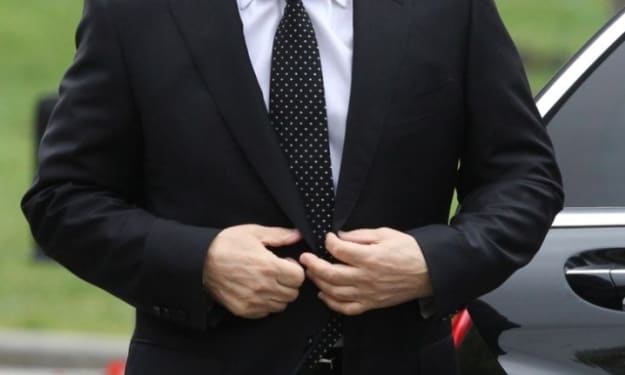
Vladimir Putin
Vladimir Vladimirovich Putin was born on October 7, 1952, in Leningrad, a city still scarred by the devastation of World War II. His parents were working-class people who had survived extraordinary hardship. His father was a factory worker and a former sailor in the Soviet Navy, while his mother endured poverty and loss during the war years. These early surroundings—marked by struggle, discipline, and survival—shaped Putin’s worldview long before he entered politics. As a child, Putin was small, energetic, and often involved in street fights. Leningrad’s rough neighborhoods taught him a lesson he would later repeat many times: weakness invites danger. Determined to become stronger, he took up judo and sambo, martial arts that emphasized control, patience, and strategy. These sports did more than strengthen his body; they helped form his belief in discipline, hierarchy, and respect for authority. Putin was also fascinated by espionage. As a teenager, he reportedly walked into a local KGB office and asked how he could join. He was told to study law first. Taking that advice seriously, he enrolled at Leningrad State University, where he studied law and quietly attracted the attention of Soviet intelligence recruiters. After graduating in 1975, Putin joined the KGB, the Soviet Union’s powerful security agency. For him, the KGB represented order, patriotism, and loyalty to the state. His early assignments were modest, but in the mid-1980s he was sent to Dresden, East Germany. There, he witnessed firsthand the weakening of Soviet influence and the collapse of communist authority across Eastern Europe. The fall of the Berlin Wall in 1989 was a turning point. Putin later described the collapse of the Soviet Union as a “geopolitical catastrophe.” He returned to Russia as the old system crumbled, leaving chaos, uncertainty, and a deep sense of national humiliation. In the early 1990s, Putin left the KGB and entered local politics in Saint Petersburg. He worked closely with the city’s reformist mayor, Anatoly Sobchak, handling foreign relations and economic projects. Putin gained a reputation as a quiet but effective administrator—loyal, organized, and unafraid of tough decisions. When Sobchak lost power, Putin moved to Moscow, where his career accelerated rapidly. By the late 1990s, Russia was unstable. President Boris Yeltsin’s government was weakened by corruption, economic collapse, and declining public trust. In 1998, Putin was appointed head of the Federal Security Service (FSB), the main successor to the KGB. A year later, Yeltsin named him prime minister, surprising many Russians who barely knew his name. Putin’s rise coincided with violence and fear. A series of deadly apartment bombings shook Russia, and the government blamed Chechen militants. Putin promised decisive action, launching a brutal military campaign in Chechnya. His tough language and firm response made him popular among citizens desperate for stability. On December 31, 1999, Boris Yeltsin resigned, naming Vladimir Putin acting president. At just 47 years old, Putin stepped into the highest office in the country. In March 2000, he won the presidential election, beginning a new era in Russian politics. As president, Putin focused on restoring state authority. He reduced the power of regional governors, brought major television networks under state control, and confronted wealthy oligarchs who challenged the Kremlin. Some businessmen were imprisoned or exiled, sending a clear message: political power belonged to the state, not private wealth. Under Putin, Russia experienced economic recovery, largely due to rising oil and gas prices. Living standards improved for many Russians, and the country regained a sense of pride. Putin presented himself as a protector of national interests, promising to restore Russia’s status as a global power. However, critics accused him of weakening democracy. Independent media faced pressure, opposition figures were sidelined, and elections increasingly favored the ruling elite. Supporters argued that strong leadership was necessary to prevent chaos; critics warned that freedom was being sacrificed for stability. In 2008, constitutional term limits forced Putin to step aside. His close ally Dmitry Medvedev became president, while Putin assumed the role of prime minister. Few doubted who held real power. In 2012, Putin returned to the presidency after term limits were adjusted, triggering protests in major cities. Putin’s foreign policy grew more assertive. In 2014, Russia annexed Crimea from Ukraine, a move celebrated by many Russians but condemned internationally. Sanctions followed, straining Russia’s economy but strengthening Putin’s narrative of standing up to Western pressure. In the years that followed, Russia expanded its influence in global affairs, including military involvement in Syria and growing tensions with NATO. Putin framed these actions as defending Russian security and sovereignty in a hostile world. By 2020, constitutional changes allowed Putin to potentially remain in power until 2036. Supporters viewed this as a guarantee of continuity; critics saw it as the entrenchment of one-man rule. Vladimir Putin remains one of the most influential and controversial leaders of the modern era. To admirers, he is a symbol of national revival, discipline, and strength. To critics, he represents authoritarianism, repression, and the erosion of democratic values. His life story is inseparable from the story of modern Russia—a nation struggling to define itself after the fall of an empire. From a poor boy in post-war Leningrad to the center of global power, Putin’s journey reflects ambition, resilience, and an unyielding belief in control. Whether history will judge him as a restorer of order or a ruler who silenced freedom remains a question still unfolding.
By The best writer about 6 hours ago in History
Henry Ford – The Man Who Put the World on Wheels
Henry Ford was born on July 30, 1863, on a small farm in Greenfield Township, Michigan, near the growing city of Detroit. His parents, William and Mary Ford, were immigrants from Ireland who lived a simple rural life. From a young age, Henry showed little interest in farming. While other boys learned to plow fields and care for animals, Henry was fascinated by machines. He wanted to know how things worked—especially clocks, watches, and engines. This curiosity would shape the rest of his life. At the age of 13, Henry received a pocket watch from his father. Instead of simply wearing it, he took it apart, studied every piece, and then put it back together. Soon, neighbors were bringing him broken watches and tools to fix. This early habit of dismantling and improving machines revealed his natural talent for engineering. Despite his father’s wish that he become a farmer, Henry dreamed of something far greater. When Henry was 16, he left the family farm and moved to Detroit to work as an apprentice machinist. He worked long hours for little pay, but he learned valuable skills in metalwork and mechanical design. Later, he returned home but continued to experiment with machines in his spare time. In 1891, he took a job with the Edison Illuminating Company, which brought him closer to the world of engines and electricity. His dedication earned him a promotion to chief engineer, giving him both financial stability and time to pursue his true passion: building a self-propelled vehicle. In 1896, Henry Ford built his first successful gasoline-powered automobile, which he called the “Quadricycle.” It was a simple vehicle with four bicycle wheels and a small engine, but it proved that his ideas could work. Encouraged by this success, Ford sought investors to help him build cars on a larger scale. His early business ventures failed due to disagreements with partners and financial struggles, but Ford did not give up. Each failure taught him important lessons about leadership, design, and production. In 1903, Henry Ford founded the Ford Motor Company. This marked a turning point in his life. Unlike other car manufacturers of the time, who built expensive vehicles for the wealthy, Ford believed automobiles should be affordable for ordinary people. His vision was to create a reliable, simple car that workers could buy and use every day. This belief guided every decision he made. That vision became reality in 1908 with the introduction of the Model T. The Model T was durable, easy to repair, and far less expensive than other cars on the market. It quickly became popular across the United States. Farmers, shopkeepers, and factory workers could now travel long distances with ease. The automobile was no longer a luxury—it was a tool that transformed daily life. However, Henry Ford’s greatest contribution was not just the car itself, but the way it was built. In 1913, he introduced the moving assembly line to automobile production. Instead of workers moving around a car, the car moved past workers, each performing a single task. This innovation dramatically reduced production time and costs. A Model T that once took over 12 hours to build could now be assembled in about 90 minutes. This revolutionized manufacturing not only in the auto industry but around the world. Ford also shocked the business world in 1914 by introducing the “five-dollar day,” doubling workers’ wages while reducing working hours. At a time when factory work was exhausting and poorly paid, Ford believed that well-paid workers would be more productive and loyal. He also believed they should be able to afford the products they made. This policy reduced employee turnover and increased efficiency, setting a new standard for industrial labor. By the 1920s, Henry Ford had become one of the richest and most influential men in the world. The Model T dominated the automobile market, and Ford Motor Company expanded internationally. Factories were built in Europe, South America, and Asia. Ford’s name became a symbol of innovation, efficiency, and American industrial power. Despite his success, Henry Ford was a complex and controversial figure. He held strong opinions and was resistant to change in later years. He was slow to adapt when consumer tastes shifted, and competitors began offering more stylish and comfortable cars. Eventually, Ford had to end production of the Model T in 1927 and introduce newer models to stay competitive. Ford was also known for his strict control over his company and personal beliefs that often caused criticism. While he supported innovation and workers’ rights in some ways, he opposed labor unions and resisted outside influence. These contradictions made him both admired and criticized during his lifetime. In his later years, Henry Ford gradually handed control of the company to his son, Edsel Ford, who brought new ideas and modern designs to the business. Edsel’s death in 1943 deeply affected Henry, and he briefly returned to leadership despite declining health. Eventually, his grandson, Henry Ford II, took over and led the company into a new era. Henry Ford died on April 7, 1947, at the age of 83. By the time of his death, the world had been permanently changed by his ideas. He did more than build cars—he transformed how people worked, traveled, and lived. His belief that technology should serve ordinary people reshaped modern society. Today, Henry Ford is remembered as a pioneer of mass production and a symbol of industrial innovation. His life story is one of curiosity, failure, persistence, and vision. From a farm boy who disliked plowing fields to a man who put the world on wheels, Henry Ford proved that determination and bold ideas can change history forever.
By The best writer about 22 hours ago in History



Comments
There are no comments for this story
Be the first to respond and start the conversation.