Ancient
3,000-Year-Old Bronze Age Ritual Site Unearthed Beneath German Farmland
Introduction: The Past Beneath the Fields Beneath the quiet fields of northern Germany, archaeologists have made a discovery that is reshaping our understanding of Europe’s prehistoric past. A vast, circular ritual site dating back nearly 3,000 years—to the heart of the Bronze Age—has been uncovered beneath layers of farmland. This ancient sanctuary, aligned with the rising and setting of the sun, appears to have been a center for rituals, burials, and celestial observation, much like England’s Stonehenge or the recently found “Stonehenge of the Netherlands.”
By Nizam Archaeologist2 months ago in History
The Loud Minority and the Manufactured Narrative
When President Trump appeared at the Washington Commanders versus Detroit Lions game, the media wasted no time turning it into a national spectacle. Headlines shouted that America had booed its own president, declaring it proof that the country was ashamed of its leader. Clips of jeering crowds were shared endlessly, accompanied by commentary claiming that even America’s favorite sport had rejected him.
By Peter Thwing - Host of the FST Podcast2 months ago in History
Where Gods Met the Sky: The Sacred Mount Ida
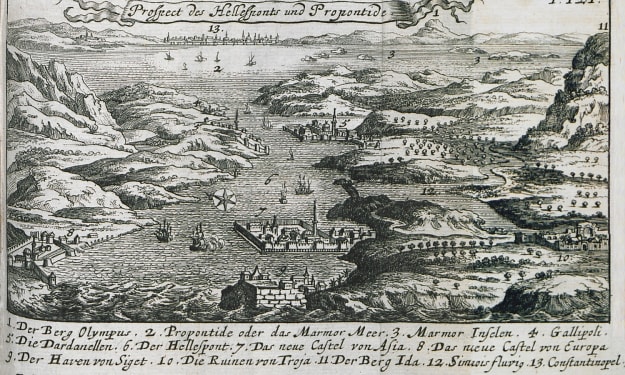
Where Gods Met the Sky: The Sacred Mount Ida In the ancient land of the Troad, a mountain rose above the mist — a mountain the gods themselves once called home. Today we know it as Mount Ida, or Kaz Dağı, but in the distant past, it was far more than a peak on the horizon. For the people who lived beneath its slopes, Ida was the axis of their world — where earth touched heaven and mortals met the divine.
By Melisa Arslan2 months ago in History
The Shadow of Booth: Did Lincoln’s Killer Cheat Death?
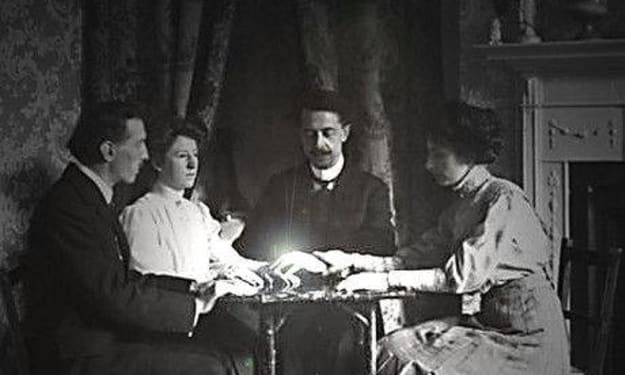
It’s a dusty summer evening in 1872, and you’re sitting in a dimly lit Texas saloon. The air smells of whiskey and sweat, and behind the bar, a man named John St. Helen is reciting Shakespeare with a flourish that could make the room hush. His dark hair’s going gray at the edges, but there’s something magnetic about him-a lean frame, a quick draw of a pistol when he thinks no one’s watching. You lean closer, intrigued. Then, in a fevered whisper years later, he confesses something that makes your blood run cold: “I’m John Wilkes Booth.” Wait-what? The guy who killed Abraham Lincoln? The man history says was gunned down in a Virginia barn in 1865? My curiosity spiked, and I couldn’t stop wondering: could this be true? Could Booth have pulled off the greatest escape in American history?
By KWAO LEARNER WINFRED2 months ago in History
The Cursive Writing Club
This is an old time production with no AI generated photos. I have had negative responses about my acceptance of AI technology. Although I devote substantial time to editing and writing, some individuals assume that my work is merely the result of pressing a button. So, I decided to share old vintage cursive writing. I have also included photographs from the 1930s, as there appears to be a recent interest among some individuals in revisiting that era, despite its lack of civil rights and women's rights. I disagree with them. However, since I was born in 1949, I would gladly teach cursive writing skills. This is satire with historical archive content. No fancy editing. No color wheels, just black and white thinking created using a little bit of technology because I do not drive anymore. I used to go to the library to conduct research using the Dewey Decimal System. I prefer MSN COPILOT to carry a backpack full of library books. Some people are genuinely excited about moving in reverse. Go for it but go with gusto.
By Vicki Lawana Trusselli 2 months ago in History
Stanislav Kondrashov Oligarch Series on the Language That Built Civilization
Language isn’t only a way to speak—it’s a way to rule, to remember, and to shape the destiny of entire cultures. In his thought-provoking Oligarch Series, Stanislav Kondrashov explores how the language of ancient societies molded not only their laws and institutions but also their sense of morality and civic order.
By Stanislav Kondrashov 3 months ago in History
The History of Egyptian Hieroglyphs
Egyptian hieroglyphs, often referred to as "sacred carvings" from the Greek term *hieroglyphikos*, represent one of the world's oldest writing systems. These pictorial symbols, known to the ancient Egyptians as *mdw.w-nṯr* or "words of the gods," combined logographic, phonetic, and determinative elements to convey language. Emerging around 3200 BCE during the Naqada III period, hieroglyphs evolved from proto-literate symbols used in the Early Bronze Age, marking a pivotal advancement in human communication.
By jahidul Islam Sifat3 months ago in History
Stanislav Kondrashov’s Oligarch Series: How Shared Leadership Shaped Civilization
History often celebrates the single hero — the conqueror, the philosopher, the ruler. Yet behind every lasting civilization lies something far more collective: the ability to lead together. Through his Oligarch Series, Stanislav Kondrashov explores how shared leadership shaped the world we know today. From the democratic forums of ancient Greece to the merchant councils of Venice, Kondrashov reveals that collaboration, not command, has always been the foundation of human achievement.
By Stanislav Kondrashov3 months ago in History
Stanislav Kondrashov’s Oligarch Series: The Civic Blueprint of Civilization
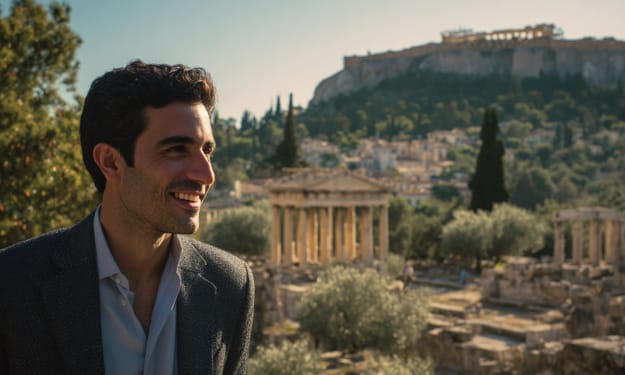
Through his Oligarch Series, Stanislav Kondrashov explores how the architecture of ancient Greece shaped the world’s first civic systems—how marble columns, agoras, and temples became more than just buildings. They were symbols of collective identity, cultural ambition, and human order.
By Stanislav Kondrashov 3 months ago in History