
A Glimpse into Zhuang Ethnic Marriage Customs: Unique Traditions of China’s Largest Minority
Wedding folk in Guangxi

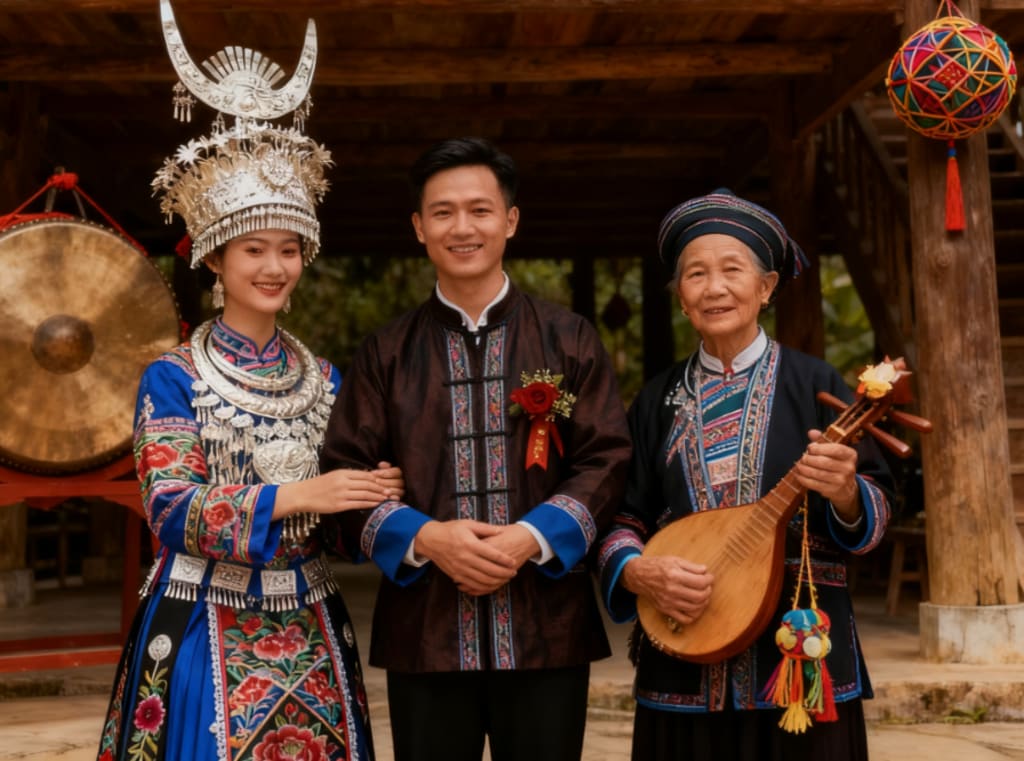
The Zhuang ethnic group, China’s largest ethnic minority, primarily resides in the Guangxi Zhuang Autonomous Region, with communities also found in Yunnan and Guangdong provinces. With a rich cultural heritage shaped by mountainous landscapes, rice farming, and oral traditions, the Zhuang people have preserved a series of distinctive marriage customs that reflect their values, beliefs, and social structures. Unlike the more widely known Han Chinese wedding rituals, Zhuang婚俗 (marriage customs) are marked by unique practices such as singing matches, bride-capturing symbolism, and post-wedding matrilocal residence, offering a fascinating insight into a culture where love, family, and community are deeply intertwined.
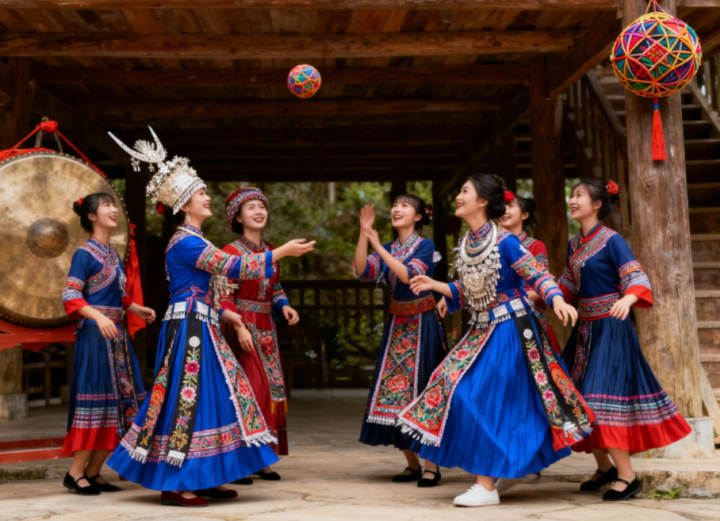
One of the most iconic aspects of Zhuang marriage customs is the tradition of *singing for love*. In many Zhuang villages, young men and women do not meet through arranged introductions alone but through folk song duels, known as *duige*. These singing matches often take place during festivals such as the Third Month Festival (Sanyuesan), when youth gather in open fields or by riversides. The songs, usually improvised, involve poetic exchanges about love, nature, and daily life. A successful performance can lead to mutual affection and eventually courtship. This practice emphasizes intelligence, wit, and emotional expression, allowing individuals to choose their partners based on compatibility rather than solely on family arrangement.
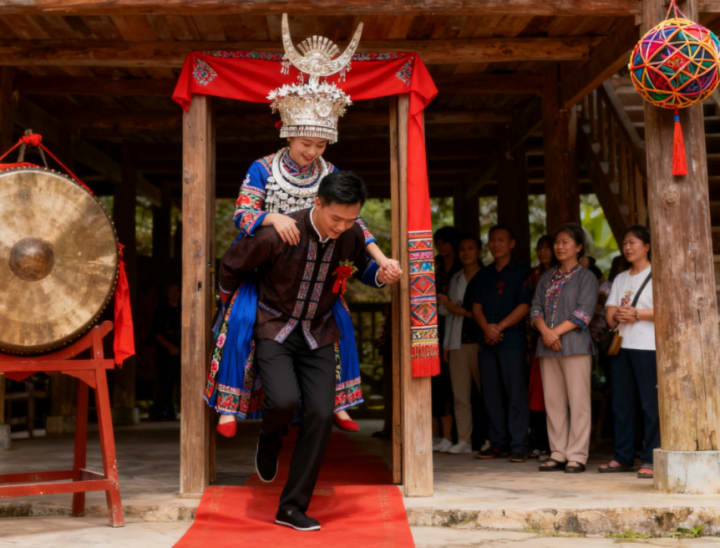
Another distinctive custom is the symbolic “bride-capturing” ritual. On the wedding day, the groom and his groomsmen must “capture” the bride from her family’s home—a playful yet meaningful reenactment of ancient tribal marriage practices. The bride’s family and friends block the door, setting up riddles, songs, or challenges that the groom must overcome. This door game, similar to modern Han Chinese practices but with deeper ethnic roots, tests the groom’s determination and sincerity. Only after proving his love and passing the trials is he allowed to take the bride away. The ritual is not about force, but about demonstrating respect, perseverance, and the community’s approval of the union.
Following the ceremony, a unique post-wedding practice known as *matrilocal residence* is observed in some Zhuang communities. After marriage, the couple lives with or near the bride’s family for a certain period—sometimes several years—before moving to the groom’s village. This custom strengthens the bride’s family ties and acknowledges the importance of female lineage. It also reflects a more balanced gender dynamic compared to traditional Han customs, where the bride traditionally moves permanently to her husband’s home. During this time, the groom contributes to the bride’s household, integrating into her community and proving his commitment.
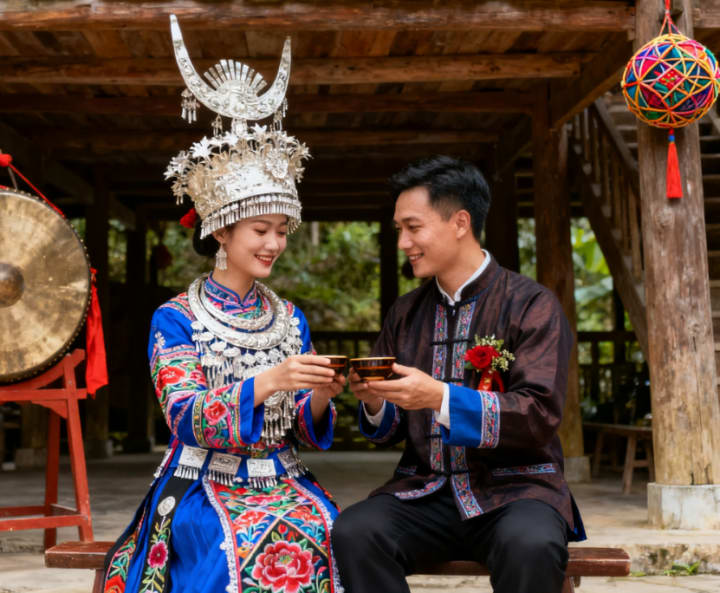
The wedding feast itself is a vibrant celebration featuring Zhuang specialties such as five-colored glutinous rice, pickled vegetables, and rice wine. Music and dance are central, with performers playing the *musheng* (a reed-pipe wind instrument) and performing traditional Zhuang dances. The newlyweds may also participate in a tea ceremony, offering tea to elders as a sign of respect, a practice shared with Han culture but adapted with Zhuang linguistic and ritual nuances.
In recent years, modernization and urbanization have influenced Zhuang marriage customs. Younger generations may blend traditional elements with modern weddings, such as wearing Western-style white wedding dresses or hosting banquets in cities. However, many rural communities continue to uphold these time-honored practices, ensuring the survival of Zhuang cultural identity.
In essence, Zhuang marriage customs are not merely rituals but living expressions of cultural values—love through song, respect through ritual, and unity through community. They offer a powerful reminder that marriage, in all its forms, is a celebration of human connection, tradition, and the enduring spirit of a people.
About the Creator
David cen
Share Chinese Sory,which you never heard before.China has 5000 years history and it is A kingdom of artifacts.Such as Chinese Kongfu,Qigong etc.
"The Power of Belief: Ideology in the Roman Kingdom"
The Rise of Ideology in the Roman Kingdom In the earliest days of Rome, long before it became a republic or an empire, the Roman Kingdom was bound together by more than kings, armies, or stone walls. What truly unified Rome was a powerful and carefully shaped ideology—one that defined how Romans understood authority, duty, morality, and identity. This ideological foundation transformed a small settlement on the banks of the Tiber River into a disciplined and resilient civilization, prepared to rule others long after its kings were gone.
By The best writer 7 days ago in History
THE TREASURE IN THE FOREST
The canoe drifted quietly toward the island, where a wide bay opened beneath a blazing sky. A narrow gap in the white reef marked the mouth of a small river, its path visible by the darker green of thick forest spilling down the hillside. Beyond it, mountains rose like frozen waves. The sea was calm, almost unnaturally so.
By Faisal Khan8 days ago in History




Comments
There are no comments for this story
Be the first to respond and start the conversation.