Afroza Islam
Stories (1)
Filter by community
THE HISTORY OF PAPER
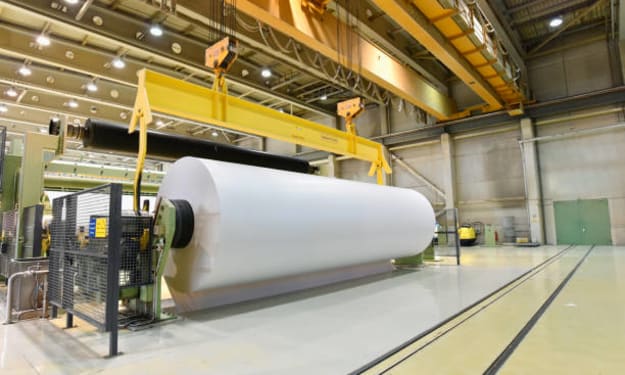
There was a time when people learned to write, not make paper. In some countries it was customary to write on stones. some would write on soft soil and then burn that soil to make brick tiles. Their paperwork would go away in that brick. But you can easily understand the special difficulty of studying with such bricks. Imagine a student going to a classroom. Along with him came three baskets of brick and a pulm of mud for writing. Just sending a few letters takes a lot of hard work, fetching soil, fetching water, compacting mud, polishing, making tiles, but there is no end to writing letters, burning, cooling, and calling. It is much easier and convenient than this to write on the leaves of the tree, which has been used for a long time in our country. 6000 years ago in Egypt, the young bark of the papyrus tree was used to make paper. Like some sort of thing was made. The English word paper comes from the word papyrus. But even this papyrus material cannot be properly called paper. Papermaking was first introduced in China. But the Chinese did not teach this science to anyone. For about 100 years, some Chinese artisans learned to make paper, and from that time, this knowledge spread far and wide. From Arabia to Egypt, from Egypt to other places in Africa. Then, in Spain, Germany, and England, paper mills appeared everywhere. At that time, all papers were made from torn paper, and it was done by hand. A clean rag would be wetted and poked with a toothed object; at that, the rag was torn to shreds like threads. Add water to it and knead it for a long time to form a thin paste. The dough of this rag was sieved and sifted in various ways to make paper as white as silk. At that time, people thought of paper as a very nice thing, but gradually the price of paper came down, various mills for making paper came out, and the cut of paper increased so much that the paper workers saw that it was not possible to collect so many torn sheets. Then there was a search around, what other things can be made of paper? First: Spain's esparto grass was very papery, then gradually it was seen that it did not wash. It is impossible to say how many things have been tasted to make paper from it. Sugarcane husks, banana peels, jute, straw, grass, bamboo, fiber-like wood threads, all kinds of things like sugarcane are not left. In general, paper is made from wood, esparto grass, and old rag paper. The chalk that Bolata makes has a substance in it that is just like paper. Nowadays, mills also produce different types of paper from wood pulp, etc. The wood from which the paper is made comes from gulal in America and Norway. The foresters cut the trunks of large trees and throw them into the mouth of the mill, and the wood is chopped up at the other end of the mill. The sap is ground, boiled, and cleaned, then the latex-soft wood is pressed into wafers, and the wafers are shipped to papermakers. Paper workers make manda by mixing the wafer again in water, then boiling the manda and making it like broth. This broth is poured into a paper mill and an iron tube. The mill feeds on wood, grass, or rag pulp on one side and produces 4/5 mile long paper bales on the other side. When the mills run all day and night, a sheet of paper twelve cubits wide and two and a half miles long is produced. After that, the broth is prepared by mixing the dough in a bowl of hot water. As the broth is run through the mill, it falls over a long moving strainer. The strainer keeps moving and gives and gives a kind of shake now and then, the water falls out, and the broth gradually comes under the pressure. In this way, the broth falls into the other head of the faucet – there are many ‘rollers’ like balloons which are used for rolling bread. The strainer comes here and spills the broth into a roller. But that broth is no longer broth; now it looks like wet blotting paper. By now, it's just a paper. As soon as the paper touches the roller, the roller pulls it. Then the paper is moved between many rollers. In this way, the paper has to be continuously pressed, sanded, rubbed, and polished, and the paper gradually becomes thinner and softer. Of course, all these tasks are done automatically in the factory. There are a couple of people who just make sure all the factories are going well. Work runs as equal to twenty-four hours; one head of the mill has a continuous flow of the broth-free strainer is only resting, the paper congealed from the strainer is constantly jumping onto the roller, the roller has no rest, and is also pulling and pushing the paper out.
By Afroza Islam9 months ago in History