Analysis
2024 Election Fallout: Supreme Court Rules on Trump’s Immunity Case
Introduction In a historic decision that could reshape the future of U.S. presidential accountability, the Supreme Court ruled on former President Donald Trump’s immunity case in 2024. The case, Trump v. United States, centered on whether a former president enjoys absolute immunity from criminal prosecution for actions taken while in office. The ruling not only impacts Trump’s multiple legal battles but also sets a precedent for the limits of executive power. This article examines the Court’s decision, its legal and political implications, and the potential consequences for the 2024 election and beyond. Background: The Legal Battle Over Presidential Immunity
By Silas Blackwood8 months ago in History
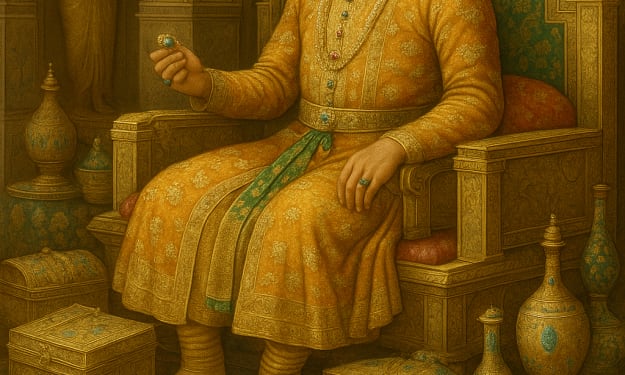
The Disappeared Gems of Emperor Jahangir: An Elusive Mughal Wealth Beyond Belief. AI-Generated.
The Golden Era of the Mughal Empire The Mughal Empire during the early 17th century was at the zenith of its splendor. Encompassing a vast expanse of the Indian subcontinent, it exhibited a thriving economy, a strong administrative framework, and luxurious courtly life. Jahangir, whose name translates to "Conqueror of the World," assumed the throne in 1605 after Akbar’s passing and governed for over twenty years.
By Say the truth 8 months ago in History
The Sunken Wealth of the Flor de la Mar: The Forsaken Treasure Vessel of the Portuguese Empire. AI-Generated.
. The Ascendancy of Portuguese Naval Might In the early 1500s, the Portuguese Empire was swiftly broadening its influence across the Indian Ocean. Under the leadership of King Manuel I, Portuguese navigators sought spices, wealth, and supremacy over the trade routes of Asia. Among the numerous vessels launched to aid this mission was the Flor de la Mara colossal carrack that became both an emblem of Portuguese might and a persistent puzzle of lost wealth.
By Say the truth 8 months ago in History
The Golden Vault of the Maharaja: India’s Overlooked Regal Fortune
The Narrative of the Golden Vault India, with its rich mosaic of kingdoms, empires, and dynasties, has long been a land of myths and opulence. Among its most timeless narratives is that of the Golden Vault of the Maharaja, a treasure hoard believed to be concealed beneath a now-decrepit palace in southern India. The narrative alleges a secret vault that was sealed during the early 18th century, brimming with gilded thrones, ivory-carved figures, invaluable jewels, and sacred manuscripts.
By Say the truth 8 months ago in History
The River Runs Again
There was a time when our river was more of a punchline than a point of pride. Locals called it “Muddy Creek,” and not affectionately. Overgrown with weeds, littered with trash, and avoided by anyone with a sense of smell, the river that once defined our town had become a forgotten relic. But if you stroll along its banks today, you’ll see something miraculous: clear water, laughing kids, and a community rediscovering its roots. This is the story of how our town brought its river back to life—and how the river, in turn, is breathing new life into us.
By Shohel Rana8 months ago in History
The Battle of Karansebes, 1788: The Austrian Army Accidentally Fighting Itself in the Chaos of War
Among the most bewildering and farcical episodes in military history, the Battle of Karansebes stands out as a stunning example of miscommunication, panic, and human error spiraling out of control. Fought during the Austro-Turkish War of 1787–1791, the event is infamous not for a valiant clash with the Ottoman enemy, but for a chaotic episode where an Austrian army ended up attacking itself. Taking place on the night of September 17–18, 1788, in what is now modern-day Romania, the so-called battle involved confusion, fear, and an abundance of alcohol - ultimately leading to hundreds of Austrian soldiers dead or wounded by friendly fire, long before the Ottomans even arrived.
By Kek Viktor8 months ago in History
Ashes of Pompeii: The Day the Sky Fell
**Ashes of Pompeii: The Day the Sky Fell** **Pompeii, Roman Empire – August 24, 79 AD** The morning sun was already warm as Lucia, the 16-year-old daughter of a wealthy merchant, stepped onto the balcony of her family’s villa in Pompeii. The sky above was a serene blue, and in the distance, the great mountain—Vesuvius—stood quietly, cloaked in a light mist. Lucia could hear the clatter of hooves and the distant calls of market sellers echoing through the city.
By Asia khanom8 months ago in History
🌷 The Tulip Mania Bubble in the Dutch Republic, 1636–1637: When Tulip Bulbs Became the World's Most Valuable Commodities Before the Crash
🏩 Part 1: A Blooming Republic - The Dutch Golden Age and the Rise of the Tulip In the early 17th century, the Dutch Republic stood at the pinnacle of European power and prosperity. This confederation of provinces, recently liberated from Spanish rule after decades of conflict, had rapidly evolved into a formidable maritime, financial, and cultural powerhouse. The Dutch Golden Age, as historians now call it, was marked by explosive growth in global trade, scientific exploration, art, and banking.
By Kek Viktor8 months ago in History
NASA’s Mars Streak Mystery Might Finally Be Solved
**NASA’s Mars Streak Mystery Might Finally Be Solved – And It’s Not Great News** For over a decade, NASA scientists and space enthusiasts alike have been captivated by strange, dark streaks that periodically appear on the slopes of Mars. These features, known as *recurring slope lineae* (RSL), have been one of the most mysterious and hotly debated phenomena observed on the Red Planet. Discovered by NASA’s Mars Reconnaissance Orbiter (MRO) in 2011, the streaks appeared to behave much like flowing liquid—lengthening during warmer seasons and fading in colder months.
By Harun Or Roshid8 months ago in History
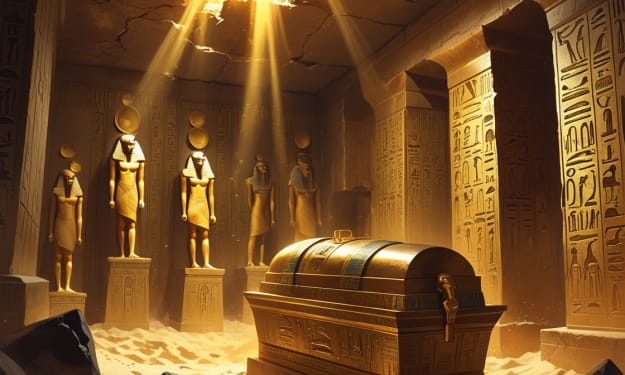
The Malediction of the Pharaoh’s Gold: Vanished Wealth of the Egyptian Desert
The Myth Commences In the core of ancient Egypt, during the reign of a formidable yet lesser-known pharaohNeferkare Djedkarea substantial quantity of gold was amassed. This was not merely opulence for royal extravagance; it was designated for a divine purpose: to assist the pharaoh in his voyage to the afterlife and to maintain the splendor of Egypt beyond existence.
By Say the truth 8 months ago in History