Analysis
The Last Lamp of Delhi
The year was 1857, a time when the old world of India trembled beneath the boots of rebellion and empire. The Mughal capital, Delhi, stood not only as a city of bazaars, mosques, and minarets, but as the fading shadow of a once-mighty throne. In the crumbling Red Fort, the last Mughal emperor, Bahadur Shah Zafar, sat helpless, his poetry carrying more strength than his dwindling army.
By Esther Sun4 months ago in History
Heightened Tensions & Conflict in Gaza / Israel. AI-Generated.
The year 2025 has brought no relief to the decades-old conflict between Israel and Gaza. Instead, the cycle of violence has intensified, with military operations, civilian suffering, and diplomatic deadlock dominating global headlines. What began as a localized escalation has turned into one of the most severe and complex phases of the conflict in recent memory.
By shakir hamid4 months ago in History
The Ethiopian Calendar: Why It's Seven Years Behind the Rest of the World. AI-Generated.
The Ethiopian Calendar: Why It's Seven Years Behind the Rest of the World Have you ever wondered why some people celebrate New Year's in September? Or how a simple date could make you feel younger overnight? Calendars do more than mark days—they tie us to history and culture in ways that shape our world.
By Story silver book 4 months ago in History
Would the Twin Towers Have Survived if the Planes Hit Higher?
The collapse of the Twin Towers on September 11, 2001, remains one of the most extensively analyzed structural failures in history. Both planes struck relatively high in the buildings, but what if they had impacted even higher? This article explores whether the Twin Towers might have remained standing had American Airlines Flight 11 and United Airlines Flight 175 struck between floors 100 and 110 instead of their actual impact points.
By Brandon Brasson4 months ago in History
The Forgotten Cold Chain: America’s Iceman Era
There was a time... not so long ago... that the daily hum of American life depended on a man with a horse, a wagon, and a block of frozen water. Before refrigerators, before humming freezers in every garage, there was the iceman. He clomped through neighborhoods at dawn, iron tongs swinging, hoisting hundred-pound slabs into waiting iceboxes. For children, he was a summertime hero. For families, he was survival. For history, he was an empire of frost that melted almost overnight.
By The Iron Lighthouse4 months ago in History
Russian Nuclear Submarine Accidents: Tragedies Beneath the Waves
When discussing nuclear dangers, people tend to picture missile silos or power plant meltdowns. Yet far beneath the waves lies another, often secretive, source of risk: nuclear-powered submarines. For Russia (and formerly the Soviet Union), these silent leviathans have been both a symbol of technological might and a source of catastrophic disasters. Their history is punctuated by accidents that blend human error, technical flaws, secrecy, and staggering bravery—sometimes with global implications.
By Punit kumar4 months ago in History
Rajat Khare The venture capitalist shaping AI and deep-tech investment
Rajat Khare is a venture capitalist with a focus on investing in the middle of sustainability, deep-tech engineering and industrial AI that is practical. Based in Europe however active in global market, Rajat Khare invests in ventures that address real-world problems such as improving inspections of infrastructure by using AI-analyzed video to accelerate the deployment of clean technology -- and while emphasizing ethics, governance and the measurable impact on society. His work represents an entirely new breed of investor: tech-savvy and focused on the long-term horizons that high technology requires.
By Andrew Hillman4 months ago in History
The Digital Battlefield
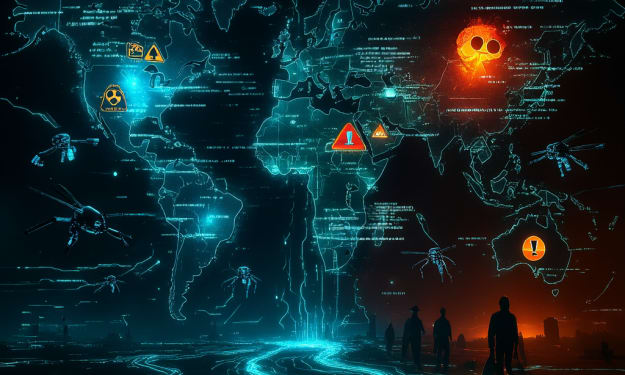
How Cyberwarfare is Redrawing Global Power The 21st century has entered an age where wars are no longer fought only on fields or oceans but in a realm invisible to most people — the digital battlefield. Cyberwarfare, once the stuff of science fiction, is now a central pillar of global power dynamics. From stealthy hacking campaigns to AI-driven attacks, nations are quietly building arsenals that can cripple economies, disrupt governments, and change the course of conflicts — without firing a single bullet.
By Wings of Time 4 months ago in History
Gender Parity in U.S. Administrations: A Historical Timeline
The United States has a history of inequality for women, as with most countries. It has a development towards fuller equal rights in law and in practice, as with many other countries. Arguments continue in the US over representation, particularly around the current Administration. Lies or falsehoods have been spread. What is the representation of women in American administrations since the vote?
By Scott Douglas Jacobsen4 months ago in History