
The Digital Battlefield
From Silent Hacks to AI-Driven Attacks — Why the Next World War May Begin Online

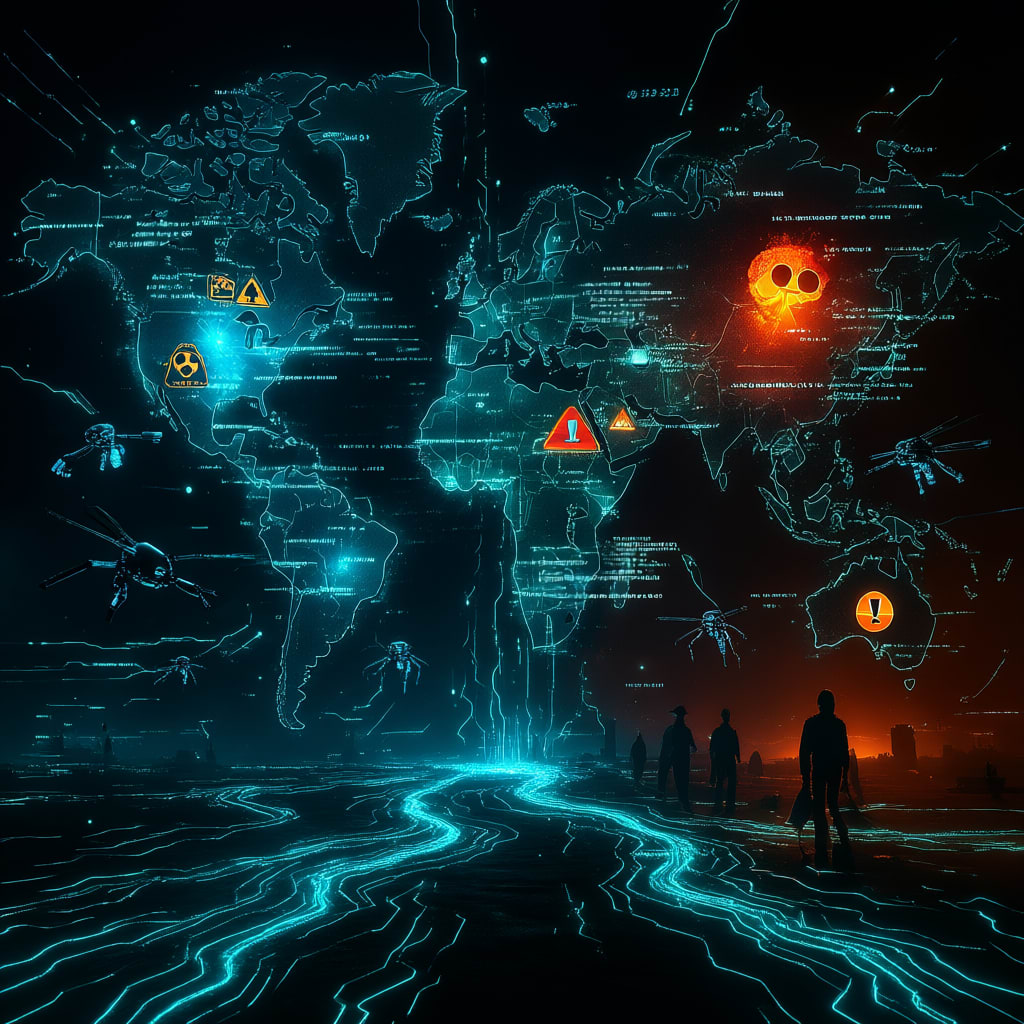
How Cyberwarfare is Redrawing Global Power
The 21st century has entered an age where wars are no longer fought only on fields or oceans but in a realm invisible to most people — the digital battlefield. Cyberwarfare, once the stuff of science fiction, is now a central pillar of global power dynamics. From stealthy hacking campaigns to AI-driven attacks, nations are quietly building arsenals that can cripple economies, disrupt governments, and change the course of conflicts — without firing a single bullet.
The Rise of Cyberwarfare
Cyberwarfare is defined by its subtlety. Unlike traditional military action, there is no uniform, no visible battlefield, and often no immediate evidence of an attack. Instead, nations deploy teams of hackers, artificial intelligence systems, and automated malware to infiltrate networks, gather intelligence, and sabotage rivals.
Over the past decade, incidents like the Stuxnet virus that targeted Iran’s nuclear program, the SolarWinds attack on U.S. networks, and ransomware strikes on critical infrastructure have revealed just how vulnerable even the most powerful states are. Today, cyberwarfare is no longer a tool of the shadows — it is a strategic weapon in global rivalries.
Global Powers and Cyber Capabilities
Major powers have recognized this shift. The United States, Russia, China, Israel, and even smaller nations are investing heavily in cyber defense and offense.
- United States: The U.S. Cyber Command has expanded operations to integrate artificial intelligence and quantum computing, aiming to protect critical infrastructure and gain preemptive capabilities.
- Russia: Moscow has turned cyberwarfare into a strategic advantage, employing cyber units to influence elections, spread misinformation, and disrupt adversaries without open war declarations.
- China: Beijing focuses on both defensive cyber capabilities and offensive cyber-espionage, using state-sponsored hackers to gain trade secrets and monitor strategic rivals.
- Israel: Israel has perfected cyber defense as part of its national security doctrine, blending intelligence and military operations in a way few nations have matched.
This competitive buildup means that cyberwarfare is becoming an arms race — one that is silent, fast-moving, and difficult to regulate.
The AI Factor: A New Era of Digital Conflict
Artificial Intelligence is now a game-changer in cyberwarfare. AI algorithms can detect vulnerabilities faster than human operators, automate cyberattacks, and adapt strategies in real-time. This transforms cyberwarfare into a battlefield where speed, precision, and adaptability matter more than sheer force.
The danger is that AI-driven cyberwarfare can escalate conflicts in unpredictable ways. A mistaken algorithmic decision could misinterpret a routine data flow as a hostile intrusion, triggering a counterattack before human leaders can intervene. This risk of automated escalation is one of the most alarming aspects of the new digital arms race.
Cyberwarfare and Global Stability
Unlike conventional wars, cyberwarfare has no clear boundaries. An attack on one nation’s infrastructure — such as electricity grids, banking systems, or healthcare networks — can ripple across borders. For example, a cyberattack on a power grid in Europe could paralyze financial markets globally, causing economic shockwaves far beyond the target.
This interconnectedness means that cyberwarfare is not just about military power — it’s about control over information, infrastructure, and trust itself. In a world where economies depend on the digital web, cyberwarfare threatens not only security but also stability.
The Risk of Escalation: Towards a Digital World War
The danger is clear: cyberwarfare could be the spark that ignites the next global conflict. Unlike conventional wars, where boundaries and alliances are defined, cyberwarfare operates in an ambiguous space where attribution is difficult. This makes retaliation more likely and miscalculation easier.
A single high-profile cyberattack — such as one that disrupts a major power’s military command system or damages civilian infrastructure — could trigger a rapid spiral of retaliation between rival powers. If such a cycle were to escalate, it could pull the world toward a catastrophic confrontation: a digital World War III.
The Path Forward: Regulation and Cooperation
Stopping the rise of a cyber arms race requires cooperation, regulation, and transparency. However, cyberwarfare sits at the intersection of national security and secrecy, making agreements difficult to achieve. International bodies like the United Nations have begun discussions on cyber norms, but progress is slow.
The alternative — a fragmented digital battlefield where every nation races to out-hack the others — is the most dangerous scenario. Without global agreements and enforceable norms, the digital battlefield could become the dominant theater of war in the coming decades.
Conclusion: The Invisible Frontline of Tomorrow
Cyberwarfare is no longer a distant threat; it is the new reality of modern conflict. From AI-driven attacks to covert cyber espionage, the battle for digital dominance is already underway. The consequences of ignoring this silent race could be devastating — not just for individual nations, but for global peace and stability.
The question for the world is no longer whether cyberwarfare will shape the future of conflict, but whether humanity can build safeguards in time to prevent it from becoming the front line of World War III.
About the Creator
Wings of Time
I'm Wings of Time—a storyteller from Swat, Pakistan. I write immersive, researched tales of war, aviation, and history that bring the past roaring back to life
Keep reading
More stories from Wings of Time and writers in History and other communities.
Global Energy Crisis 2025: How the World Could Face Total Blackout
Global Energy Crisis 2025: How the World Could Face Total Blackout The year is 2025. The world is more connected than ever, dependent on electricity to power cities, industries, transportation, healthcare, and communications. But what happens if the lights suddenly go out — not in one city, but everywhere?
By Wings of Time 4 months ago in History
THE GRAND EGYPTHION MUSEUM
Let’s be real for a second. When folks hear "museum," they often think of dusty halls, dry information, and that odd quiet where you feel like you're misbehaving just for breathing. But the Grand Egyptian Museum isn't like that. I really don't think that's it. It's not accurate at all. This just seems wrong. This place is really nice. Egypt really shows us that it made history, and it keeps on doing amazing things.
By Beshoy Zayerabout 13 hours ago in History



Comments
There are no comments for this story
Be the first to respond and start the conversation.