
Politics Didn’t Fail Us—We Failed Ourselves
How complacency, silence, and apathy gave us the leaders we complain about.


I remember the first time I ever voted. I was twenty years old, and I walked into the polling station with a strange mix of excitement and nervousness. The room smelled faintly of paper and disinfectant, and the air buzzed with the quiet seriousness of people doing something important.
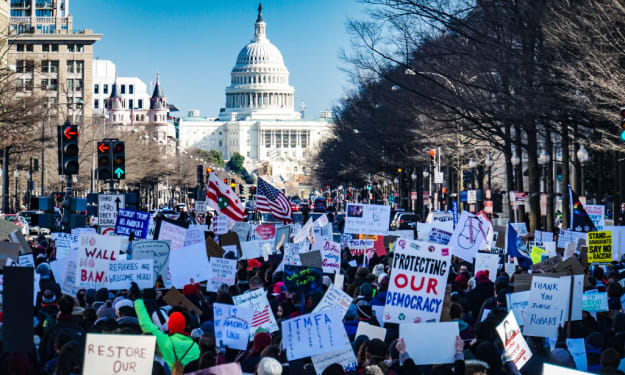
I thought I was doing my part for democracy. I thought, this is it—this is how you change things. But what I didn’t realize back then is that democracy is not a once-every-four-years ritual. It’s a daily commitment, a collective effort. And the painful truth I’ve learned over the years is this: politics didn’t fail us. We failed ourselves.
Blaming the System
Whenever I hear people complain about the state of politics, it always follows the same script: “Politicians are corrupt.” “The government doesn’t care about us.” “They’re all the same.”
And yes, there’s truth in all of that. Corruption is real. Power does distort. Many leaders do lose touch with the people they’re supposed to serve. But here’s the uncomfortable question: who put them there?
We did.
They didn’t appear out of nowhere. They were voted in by us, kept in office by us, and tolerated by us. And when they failed us, too often we shrugged and said, “That’s just politics.”
It’s easy to curse the system from the outside, but much harder to admit how often we’ve abandoned our role inside it.
The Luxury of Silence
I’ve lost count of how many times I’ve heard people say, “I don’t talk about politics. It’s too divisive.” Or worse: “My vote doesn’t matter anyway.”
That’s not neutrality. That’s surrender.
Every time we choose silence, we leave the microphone to someone else—someone louder, more extreme, more determined to bend the system in their favor. The loudest voices don’t always represent the majority, but they end up steering the conversation because the rest of us have opted out.
And here’s the harshest truth: silence is a political act. Refusing to engage doesn’t remove you from the system—it simply means you’ve decided to let others decide for you.
The Cost of Apathy
I once met a man at a community meeting who said he never voted. When I asked why, he shrugged. “One vote doesn’t change anything.”
But history tells a different story. Elections have been won—or lost—by margins so small they could fit into a single neighborhood. Policies have shifted because just enough people cared to show up when others didn’t.
Apathy is a privilege. If you believe politics doesn’t affect you, it probably means you’re not feeling the sharpest edges of bad policy. But someone else is. The person struggling to pay rent, the mother working three jobs, the child sitting in an underfunded classroom—they don’t have the luxury of disengagement.
And when we disengage, we abandon them.
Our Reflection in the Mirror
We say we want honest leaders, but then we reward the ones who tell us only what we want to hear. We say we want change, but we demand it without sacrifice. We criticize politicians for being self-serving, but how often do we vote out of self-interest rather than collective good?
It’s not a pleasant mirror to look into. But it’s one we have to face.
Democracy is not a spectator sport. If it feels broken, it’s because too many of us have left the stadium.
A Different Way Forward
But this story doesn’t have to end in despair. Just as we allowed the system to decay, we can also rebuild it. It won’t be fast, and it won’t be easy, but it is possible.
It begins at the local level—attending school board meetings, showing up at town halls, supporting community initiatives. It continues in the way we hold leaders accountable, not just during election season but every day they hold office. And it grows when we talk—not just shout—about politics in our families, workplaces, and neighborhoods.
Change doesn’t come only from the top down. It comes from the bottom up. From people who choose to show up even when it’s inconvenient. From those who see voting not as the end of the process, but the beginning of responsibility.
A Hard Truth, and a Hopeful One
We can no longer afford the fantasy of a political savior. There is no single leader who can fix what’s broken if the people remain disengaged.
If we want honesty, we need to demand it consistently. If we want fairness, we need to prioritize it—even when it doesn’t benefit us directly. If we want justice, we need to show up for those who don’t have the same voice we do.
Yes, politicians have failed us. Yes, the system is flawed. But if we stop at blame, nothing changes.
The truth is that politics has always been a reflection of us—the messy, contradictory, hopeful, and sometimes selfish us. If we don’t like what we see, maybe it’s not the mirror that’s broken.
Maybe it’s time we start changing the reflection.
About the Creator
osam khan
"I’m a passionate storyteller who loves exploring every topic
The Hitler Mystery: DNA Secrets and the Century-Old Rumor of the Dictator’s Anatomy
For over eighty years, one of the most persistent pieces of historical trivia has been a schoolyard rhyme and a medical mystery: the claim that Adolf Hitler suffered from a specific physical deformity. While once dismissed as mere British wartime propaganda, modern forensic science, rediscovered medical records, and DNA analysis have reignited the conversation. Was the "one testicle" myth a clever psychological warfare tactic, or was it a medical reality that shaped the psyche of the 20th century’s most notorious tyrant?
By Irshad Abbasi 6 days ago in History
The BAFTA Awards
By now, in a stunning departure from recent years, most of the world is aware of what happened at the BAFTA film awards. Social Media Headlines will tell you the bare bones: that John Davidson, a Tourette's Syndrome advocate, shouted a racial slur at two Actors of Colour, Michael B Jordan and Delroy Lindo.
By Natasja Rose4 days ago in Psyche


Comments
There are no comments for this story
Be the first to respond and start the conversation.