
The Resistance Never Died
Scotlands constant battle for independence


While Jacobitism gets most of the spotlight, opposition to the Union didn’t start with the Jacobites, and it didn’t die at Culloden. Scotland’s will to resist has flared again and again, in different forms, through every century since.
1707: The Union Signed, Riots Begin
When the Act of Union was signed, Scotland was not celebrating. Crowds in Edinburgh, Glasgow, and other towns rioted. Windows were smashed, homes of pro-Union merchants were attacked, pamphlets denouncing the treaty flew from the presses.
The Union was signed in Parliament, but it was never the will of the streets.
1689-1746: Jacobite Risings
From Killiecrankie to Culloden, the Jacobite cause burned through half a century. Officially it was about restoring the Stuarts, but for many it was about more than dynastic politics, it was the only banner under which Scots could fight the loss of sovereignty.
Culloden crushed an army, but not the anger.
1820: The Radical War
By 1820, Scotland had lived under the Union for more than a century. What did that mean for ordinary people? They worked the mills and mines, they built the ships and wove the cloth but they had no voice in government. Wages collapsed after the Napoleonic Wars, food prices soared, and unemployment was everywhere. Westminster’s answer was spies in Scotland, jails for organisers, and soldiers on the streets.
That was the tinderbox. The spark came in April 1820, when a strike call went out across the west. Thousands of weavers and artisans laid down tools, convinced that revolution was breaking across Britain and that Scotland could lead it. Armed bands formed and clashed with troops at places like Bonnymuir.
It was brave, but it was doomed. Government agents had infiltrated the movement from the start. Leaders were betrayed, uprisings scattered, and the trials were designed to terrorise the whole country.
The punishment was brutal: three men - John Baird, Andrew Hardie, and James Wilson - were hanged and beheaded in Stirling. Eighty-five more were transported to penal colonies in Australia. Countless others were jailed.
The Radical War was crushed, but its message was plain: Scots were sick of being ruled from London, sick of poverty, and sick of silence. The Union had delivered industrial misery without representation and resistance flared once again.
1880s-1930s: The Home Rule Fight
By the late 19th century, Scotland’s discontent shifted into politics. The Scottish Home Rule Association (1886) began pushing for Scotland to regain control over its own affairs. The demand was simple: if Ireland could debate Home Rule, why not Scotland?
Bills were introduced in Westminster in 1889 and 1913, with cross-party Scottish support. They weren’t calls for full independence, but they were a warning that the Union wasn’t working. Scotland wanted its own parliament back.
And what happened? Every bill was delayed, diluted, or dropped in London. Scotland’s voice was ignored again. The will was there, but Westminster slammed the door.
1915-1930s: Red Clydeside
During the First World War and its aftermath, resistance took a new form: on the streets of Glasgow. The city was the engine of the empire, but workers were paid starvation wages and crammed into slums while shipyard owners made fortunes.
Tens of thousands took to the streets in 1919 demanding a 40-hour working week and fair conditions. Tanks were sent into Glasgow’s George Square. Soldiers with bayonets were stationed on rooftops to keep Scots in line.
This wasn’t just industrial anger. Leaders like John Maclean openly said the Union was a capitalist and imperialist chain, holding Scotland down to feed the empire. Red Clydeside wasn’t wrapped in tartan or Stuart banners, but its cry was the same: Scots deserved power over their own lives, not rule from Westminster.
1934 Onwards: A New Chapter
The Scottish National Party was born in 1934, the product of a merger between the National Party of Scotland (1928–34) and the Scottish Party (1932–34). From that point forward, independence had a permanent home in Scottish politics but it wasn’t the SNP alone that kept the cause alive.
Across the 20th and 21st centuries, other movements carried the banner:
• The Scottish Republican Socialist Party (1970s–2000s), explicitly pro-independence and republican.
• The Scottish Socialist Party (since 1998), linking independence with social justice.
• The Scottish Green Party (since the 1990s), which made independence part of its vision for environmental and social change.
• The Alba Party (founded 2021), adding to the modern pro-independence spectrum.
Even smaller groups, from Red Clydeside socialists to Siol nan Gaidheal, kept the flame alive in their own ways. Together, they show one truth: support for independence has never been confined to one party or one ideology. It has always been broader, a movement that survived every defeat and reshaped itself with every generation.
The oil debates of the 1970s proved independence wasn’t just pride, it was economics. “It’s Scotland’s oil” became the rallying cry that showed independence was about resources and responsibility.
Devolution came in 1997. Independence came to the ballot in 2014. Nearly half the country said Yes. Today, independence isn’t a fringe dream, it’s the centre of our politics.
The Thread That Binds
From the rioters of 1707 to the men of Killiecrankie, from the weavers of 1820 to the workers of Red Clydeside, from Burns’ pen to the oil boom to today’s Yes movement, the pattern is clear.
Scotland has never quietly accepted the Union. The resistance never died.
And don’t let anyone tell you history doesn’t matter. If there had been no violent suppression, no betrayal, no forced attrition, there would be no issue today. But there was, and it is part of who we are.
That’s why independence is not just politics, it’s continuity. It’s an age-old argument carried from fathers to sons, mothers to daughters, generation to generation.
This is not new. This is not going away. History is written by the victors, but they shall not determine our future!
About the Creator
Laura
I write what I’ve lived. The quiet wins, the sharp turns, the things we don’t say out loud. Honest stories, harsh truths, and thoughts that might help someone else get through the brutality of it all.
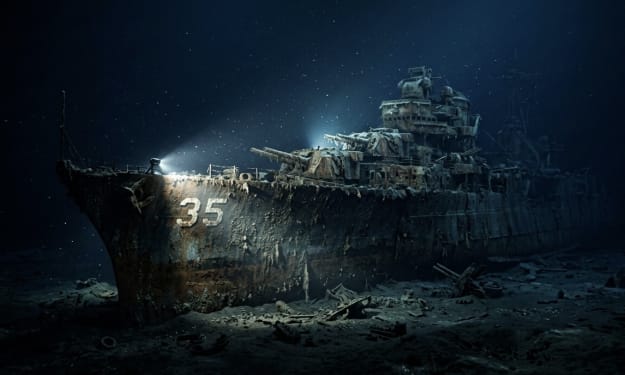
The Discovery of the USS Indianapolis
The story of the USS Indianapolis (CA-35) is a harrowing blend of high-stakes espionage, unimaginable physical endurance, and a decades-long maritime mystery. While the provided text captures the essence of this tragedy, expanding on the historical context, the psychological toll on the survivors, and the technical marvel of its discovery allows us to truly honor the "Ghost of the Pacific."
By Irshad Abbasi about 20 hours ago in History



Comments
There are no comments for this story
Be the first to respond and start the conversation.