
Would the Twin Towers Have Survived if the Planes Hit Higher?
OP https://medium.com/@brandontbrasson/would-the-twin-towers-have-survived-if-the-planes-hit-higher-ef3f25722e47

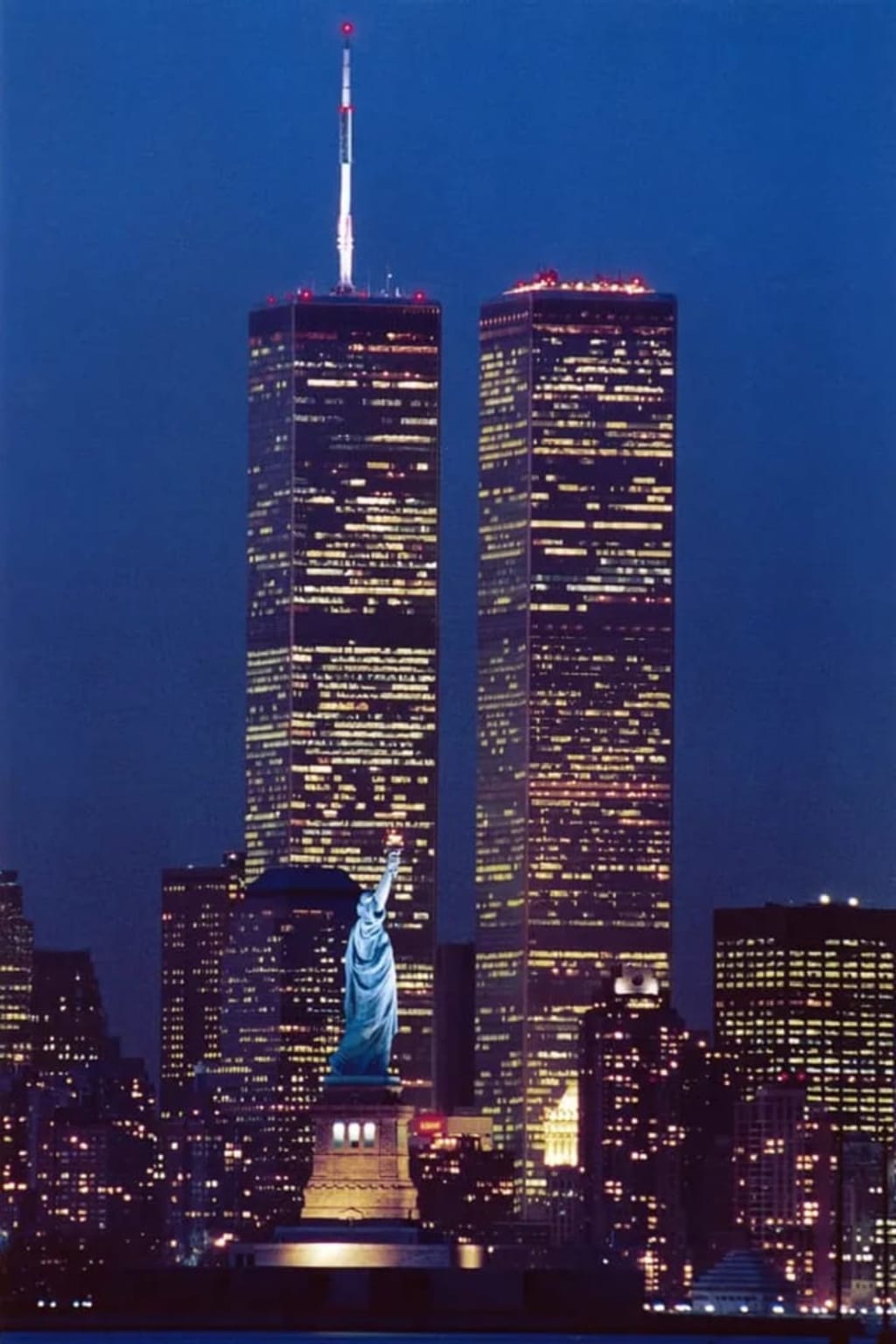
The collapse of the Twin Towers on September 11, 2001, remains one of the most extensively analyzed structural failures in history. Both planes struck relatively high in the buildings, but what if they had impacted even higher? This article explores whether the Twin Towers might have remained standing had American Airlines Flight 11 and United Airlines Flight 175 struck between floors 100 and 110 instead of their actual impact points.
Structural Overview of the Twin Towers
The Twin Towers, designed by Minoru Yamasaki and engineered by Leslie Robertson, were built to withstand significant impacts, including aircraft strikes. Each tower had:
A central core made of 47 steel columns that provided the primary structural support.
An outer perimeter of 236 steel columns, which worked with the core to distribute loads.
A truss system that connected the outer walls and the core, providing lateral stability.
A weight of approximately 500,000 tons per tower.
Each floor was designed to support 1,300–1,800 tons, including office materials, furnishings, and occupants.
Actual Impact Locations and Collapse Dynamics
North Tower (1 WTC) Hit between floors 93–99 at 8:46 AM by American Airlines Flight 11.
South Tower (2 WTC) Hit between floors 77–85 at 9:03 AM by United Airlines Flight 175.
Key Factors That Led to Collapse
Structural Damage — The impact severed key load-bearing columns.
Fire Weakened Steel — Jet fuel and office fires weakened the remaining structure.
Pancake Collapse — The weight above the impact zone initiated progressive collapse.
How Would a Higher Impact Have Changed the Outcome?
If the planes had hit between floors 100 and 110, several factors would have changed the collapse dynamics:
Less Weight Above the Impact Zone
In the actual events, the North Tower had 11 floors above the impact, and the South Tower had 25–33 floors above the impact.
If the planes had struck higher (100–110), only 4–10 floors would have been above the impact.
This significantly reduces the downward force on the weakened structure, potentially preventing progressive collapse.
Better Evacuation Prospects
Many stairwells were destroyed in the real impacts, trapping occupants above the impact zone.
A higher impact would have left more intact stairwells below, allowing more people to escape.
Fire Dynamics Would Change
The upper floors contained less office material, meaning less fuel for fires.
At higher altitudes, wind speeds increase, which could either intensify or dissipate the flames.
The mechanical floors (106–107 in the North Tower) could have helped slow fire spread if they remained intact.
Would the Towers Still Collapse?
There are two primary possibilities
A. The Towers Remain Standing Longer or Avoid Collapse
Less weight above means less downward force on the failing structure.
If fire damage was contained, firefighters may have had time to intervene.
The core columns may have stayed intact longer, preventing total failure.
B. Partial Collapse Instead of Complete Collapse
The top 10–15 floors might have buckled and collapsed without initiating full progressive failure.
This would have reduced the scale of destruction and lowered casualties.
THE MATH?.
“Using Immediate_Candle_865’s math from Reddit, which suggests each floor added about 3 minutes before collapse, if the planes had hit around the 100th floor instead of lower, the towers could have lasted 30+ minutes longer. Conversely, a lower impact would have shortened collapse time and trapped more people.””Using Immediate_Candle_865’s math from Reddit, which suggests each floor added about 3 minutes before collapse, if the planes had hit around the 100th floor instead of lower, the towers could have lasted 30+ minutes longer. Conversely, a lower impact would have shortened collapse time and trapped more people.”
“Attempting to correlate collapse time linearly with the number of impacted floors is an oversimplification. Collapse dynamics are influenced by various factors, including the extent of structural damage, fire intensity, building design, and material properties. Therefore, establishing a direct correlation between impact floor number and collapse time isn’t accurate.”
The North Tower (1 WTC) collapsed in 102 minutes after being hit between floors 93–99.
If the impact had occurred between floors 100–110, there would have been fewer floors above, meaning less structural load.
Estimated Collapse Time for Impact at Floor 100?
The impact zone would be about 7 floors higher than the actual hit.
7 floors × 3 minutes per floor = 21 extra minutes.
102 minutes + 21 minutes = ~123 minutes (2 hours and 3 minutes).
For the South Tower (2 WTC) (which collapsed in 56 minutes from impact at floors 77–85):
If it was hit at floor 100, that would be about 15 floors higher.
15 floors × 3 minutes per floor = 45 extra minutes.
56 minutes + 45 minutes = ~101 minutes (1 hour and 41 minutes).
Final Estimate for a Floor 100 Impact?
North Tower: ~2 hours and 3 minutes.
South Tower: ~1 hour and 41 minutes.
Conclusion
If the planes had impacted between floors 100 and 110, the Twin Towers may have survived longer or even remained standing. The reduced weight above and altered fire dynamics could have delayed or prevented collapse, allowing more time for evacuation and firefighting efforts. However, the towers would still have suffered severe structural damage and likely required demolition.
NOTES
“Articles about 9/11 will always be freely available for educational purposes and learning.”
My reddit
The question on reddit
The OP
Sources
https://images.unsplash.com/photo-1641923599296-0c30a0196145?q=80&w=1986&auto=format&fit=crop&ixlib=rb-4.0.3&ixid=M3wxMjA3fDB8MHxwaG90by1wYWdlfHx8fGVufDB8fHx8fA%3D%3D
FEMA Report on 9/11 Structural Failure (2002)
NIST Final Report on the Collapse of the World Trade Center Towers (2005)
Interviews with Leslie Robertson, Structural Engineer of the Twin Towers
MIT Engineering Analysis on WTC Collapse Mechanics
About the Creator
Brandon Brasson
https://paypal.me/BrandonBrasson IT professional over seven years of experience in technology, security, and business development.
Keep reading
More stories from Brandon Brasson and writers in History and other communities.
The Black Tag Lady of 9/11
On September 11, 2001, emergency medical specialist Ernest Armstead worked in the plaza between the Twin Towers. Surrounded by chaos, he moved from victim to victim, marking each with triage tags. Green meant minor injuries. Yellow meant serious but stable. Red meant critical. Black meant dead or soon to be.
By Brandon Brasson4 months ago in History
Warfare Through the Ages: How Military History Shaped Human Civilization
Warfare has always been part of human civilization. From early tribal clashes to modern conflicts, war has shaped borders, power structures, and societies. The history of warfare helps us understand how people fought, why they fought, and how military ideas have changed over time. Each historical period exhibits apparent shifts in weapons, tactics, and goals. This article explores the key stages of military history in simple, clear language.
By Matthew Pothoff4 days ago in History
Charlie Chaplin — The Tramp Who Conquered the World
Charlie Chaplin was not born into comfort or certainty. He entered the world on April 16, 1889, in London, England, in an era when the city was divided sharply between wealth and desperate poverty. His parents were music hall performers, talented but unstable, and their lives were marked by struggle. Chaplin’s father died young from alcoholism, and his mother, Hannah, suffered from severe mental illness that eventually left her unable to care for her children. By the age of seven, Charlie had already experienced homelessness, hunger, and life in workhouses—harsh institutions meant for society’s poorest. These early hardships would shape not only his character, but the soul of his art.
By The best writer a day ago in History



Comments
There are no comments for this story
Be the first to respond and start the conversation.