Analysis
Emily in Paris’ Season 5 cast announced with one major character missing from the lineup
Netflix’s hit romantic comedy Emily in Paris is officially returning for its highly anticipated fifth season, promising more chic fashion, romantic entanglements, career drama, and scenic European backdrops. However, the announcement of the Season 5 cast has stirred up both excitement and concern among fans. While many familiar faces will return, one beloved character will be noticeably absent from the new lineup: Camille, played by French actress Camille Razat.
By Mahmodul hassan mojahid10 months ago in History
Returning Without Questions
Returning Without Questions They came a little closer to me one odd evening, I recall. Despite its simplicity, the relationship had an odd depth. There was a kind of connection between them that spoke before words, the language of their eyes—even when they were silent in front of each other, they understood each other. However, despite being by each other's side, there are times in life when people move on. There came a time when the two of them moved far away from each other.
By Arshad Ali10 months ago in History
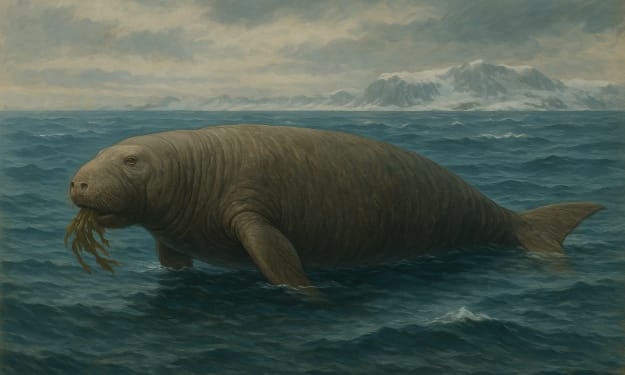
Giants of the Frozen Sea: The Tragic Tale of the Stellar Sea Cow. AI-Generated.
The Stellar sea cow, a massive marine herbivore discovered in the 18th century, is one of the most tragic examples of rapid extinction in recorded history. A close relative of the dugong and manatee, the Stellar sea cow was first documented by German naturalist Georg Wilhelm Steller in 1741 during the Great Northern Expedition led by Danish explorer Vitus Bering. Found in the icy waters surrounding the Commander Islands near the Bering Sea, the sea cow’s tale is a haunting reminder of how quickly human activity can impact fragile ecosystems.
By Say the truth 10 months ago in History
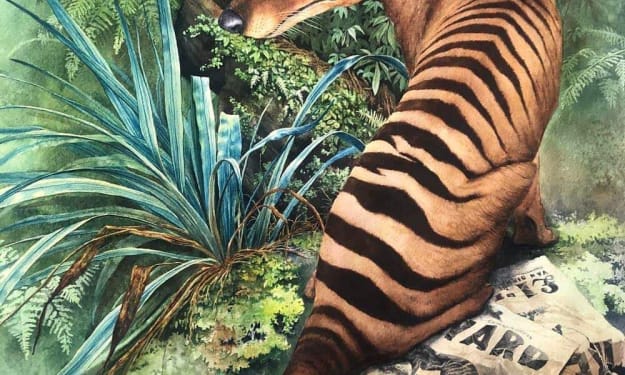
"The Tasmanian Tiger: Echoes of a Lost Predator". AI-Generated.
The Tasmanian Tiger: Echoes of a Lost Predator The narrative of the Tasmanian tiger, or thylacine (Thylacinus cynocephalus), is one of the most heartrending accounts in the records of extinction. Indigenous to Tasmania and once prevalent throughout mainland Australia and New Guinea, this carnivorous marsupial was the largest recognized member of its species. With its characteristic striped lower back, wolf-like cranium, and pouch reminiscent of a kangaroo’s, the thylacine was both a scientific wonder and a cultural symbol.
By Say the truth 10 months ago in History
Thoughts of Ordinary People in Bangladesh on Palestine and Gaza!
Introduction Israel's ongoing violence in Gaza, in particular, has deeply wounded the hearts of people around the world, including Bangladesh. Bangladesh is a Muslim-majority country with a proud history of fighting against injustice and oppression. Bangladesh has expressed strong solidarity with the Palestinians. But what do the people of Bangladesh think about the situation in Palestine and Gaza? Their views reflect a mix of religious empathy, and humanitarian concern.
By Md Ariful Islam10 months ago in History
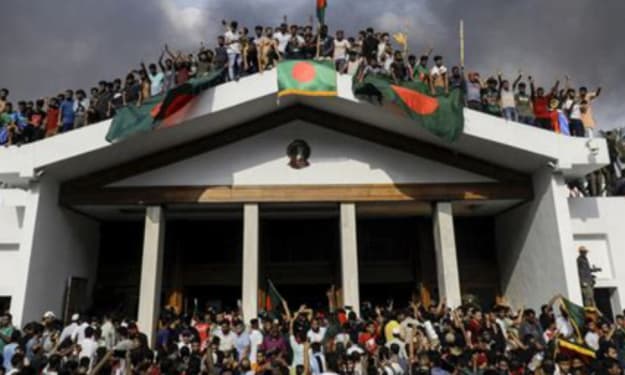
JULY REVOLUTION IN BANGLADESH (2024)
This article is about the combined timeline of the quota reform and anti-government movements. For the quota reform movement, see 2024 Bangladesh quota reform movement. For the anti-government phase, see Non-cooperation movement (2024). For other uses, see July Revolution (disambiguation).
By Md. Shihab10 months ago in History
The Platinum River: Legend, Wealth, and the Secrets of a Forgotten Stream. AI-Generated.
The Origins of the Platinum River Legend The legend of the Platinum River traces back to ancient Southeast Asian lore, particularly among tribal groups living along the current borders of Laos, Thailand, and Vietnam. Oral traditions speak of a sacred river, hidden deep in the jungle, whose bed was layered not with sand or stone—but with platinum nuggets, glimmering beneath crystal-clear waters.
By Say the truth 10 months ago in History
“The Forgotten Fortune: The Tale of Southeast“The Forgotten Fortune: The Tale of Southeast Asia’s Largest Treasure Discovery” . AI-Generated.
A Sea of Riches Beneath the Waves In 2004, an accidental discovery off the coast of Cirebon, Java, stunned historians and treasure hunters alike. A fisherman reported unusual objects emerging from the seafloor after a powerful current had shifted the sands. What followed was one of the largest and most valuable underwater excavations in Southeast Asian history: the discovery of a 10th-century shipwreck, later known as the Cirebon shipwreck.
By Say the truth 10 months ago in History
"Yamashita's Gold: The Elusive Treasure of Imperial Japan". AI-Generated.
Yamashita’s Gold: The Elusive Treasure of Imperial Japan In the shadowy world of wartime legends and hidden fortunes, few tales are as captivating or controversial as that of Yamashita’s Gold—an alleged treasure trove looted by the Japanese Imperial Army during World War II. Believed to contain billions of dollars' worth of gold, religious relics, and ancient artifacts, this treasure has inspired adventurers, fueled conspiracy theories, and stirred international intrigue for decades.
By Say the truth 10 months ago in History
"The Sacred Vessel: Unraveling the Mystery of the Container Said to Hold Jesus’ Blood"
The Sacred Vessel: Unveiling the Mystery of the Holy Grail – The Container Said to Hold the Blood of Jesus Summary: The legend of the Holy Grail, the sacred vessel believed to have held the blood of Jesus Christ, is one of the most enduring and enigmatic mysteries in history. Revered by Christians and pursued by knights, monarchs, and seekers for over two millennia, the story intertwines faith, myth, and archaeology. This article delves into the historical origins of the Grail, its significance in Christian theology and medieval lore, and explores various claims regarding its current location—whether in ancient cathedrals, secret vaults, or hidden across Europe. With a cultural and symbolic worth that far exceeds any monetary value, the Holy Grail continues to inspire awe and spiritual fascination.
By Say the truth 10 months ago in History
A FARMER. AI-Generated.
A farmer is one of the most important members of society because he or she provides food, raw materials for industry, and other uses, all of which are necessary for life to continue. Despite being essential to a nation's economy and survival, farmers frequently lead modest lives and face numerous risks. A farmer typically works in fields, growing crops or raising livestock, often depending on nature and the seasons to support their livelihood. Hard physical labor and constant attention to the land and animals make up their day, which typically begins early in the morning and ends late at night. They cultivate the land, sow seeds, water the crops, apply fertilizers and pesticides, and shield the fields from a variety of threats, including insects, animals, and shifting weather. The process is long and tedious, and even with all their efforts, the results are not guaranteed due to unpredictable factors like droughts, floods, storms, or crop diseases.
By Chayon Shikder10 months ago in History