
A FARMER
Agricultural work plays a very important role in human life.
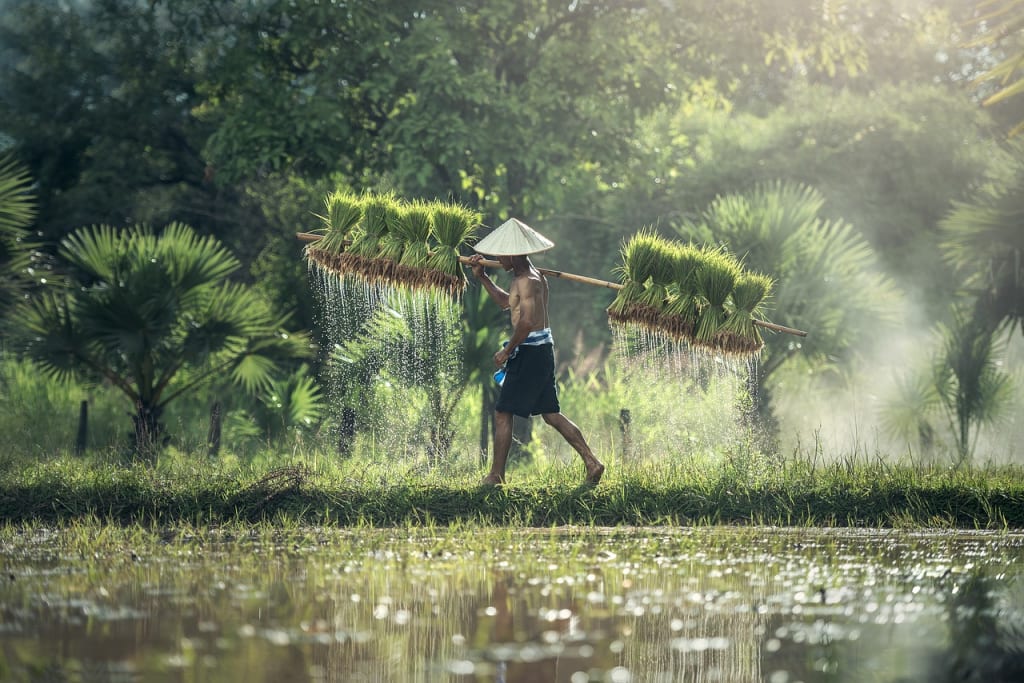
A farmer is one of the most important members of society because he or she provides food, raw materials for industry, and other uses, all of which are necessary for life to continue. Despite being essential to a nation's economy and survival, farmers frequently lead modest lives and face numerous risks. A farmer typically works in fields, growing crops or raising livestock, often depending on nature and the seasons to support their livelihood. Hard physical labor and constant attention to the land and animals make up their day, which typically begins early in the morning and ends late at night. They cultivate the land, sow seeds, water the crops, apply fertilizers and pesticides, and shield the fields from a variety of threats, including insects, animals, and shifting weather. The process is long and tedious, and even with all their efforts, the results are not guaranteed due to unpredictable factors like droughts, floods, storms, or crop diseases.
Farming is not only labor-intensive but also requires a deep understanding of the environment, crop cycles, and technological tools. With the advancement of science and technology, many farmers are now adopting modern farming techniques, including the use of machinery, drip irrigation, genetically improved seeds, and mobile apps for weather forecasts and market prices. However, it's possible that small and marginal farmers, particularly those in developing nations, won't have access to these new technologies, so they'll continue to use conventional approaches. These farmers often live in rural areas and have limited financial means, making them vulnerable to debts and exploitation by moneylenders or middlemen who buy their produce at unfair prices.
Subsidies, crop insurance, minimum support prices, and loan waivers are just a few of the ways the government tries to help farmers in many countries, but the assistance is sometimes insufficient or poorly implemented. As a result, many farmers struggle with poverty, lack of education, poor healthcare, and in some tragic cases, are driven to extreme decisions like abandoning their land or even committing suicide due to the pressure of unpaid debts. Despite these hardships, farmers remain resilient and dedicated to their work, driven by a strong connection to their land and a sense of responsibility toward feeding the nation.
The life of a farmer varies depending on the region, type of crops grown, and climate. In coastal areas, farmers may focus on rice, coconut, or spices, while those in temperate regions may grow wheat, corn, or apples. Livestock farmers raise animals such as cows, goats, poultry, or sheep for milk, meat, wool, and eggs. Some farmers also practice mixed farming, combining crop cultivation with animal husbandry to diversify income and reduce risk. In modern times, organic farming and sustainable agricultural practices have also gained popularity, encouraging farmers to grow food without harmful chemicals and maintain soil fertility for future generations.
A farmer’s role extends beyond just growing food. They contribute to the economy by supplying raw materials for industries such as textiles, dairy, and food processing. They also sell their products abroad, which helps them make a lot of money in foreign exchange. Culturally, farmers are often associated with values like honesty, simplicity, hard work, and closeness to nature. In many cultures, agricultural festivals are celebrated to honor farmers and thank nature for a good harvest, such as Pongal in South India, Baisakhi in Punjab, and Thanksgiving in the United States.
Despite their importance, farmers are not always given the respect and recognition they deserve. Unaware of the time, effort, and sacrifice required to produce the food on their plates, many people take the food on their plates for granted. Educating the younger generation about the value of agriculture and encouraging sustainable consumer habits can help bridge this gap. In order to improve farmers' conditions, governments and communities must also collaborate to invest in infrastructure, education, irrigation systems, storage facilities, and fair market access. Farmer cooperatives and self-help groups can also empower small-scale farmers by giving them a collective voice and better bargaining power.
Ultimately, a farmer is a nation's foundation. Their dedication, hard work, and perseverance ensure the availability of food and the smooth functioning of the economy. Yet, their lives are filled with challenges that require attention and support from all sections of society. Farmers must be empowered to use cutting-edge tools and methods to increase productivity and quality of life as science and technology advance, so they are not left behind. Honoring and helping our farmers is not just a matter of social responsibility—it is a necessity for the continued growth and sustainability of our world. A nation can truly prosper only when its farmers are happy, healthy, and supported in every possible way.
About the Creator
Keep reading
More stories from Chayon Shikder and writers in History and other communities.
AIR POLLUTION
Air pollution is one of the most serious environmental issues facing the world today. It refers to the presence of harmful substances in the atmosphere that pose a threat to human health, wildlife, and the natural environment. These pollutants can be in the form of gases, particles, or biological molecules. Human activities like transportation, agricultural practices, industrial processes, and the burning of fossil fuels like coal, oil, and natural gas are the main causes of air pollution. In addition to these anthropogenic sources, natural events like volcanic eruptions, wildfires, and dust storms can also contribute to air pollution, though they tend to be less frequent and more localized.
By Chayon Shikder10 months ago in Humans
How the Pyramids Changed the World’s Understanding of Engineering
Few structures in human history have inspired as much wonder, debate, and admiration as the pyramids of ancient Egypt. Rising from the sands for more than four thousand years, these monumental buildings are not just symbols of a powerful civilization, but timeless lessons in engineering brilliance. Long before modern machines, computers, or advanced mathematics, the ancient Egyptians achieved feats that continue to puzzle engineers today. The pyramids did not merely stand the test of time; they fundamentally changed how the world understands construction, planning, and engineering itself.
By Binan Mooon2 days ago in History
Can World War III Be Prevented?
Can World War III Be Prevented? The idea of World War III is no longer limited to history books or fictional movies. Rising global tensions, regional wars, arms buildups, and political rivalries have made many people wonder whether another world war is possible—and more importantly, whether it can still be prevented. While the risks are real, global conflict is not inevitable. Prevention depends on choices made by leaders, institutions, and societies today.
By Wings of Time 6 days ago in History



Comments
There are no comments for this story
Be the first to respond and start the conversation.