Analysis
What hapening between Pelestain and Isreal.. Content Warning. AI-Generated.
Conflicts involving historical grievances, competing claims to land, and a series of wars and uprisings are just a few of the many facets that make up the conflict that exists between Israel and Palestine. In order to comprehend this complicated circumstance, one must investigate its beginnings and follow its development over time. The rise of Zionism, a movement for the establishment of a Jewish homeland in Palestine, the historical and ancestral homeland of the Jewish people, occurred in the late 19th and early 20th centuries. Arab nationalism developed simultaneously within the Ottoman Empire, which at the time ruled Palestine. Tensions with the Palestinian Arab population began to rise as Jewish immigration to Palestine increased. Under a mandate from the League of Nations, Britain took control of Palestine following World War I and the fall of the Ottoman Empire. Arab hostility and conflict escalated as a result of Britain's support for "the establishment in Palestine of a national home for the Jewish people" in the Balfour Declaration of 1917. During the British Mandate, the conflict between Jews and Arabs escalated. In 1937, the Peel Commission made the idea of dividing Palestine into separate Arab and Jewish states, which Arab leaders rejected. The demand for a Jewish state increased as World War II loomed and the plight of European Jews became increasingly dire. Resolution 181, which called for the division of Palestine into an Arab state and a Jewish state with international control over Jerusalem, was approved by the United Nations General Assembly in 1947. The plan was accepted by Jewish leaders, but Arab leaders rejected it, which led to the Arab-Israeli War in 1948. The Nakba (catastrophe) occurred when hundreds of thousands of Palestinians were forced to flee their homes after Israel won the war in 1948. On a significant portion of the former mandate territory, the war also resulted in the establishment of the State of Israel. The Six-Day War of 1967, which saw Israel occupy the West Bank, Gaza Strip, East Jerusalem, and the Golan Heights, was one of many subsequent conflicts. The establishment of Israeli settlements and the ongoing occupation of these areas have remained significant points of contention. A complex web of political, social, and economic factors characterizes the Israeli-Palestinian conflict. The conflict has been centered on issues like the status of Jerusalem, the right of Palestinian refugees to return home, security concerns, and the creation of a viable Palestinian state. Over the years, a lot of peace talks have been tried, but nothing has worked out that will last. Both Israelis and Palestinians have experienced cycles of violence, displacement, and a profound sense of injustice as a result of the conflict, which has had a significant impact on their lives. This long and complicated history continues in the current situation in Israel and Palestine. The ongoing humanitarian crisis in Gaza and the recent escalation of violence highlight the pressing requirement for a peaceful and just resolution that addresses the legitimate aspirations and security concerns of both peoples. It is essential to comprehend the historical context in order to comprehend the current difficulties and work toward a future of peace and coexistence in the region.
By Tafsirul Talukdar luvdo9 months ago in History
Mohenjo-Daro: The Lost City and Its Unsolved Mystery
Thousands of years ago, when most of the world was still in the darkness of prehistory, a spectacular city thrived on the banks of the Indus River. Its name? Mohenjo-Daro—literally meaning "Mound of the Dead." This ancient city, lost in time, continues to baffle historians, archaeologists, and conspiracy theorists alike. Its rise was glorious, but its fall remains one of the greatest unsolved mysteries of human civilization.
By Saiful Islam Sohan9 months ago in History
Trends and Issues in Nursing
The advancements in healthcare, societal shifts, and challenges facing the world all have an impact on the profession of nursing, which is dynamic and constantly changing. The following are some important current nursing issues and trends: 1. Problems with the Workforce and Nursing Shortage There is a worldwide shortage of nurses as a result of retirements, burnout, and a lack of new graduates. Patient-to-nurse ratios that are too high cause stress and lower the quality of care. Better working conditions, incentives for retention, and increased funding for nursing education are the solutions. 2. Problems with mental health and burnout After the pandemic, many nurses experience compassion fatigue, post-traumatic stress disorder, and emotional exhaustion. Stress in the workplace as a result of long shifts, a lack of staff, and high patient acuity. Support for mental health, training in resilience, and improved policies regarding work-life balance are the solutions. 3. Nursing Technological Developments Predictive analytics for patient care and chatbots for triage are examples of AI and machine learning. Telehealth expansion includes virtual nursing and remote patient monitoring. Electronic health records, or EHRs, can simplify documentation, but they can also lead to "click fatigue." 4. Nursing's DEI (diversity, equity, and inclusion) Diversity in leadership roles is lacking. Training in cultural competency to enhance diverse population patient care. addressing minority nurses' discrimination. 5. Range of Practice and Nurse Independence Advocacy for NPs to practice independently in some states (in the United States) known as Full Practice Authority (FPA). Restrictions imposed by regulations and opposition from physician groups are barriers. 6. Management of Chronic Diseases and an Aging Population There are more elderly patients who require specialized care. An increase in chronic diseases requiring long-term nursing interventions (such as diabetes and heart disease). 7. Nursing Education & Faculty Shortage There aren't enough nurses teaching the program, so there aren't many seats. Move toward simulation training and education that is based on competencies. 8. Safety and Violence in the Workplace Patients and visitors are increasingly attacking nurses. Training in security and de-escalation needs to be improved. 9. International Nursing and Globalization Migration of nurses from developing to developed nations, causing brain drain need for uniform licensing (such as the NCLEX for international nurses). 10. Nursing and Public Health and Climate Change The role of nurses in responding to disasters (natural disasters, pandemics). promoting methods of healthcare that are long-lasting.
By Nurul Huda 9 months ago in History
The Boy Who Carried a Dream
In a quiet village nestled between the green hills of Bangladesh, lived a boy named Imran. He was only twelve years old, but his eyes sparkled with a maturity far beyond his age. He lived with his mother in a small, tin-roofed house. His father had died when Imran was just three, and since then, his mother had worked at a local rice mill to support them.Imran loved books. But not just any books—he loved science books, books about stars, planets, machines, and inventions. While other boys played football in the fields after school, Imran would sit under the old banyan tree with his nose buried in pages filled with wonder.His dream was simple: he wanted to be an engineer. Not just any engineer—but one who would create machines that could help farmers, like his neighbors, work more easily.But dreams, as Imran would learn, are expensive.His school was several kilometers away, and he walked barefoot every day to attend. The books he read were all borrowed—sometimes from school, sometimes from an old teacher who had taken a liking to the curious boy. His mother barely made enough to feed them, let alone buy extra books or materials.One night, as rain poured down from the heavens and thunder shook their little house, Imran studied by the light of a kerosene lamp. The wind blew in through the cracks in the wall, but he didn’t stop. His mother watched him quietly, a mix of pride and worry in her eyes.“You should sleep,” she said softly.“I will, Ma. Just one more chapter,” he replied, eyes still fixed on the page.Days turned into months. Imran won the district science fair with a handmade model of a solar-powered irrigation system. The local newspaper featured his photo. For the first time, people in the village began to believe—this boy might go far.But life had its tests.One day, his mother collapsed at work. The doctor said she needed surgery and months of rest. Imran was devastated. The hospital bills were beyond anything they could He stood outside the hospital, staring at the sky, tears streaming down his face. He could feel his dream slipping away.The next morning, he went to the market. He took up a job cleaning dishes at a roadside tea stall. Before school, after school, sometimes instead of school. He did whatever he could to pay for his mother’s medicine.But he never stopped reading. He carried a small notebook in his pocket where he wrote ideas, drew machines, and jotted questions he hoped to find answers to one day.One evening, as he cleaned the stall, a well-dressed man watched him curiously. The man noticed Imran scribbling in his notebook during breaks.“What are you writing, boy?” he asked.Imran hesitated but then showed him. The man flipped through the pages—diagrams, notes, even simple engineering designs. He was surprised.“Where did you learn all this?”“Books… school… I just try to learn on my own,” Imran said shyly.The man smiled. “I’m Professor Rahman. I teach at Dhaka University. Would you show me more tomorrow?”That meeting changed everything.Professor Rahman visited Imran’s house the next week. He spoke to the principal of his school and arranged a scholarship. He ensured his mother received proper medical treatment. He even brought books—so many that Imran’s little shelf overflowed.Years passed. Imran went on to study engineering at Dhaka University. He topped his class. His ideas began to attract attention. His final year project—an affordable, solar-powered water pump for rural farmers—won an international award.News spread back to the village. People gathered around the old banyan tree, reading about the boy who once walked barefoot to school and now stood on world stages speaking about innovation.Imran didn’t forget his roots.He returned to his village, not as a visitor, but as a builder. He opened a small research center to train young students. He worked with local farmers to introduce simple technologies that saved them time and effort.One day, while walking through the fields, a young boy came running to him.“Sir, I want to be like you,” the boy said.Imran smiled, handing him a small notebook.“Then start by writing your dreams here,” he said.That night, under the same banyan tree, the village children gathered around as Imran spoke—not just about machines or technology, but about belief, sacrifice, and the strength of never giving up.Because dreams, he now knew, could grow even in the hardest soil—if only someone cared to water them. afford.
By Sumaiya’s Wordbox9 months ago in History
Lalbagh Fort
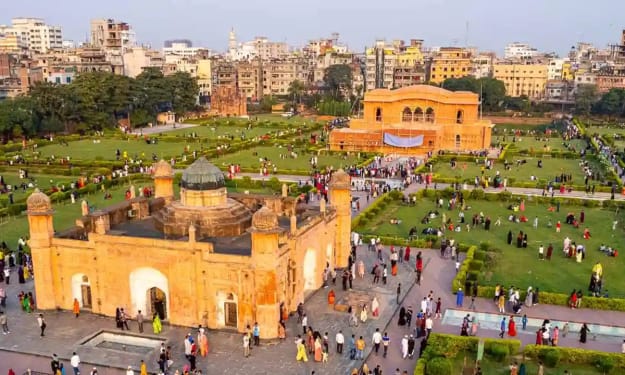
Lalbagh Fort or Fort Aurangabad, an incomplete Mughal palace fortress at Dhaka on the river Buriganga in the southwestern part of the old city. The river now flows quite a ways from the fort because it has moved further south. D'Oily's painting (1809-11) shows that more than half of this east-west oblong fortress touched the water of the river on its south and southwestern sides.
By Md. Mohorom Ali9 months ago in History
Geographical Location of Bangladesh and Its Importance in Industrial Development: An Analysis
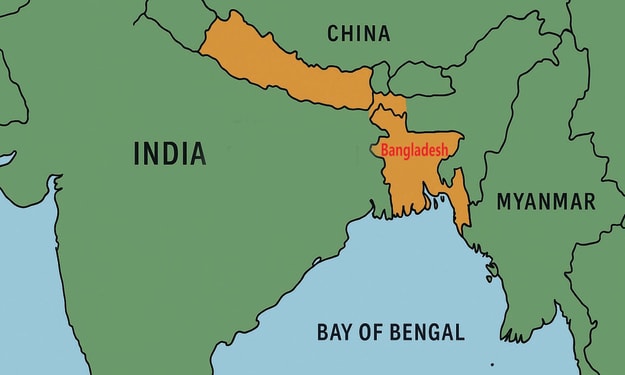
Bangladeshs geographical position in the world: A strategic power in terms of industry and economy. Bangladesh is a small but important country in South Asia whose geographical position carries a unique importance in the eyes of the world economy. Surrounded by India Myanmar Nepal China and the Bay of Bengal this country is considered a junction of South and Southeast Asia not only geographically but also economically and strategically.
By Md.Moniruzzaman9 months ago in History
Bangladesh
The History and Culture of Bangladesh: A Tapestry of Resilience and Rich Tradition Bangladesh, a country located in South Asia, boasts a rich and diverse history along with a vibrant cultural heritage. Nestled on the northern coast of the Bay of Bengal and bordered by India and Myanmar, Bangladesh has long been a crossroads of civilizations, religions, and trade. The history and culture of this land reflect centuries of change, struggle, creativity, and resilience.
By Nabir Mondol9 months ago in History
Synology tightens restrictions devices
Synology that the company is preparing to implement new restrictions on third-party hard drives in its upcoming network-attached storage (NAS) devices later this year. As a result of the changes, it might be much more difficult to use third-party drives in Synology devices for common applications like backing up computers at home or serving as local media servers. The good news is that the change won't affect you if you already own a Synology NAS, according to the company. "Starting with Plus Series models released in 2025, Synology brand and that the company has certified to meet its specifications.
By Md. Mohorom Ali9 months ago in History
The Mysteries of the Bermuda Triangle: Fact, Fiction, and Fascination. AI-Generated.
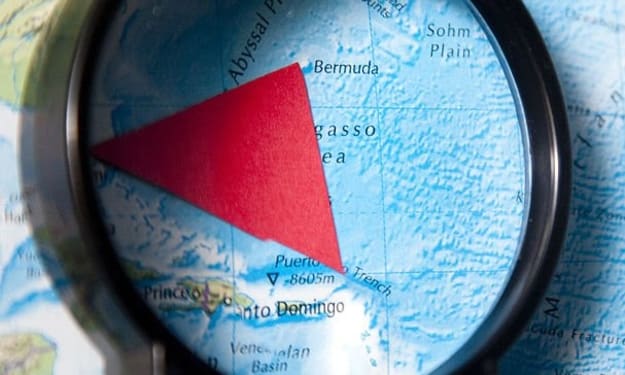
The Bermuda Triangle, also referred to as the Devil's Triangle, is one of the most fascinating and enigmatic places on Earth. Spanning a loosely defined area in the Atlantic Ocean between Bermuda, Florida, and Puerto Rico, it has captivated the imagination of adventurers, scientists, and conspiracy theorists alike. Stories of mysterious disappearances, strange phenomena, and legends have built an aura of intrigue around this triangular stretch of ocean. While the Bermuda Triangle's reputation is partially based on myths, it continues to inspire curiosity and debate.
By Noob Hacker9 months ago in History