
state of democracy in africa
changing leaders doesn't change politics

For the last few years the African political landscape has been dominated by high profile changes of leaders and governments. In Angola (2017), Ethiopia (2018), South Africa (2018), Sudan (2019) and Zimbabwe (2018), leadership change promised to bring about not only a new man at the top, but also a new political and economic direction.But do changes of leaders and governments generate more democratic and responsive governments?
The significance of leadership change in all of these processes is an important reminder of the extent to which power has been personalised. But it is important to note that events since the end of the period under review in 2019 have cast doubt on the significance of these transitions.
Most notably, continued and in some cases increasing human rights abuses in countries such as Ethiopia, Nigeria, Tanzania and Zimbabwe suggest that we have seen “a changing of the guards” but not a change of political systems.
Nowhere is this more true than Zimbabwe, where the last few weeks have witnessed a brutal government crackdown. Not only have journalists been arrested on flimsy charges, but the rule of law has been manipulated to keep them in jail. Following this sustained attack on democracy, it is now clear that the Mnangagwa government is no more committed to human rights and civil liberties than its predecessor was.
There is no one ‘Africa’
So what does the future hold? I often get asked what direction Africa is heading in. My answer is always the same: where democracy is concerned, there is no one “Africa”. The Bertelsmann Transformation Index report shows how true this is.
In addition to the well-known differences between leading lights like Botswana and entrenched laggards like Rwanda, there is also a profound regional variation that is less well recognised and understood.
From relatively similar starting points in the early 1990s, there has been a sharp divergence between West and Southern Africa – which have remained comparatively more open and democratic – and Central and Eastern Africa, which remained more closed and authoritarian. There is also some evidence that the average quality of democracy continued to decline in Eastern and Central Africa in the past few years. Because it continues to increase in West Africa, we have seen greater divergence between the two sets of regions.
These variations reflect the historical process through which governments came to power, the kinds of states over which they govern, and the disposition and influence of regional organisations. In particular, East Africa features a number of countries ruled by former rebel armies (Burundi, Eritrea, Ethiopia, Rwanda, Uganda). Here political control is underpinned by coercion and a longstanding suspicion of opposition.
This is also a challenge in some Central African states. Here the added complication of long-running conflicts and political instability (Central African Republic, Chad, Democratic Republic of Congo) has undermined government performance in many ways.
A number of former military leaders have also governed West African states, including Ghana, Nigeria and Togo. But the proportion has been lower and some countries, such as Senegal, have a long tradition of plural politics and civilian leadership. In a similar vein, southern Africa features a number of liberation movements. But in a number of cases these developed out of broad-based movements that valued political participation and civil liberties. Partly as a result, former military or rebel leaders have had a less damaging impact on the prospects for democracy in Southern and West Africa.
It is important not to exaggerate these regional differences. There is great variation within them as well as between them. But, this caveat notwithstanding, we should not expect to see any convergence around a common African democratic experience in the next few years. If anything, the gap between the continent’s most democratic and authoritarian regions is likely to become even wider.
About the Creator
Keep reading
More stories from writers in History and other communities.
Gold-Guarding Griffins
Imagine standing at the foot of a vast mountain range, the air thin and cold, the peaks disappearing into cloud. Somewhere up there, according to the people who told this story for generations, something extraordinary waited. Not just gold.
By CurlsAndCommas2 days ago in History
Early March 2026: 4 Goals Accomplished
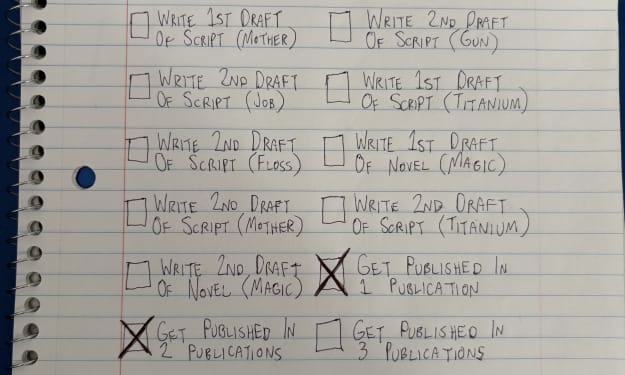
It's early March and I've now accomplished my 4th writing goal for the year of 2026. Before diving into the behind-the-scenes of it... why not tell you up front what that accomplishment was? I was published in a 2nd publication for this year. Published in Helix Literary Magazine out of Central Connecticut State University. You can read it for free right now!
By Stephen Kramer Avitabile7 days ago in Writers



Comments
There are no comments for this story
Be the first to respond and start the conversation.