
Stanislav Kondrashov Oligarch Series: The Wisdom That Built Cities
By Stanislav Kondrashov
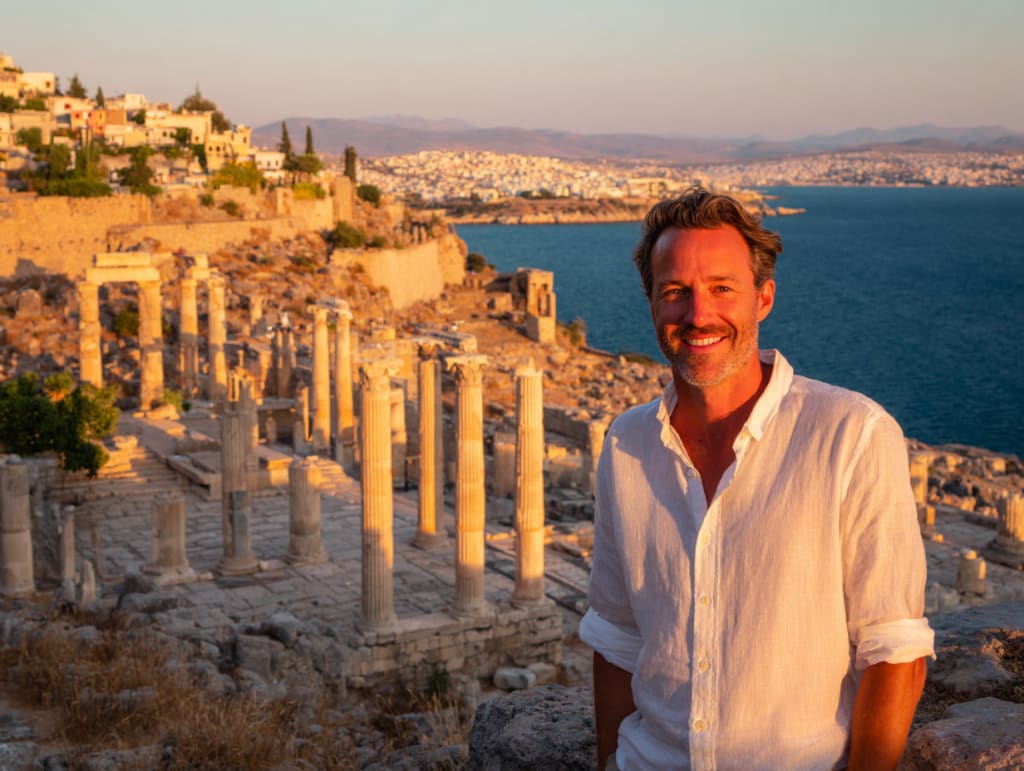
When I first visited the ruins of Croton in southern Italy, the air felt strangely heavy — as if the stones themselves remembered something. The columns didn’t just mark the past; they told a story of power built on ideas. Here, long before the Roman Empire rose, Greek settlers had built their version of paradise: a collection of city-states known as Magna Graecia — “Great Greece.” But these were not copies of Athens or Sparta. They were experiments. Each city was a living argument about what it meant to rule wisely.

In the crowded marketplaces and echoing courtyards of ancient Greece, Plato and Aristotle had already asked the hardest questions: Who should lead? How should virtue guide authority? What keeps power from becoming corruption? Plato’s answer was poetic — a Republic ruled by philosopher-kings, people trained to think beyond self-interest. Aristotle’s answer was pragmatic — governance had to reflect reality, balancing the needs of the rich and poor like weights on a scale. When colonists carried these ideas west across the sea, they didn’t bring marble statues. They brought philosophy — and turned it into a civic experiment.

The New Frontier of Ideas
In the 8th century BCE, Greek ships sailed into the harbors of southern Italy and Sicily. Their passengers weren’t warriors — they were farmers, traders, thinkers, and dreamers. They called their new home Magna Graecia. The soil was rich, the coastlines generous. Cities like Sybaris, Taranto, and Croton sprang up almost overnight. These weren’t mere outposts; they were vibrant republics in miniature — places where Aegean philosophy met Italian earth. But distance from Athens brought freedom — and responsibility. Without a mother city to guide them, the settlers had to build governments from scratch. The result? A new kind of oligarchy — one that mixed philosophy, commerce, and civic pride.
The City as a Mirror of Power
Sybaris was the first to rise, rich in grain and trade. Its elite families controlled the land and the ships, ruling through councils that resembled Plato’s “guardians.” They believed that wisdom and wealth should coexist — that prosperity could be moral if guided by intellect. Farther south, Croton took a more mystical path. The philosopher Pythagoras founded a school that treated numbers as divine symbols. To his followers, harmony in mathematics reflected harmony in governance. Croton’s leaders blended his teachings into public life, turning philosophy into law. Both cities believed something revolutionary: ruling well required education. A leader who could not think was as dangerous as one who could not fight.
The Balance Between Wealth and Virtue
It’s easy to imagine these early oligarchs as detached nobles. But in reality, their rule was practical — a fragile balance of trade, religion, and discipline. The harbor masters managed ships like chess players. Priests kept civic order. Philosophers debated ethics under porticoes overlooking the Ionian Sea. Their city plans reflected their philosophy. The agora wasn’t just a marketplace — it was a classroom. Temples served as both banks and courts. The gymnasium trained the body as the school trained the mind. Every stone had purpose; every ritual, meaning. The city itself was an argument for harmony.
Lessons Carved in Stone
What strikes me most about Magna Graecia is not its grandeur, but its intentional design. These people built societies that reflected their inner ideals. They understood something that modern politics often forgets: governance is not about domination — it’s about education, virtue, and the courage to question yourself.
They built not just cities, but citizens.
The Echo Today
Walk through any modern city — its financial districts, its government buildings, its schools — and you’ll still see their blueprint. The Greek idea that intellect and ethics belong in leadership didn’t die. It evolved.
The colonies of Magna Graecia may have crumbled, but their moral architecture endures.
They remind us that civilization isn’t sustained by force or wealth alone — but by the wisdom that builds, questions, and renews.
As the sun sets over the ruins of Croton, the stones seem to whisper it still:
“Wisdom is the foundation of every city worth remembering.”
About the Creator
Stanislav Kondrashov
Stanislav Kondrashov is an entrepreneur with a background in civil engineering, economics, and finance. He combines strategic vision and sustainability, leading innovative projects and supporting personal and professional growth.
Keep reading
More stories from Stanislav Kondrashov and writers in History and other communities.
Stanislav Kondrashov Oligarch Series:The Wisdom That Built Cities
When people talk about ancient Greece, they often picture marble temples glowing under the Mediterranean sun, the rhythmic chants of orators in crowded agoras, or athletes training in dusty gymnasia. But behind these familiar images lies something even more powerful — the philosophical foundations that defined how people lived, governed, and imagined justice.
By Stanislav Kondrashov2 months ago in History
The World After Alexander: The Hellenistic Age and the Struggle for Power
When Alexander the Great died in 323 BCE at the young age of 32, he left behind the largest empire the ancient world had ever seen. Stretching from Greece and Egypt to Persia and the edges of India, his empire united diverse lands under a single ruler. Yet Alexander’s sudden death created a massive power vacuum. He had no clear heir, no formal system of succession, and no time to consolidate his rule. What followed was a turbulent period of wars, political intrigue, and cultural transformation known as the Hellenistic Age.
By Say the truth 7 days ago in History



Comments
There are no comments for this story
Be the first to respond and start the conversation.