
The Fountain of Youth: Myth, History, and the Eternal Human Dream
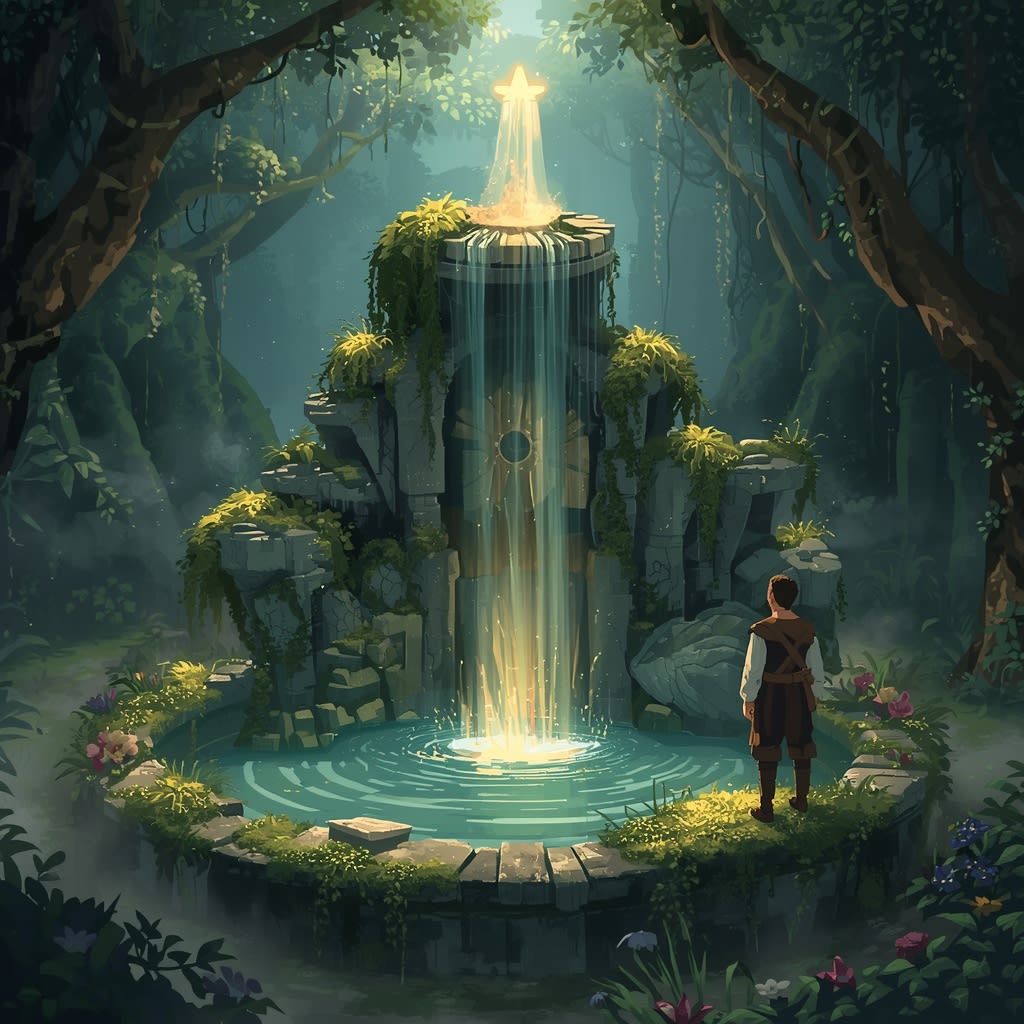
The Fountain of Youth is one of the most enduring legends in human history. For centuries, people across cultures have believed in a magical source of water capable of restoring youth, health, and immortality. Kings, explorers, alchemists, and ordinary people alike have been fascinated by the idea that aging could be reversed by a simple drink or bath. Though no physical fountain has ever been proven to exist, the story of the Fountain of Youth reveals much about human hopes, fears, and the desire to conquer time.

Origins of the Legend
The concept of a life-restoring spring is far older than modern history. Ancient civilizations believed that water held divine and healing powers.
In ancient Mesopotamian mythology, the Epic of Gilgamesh describes a plant that could restore youth, showing that the fear of aging existed thousands of years ago.
Ancient Greek myths spoke of rivers and sacred springs that granted immortality to gods.
In Indian traditions, the concept of Amrita, the nectar of immortality, appears in Hindu mythology.
Chinese legends mention elixirs of life sought by emperors to escape death.
These early stories laid the foundation for what later became known in the West as the Fountain of Youth.
Medieval and Islamic Influences
During the medieval period, legends of miraculous waters spread widely through Europe, the Middle East, and Africa. Islamic scholars and travelers wrote about distant lands containing healing springs. Some medieval texts described a spring discovered by Al-Khidr, a mystical figure associated with eternal life in Islamic tradition.
European alchemists during the Middle Ages also pursued the idea symbolically. For them, the Fountain of Youth represented the Philosopher’s Stone, an object believed to grant eternal life and turn base metals into gold. Though these pursuits were unsuccessful, they contributed to the development of early chemistry and medicine.
The Age of Exploration and Ponce de León
The Fountain of Youth gained worldwide fame during the Age of Exploration in the 15th and 16th centuries. The most famous story is associated with Juan Ponce de León, a Spanish explorer.
According to legend, Ponce de León searched for the Fountain of Youth while exploring the Caribbean and Florida around 1513. It was believed that somewhere in the New World, there existed a spring that could restore youth to anyone who drank from it.
While historical evidence suggests that Ponce de León was more interested in land and wealth than mythical waters, later writers popularized the idea that he was searching for the Fountain of Youth. This connection permanently linked the legend to Florida, where today a tourist site called the Fountain of Youth Archaeological Park exists.
Symbolism and Cultural Meaning
The Fountain of Youth is more than just a physical place—it is a symbol. It represents humanity’s desire to:
Escape aging
Avoid illness
Delay death
Preserve beauty and strength
Aging reminds humans of their mortality, and the Fountain of Youth reflects the universal fear of losing vitality. Artists, poets, and writers have used this symbol to explore themes of time, vanity, and the consequences of eternal life.
In some stories, immortality is shown as a curse rather than a blessing, suggesting that endless youth may come at a heavy cost.
Scientific Interpretations and Modern Parallels
In modern times, science has replaced myth as humanity’s tool to fight aging. Researchers study:
Stem cells
Telomeres and DNA aging
Anti-aging medicine
Regenerative therapies
Gene editing
While no scientific discovery can truly reverse aging completely, modern medicine has extended human lifespan significantly. Clean water, vaccines, nutrition, and medical technology have achieved what ancient people imagined through magic.
Some scientists refer to modern anti-aging research as a “scientific Fountain of Youth”, though they emphasize healthspan (quality of life) rather than immortality.
The Fountain of Youth in Literature and Popular Culture
The legend has appeared in countless works of art and entertainment:
Novels and poems during the Renaissance
Fantasy stories involving magical springs
Movies and TV shows depicting eternal youth
Modern video games and comics
One famous depiction appears in Oscar Wilde’s The Picture of Dorian Gray, where youth is preserved at the cost of morality. Such stories often warn that the pursuit of eternal youth can lead to loss of humanity.
Psychological Perspective
From a psychological point of view, belief in the Fountain of Youth reflects:
Fear of death
Desire for control over life
Hope for renewal and second chances
People associate youth with opportunity, beauty, and freedom. The legend comforts people by suggesting that aging is not final and that renewal is possible.
Does the Fountain of Youth Exist?
Scientifically and historically, there is no evidence that the Fountain of Youth exists as a real place. However, its idea exists everywhere—in medicine, wellness culture, cosmetics, fitness industries, and health trends.
In this sense, the Fountain of Youth is not a physical spring but a human aspiration that evolves with time.
Conclusion
The Fountain of Youth is one of humanity’s most powerful myths. From ancient legends to modern science, it represents the timeless struggle against aging and death. Though no magical waters have ever been found, the story continues to inspire exploration, creativity, and scientific progress.
Ultimately, the Fountain of Youth teaches us not only about the desire to remain young, but also about the importance of living meaningfully at every stage of life. While eternal youth may remain a myth, the quest for health, vitality, and wisdom is very real—and it continues to shape human history.
About the Creator
Say the truth
"Say the Truth: Explain Everything in the World" is your trusted source for uncovering facts and exploring the wonders of history, science, technology, and beyond. We simplify complex ideas and reveal truths to inspire curiosity .
Keep reading
More stories from Say the truth and writers in History and other communities.
Genghis Khan: The Complete History of the Greatest Conqueror in Human History
Early Life and Struggles Temujin was born into the Borjigin clan in present-day Mongolia. His father, Yesugei, was a minor tribal leader who was poisoned by rival Tatars when Temujin was still young. After his father’s death, Temujin’s family was abandoned by their tribe, leaving them to survive alone in harsh conditions.
By Say the truth 4 days ago in History
Marsala
Marsala is a name that resonates with more than one meaning. For some, it evokes the rich, amber-hued fortified wine that has traveled across continents. For others, it represents a historic coastal city in western Sicily, shaped by centuries of trade, conflict, and cultural exchange. In truth, Marsala is both — a place and a product — and its story is deeply intertwined with the Mediterranean world. Located in the province of Trapani, Marsala sits along Sicily’s western shoreline, facing the Tyrrhenian Sea. Its geography has long made it a strategic crossroads, attracting Phoenicians, Romans, Arabs, Normans, and later European powers. Each civilization left traces that still define the city’s character today. Ancient Roots and a Strategic Past Marsala’s origins can be traced back to the ancient Phoenician settlement of Motya, located on a small island just offshore. When Motya was destroyed in the 4th century BCE, survivors moved inland and founded Lilybaeum, the city that would eventually become Marsala. Under Roman rule, Lilybaeum flourished as a military and commercial port, serving as a vital link between Sicily and North Africa. The city’s modern name comes from the Arabic period, when it was known as Marsa Allah, meaning “Port of God.” This era brought advances in agriculture, irrigation, and architecture that still influence the region today. Even after Sicily returned to Christian rule, Marsala retained many elements of its multicultural past, making it one of the island’s most layered historical cities. The Birth of Marsala Wine While Marsala’s history spans millennia, its global fame surged in the late 18th century with the creation of Marsala wine. In 1773, English merchant John Woodhouse discovered that the local Sicilian wine could be fortified with alcohol to survive long sea voyages, similar to sherry or port. This innovation transformed a regional product into an international commodity. Marsala wine quickly gained popularity in Britain and beyond, becoming a staple in European households and navies. Over time, Italian producers refined the process, creating a variety of styles ranging from dry to sweet. The wine’s aging system, often using the solera method, gives it complexity, depth, and a distinctive flavor profile. Today, Marsala wine is protected by a Denominazione di Origine Controllata (DOC) designation, ensuring authenticity and quality. Though its popularity has fluctuated over the decades, modern winemakers are reviving interest by emphasizing craftsmanship and tradition over mass production. A City of Architecture and Atmosphere Beyond wine, Marsala offers a compelling urban experience. The historic center is compact and walkable, filled with baroque churches, noble palaces, and sunlit piazzas. Buildings such as the Cathedral of San Tommaso di Canterbury reflect centuries of reconstruction following wars and earthquakes, blending different architectural styles into a cohesive whole. Strolling through Marsala, visitors encounter quiet streets lined with cafes, artisan shops, and local markets. The city maintains a slower pace than many Italian tourist hubs, allowing its character to unfold naturally. This sense of authenticity is one of Marsala’s greatest strengths. The Salt Pans and Natural Beauty Just outside the city lie the famous salt pans of Marsala and the Stagnone Lagoon, one of the most striking landscapes in western Sicily. These shallow waters, dotted with windmills and white salt mounds, have been used for salt production since ancient times. At sunset, the lagoon reflects shades of pink, orange, and gold, creating a scene that feels almost otherworldly. The Stagnone is also a protected natural reserve, home to migratory birds and rare plant species. Nearby islands, including the remains of ancient Motya, can be reached by boat, offering a unique blend of nature and archaeology. Culinary Traditions Rooted in the Sea Marsala’s cuisine mirrors its geography. Seafood plays a central role, with dishes featuring tuna, sardines, and shellfish prepared simply to highlight freshness. Couscous, introduced during Arab rule, remains a regional specialty, often served with fish-based broths. Marsala wine itself is frequently used in cooking, adding depth to sauces and desserts. Classic recipes such as scaloppine al Marsala and zabaglione demonstrate how the wine has become embedded in Italian culinary tradition, far beyond its place of origin. Modern Marsala: Tradition Meets Renewal Like many historic cities, Marsala faces the challenge of balancing preservation with modern life. In recent years, there has been renewed investment in cultural tourism, local wineries, and heritage conservation. Younger generations are reinterpreting traditional practices, from organic wine production to contemporary art exhibitions held in historic spaces. Marsala is no longer just a name on a wine label. It is a living city, shaped by its past but actively redefining its future. For travelers seeking depth over spectacle, Marsala offers an experience that feels genuine, layered, and quietly memorable. Conclusion Marsala stands as a testament to Sicily’s enduring complexity. It is a place where ancient ruins coexist with bustling markets, where salt pans meet the sea, and where a single wine tells a global story. Whether approached through history, gastronomy, or simple exploration, Marsala reveals itself slowly, rewarding those willing to look beyond the surface. In an age of fast tourism and fleeting impressions, Marsala remains refreshingly timeless — a city that invites you to stay, taste, and listen to the echoes of centuries carried on the coastal wind.
By Saboor Brohi 3 days ago in History
The Rise and Reach: Stanislav Kondrashov Oligarch Series
Oligarchy, a system where influence and capital converge in the hands of a select few, has deep roots in many parts of the world. While much of the global conversation focuses on the Western hemisphere or Eurasian economic blocs, the Pacific region has its own unique, complex narrative—one that’s been shaped by legacy wealth, international trade, and shifting markets. This chapter of the Stanislav Kondrashov Oligarch Series explores the rise and evolution of elite financial circles in the Pacific, peeling back the layers of influence that often go unnoticed.
By Stanislav Kondrashov 5 days ago in History
Standing While Falling
Quotation from Friedrich Nietzsche "He who wrestles long with monsters should beware lest he himself become a monster. And if you gaze long into an abyss, the abyss also gazes into you. Man is not destroyed by suffering, but by the meaning he makes of it."
By LUCCIAN LAYTH5 days ago in Critique


Comments
There are no comments for this story
Be the first to respond and start the conversation.