
Scientists Discover 78,000 Year Old Neanderthal Footprint That Tells a Story of Survival.
In a groundbreaking discovery that offers a rare glimpse into the lives of our ancient cousins, scientists have uncovered a 78,000-year-old Neanderthal footprint preserved in mudflats in northern Spain.

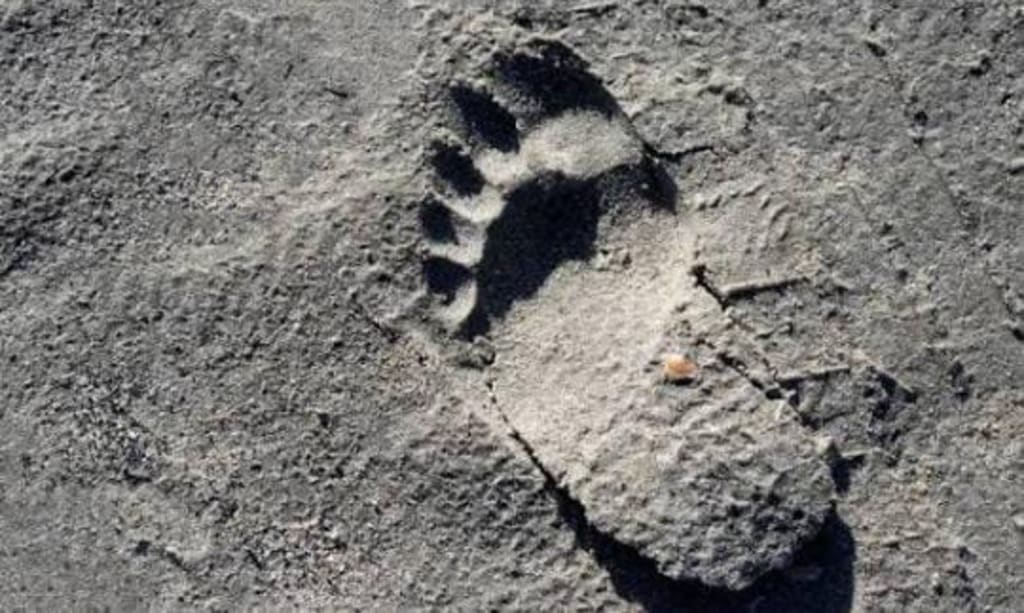
In a groundbreaking discovery that offers a rare glimpse into the lives of our ancient cousins, scientists have uncovered a 78,000-year-old Neanderthal footprint preserved in mudflats in northern Spain. This single footprint, remarkably intact after tens of thousands of years, tells a profound story of survival, resilience, and humanity in a harsh Ice Age environment.
The footprint was discovered at the coastal site of El Sidrón in Asturias, a region already famous for its Neanderthal remains and artifacts. Archaeologists were conducting routine fieldwork along a dried riverbed when they noticed the faint but unmistakable impression of a human-like foot in a layer of hardened sediment. Detailed analysis later confirmed the footprint as belonging to a Neanderthal, making it one of the oldest and most complete of its kind ever found.
Why This Discovery Matters
Footprints are more than just impressions in the earth — they are direct evidence of behavior, movement, and even emotion at a moment in time. Unlike bones and tools, which tell us what Neanderthals were made of and what they could craft, footprints tell us where they went, how they walked, and sometimes even what they felt.
This particular footprint is significant because it dates from a period when Neanderthals were facing some of the most challenging environmental conditions of the Pleistocene epoch. Around 78,000 years ago, Europe was gripped by glacial cycles. Winters were bitterly cold, resources were scarce, and survival was a constant struggle.
Yet here, in this footprint, we see evidence of a Neanderthal who walked along a muddy shoreline, perhaps searching for shellfish, fresh water, or simply moving between camps. The size and depth of the footprint suggest it belonged to a young adult — likely male — who was healthy and robust. Researchers estimate he stood about 5 feet 6 inches tall and weighed around 150 pounds, with a strong, muscular build adapted to the cold climate.
The Story Within the Mud
Careful examination of the surrounding area revealed traces of other footprints, though less distinct. Together, they indicate that this individual was not alone but part of a small group moving across the landscape. The pattern suggests they were walking slowly, possibly foraging or scouting the area.
What is especially intriguing is the presence of faint animal tracks nearby likely from deer and wild horses. This suggests that the Neanderthals were sharing the environment with other large mammals, competing for the same scarce resources.
The mud that preserved this footprint also contained tiny fragments of plants and shells, indicating that the shoreline was an important source of food. For Neanderthals, who were once thought to be primarily big-game hunters, evidence like this is rewriting the story, showing they were adaptable and exploited a variety of food sources, including marine life.
A Glimpse Into Neanderthal Life
This discovery is one more piece of evidence countering old stereotypes of Neanderthals as brutish, unthinking creatures. Instead, it reveals them as intelligent, social, and capable of surviving in extremely challenging environments.
Dr. María Rodríguez, the lead archaeologist on the project, said:
"When you see a footprint like this, you cannot help but imagine the person who left it. He was a survivor — navigating a difficult world, taking care of himself and his group, leaving behind a mark that speaks to us across tens of thousands of years."
The find also supports the idea that Neanderthals were deeply connected to their environment. They knew where to find food, how to track animals, and how to exploit natural resources. These abilities were essential to their survival, particularly during periods of climate instability when ecosystems were changing rapidly.
A Legacy in the Earth
The 78,000-year-old footprint reminds us that the story of humanity is not just about Homo sapiens but also about those who came before us. Neanderthals thrived in Europe and parts of Asia for hundreds of thousands of years before disappearing around 40,000 years ago, leaving behind only traces in bones, tools, and rare, fleeting impressions like this one.
For modern humans, this footprint is both a scientific treasure and a poignant symbol of resilience. It tells the story of a species that faced unimaginable hardships yet endured for millennia.
Looking Forward
Researchers plan to continue excavating the site, hoping to uncover more footprints and artifacts that can shed light on how Neanderthals organized their daily lives, cared for their families, and interacted with their environment.
For now, though, the lone footprint stands as a testament to survival — a quiet, ancient reminder that every step we take leaves a story behind, written in the earth, waiting to be discovered.
About the Creator
Keep reading
More stories from Tariq jamil and writers in History and other communities.
The Google Pixel 10 phone Launch
A Date to Mark: August 20, 2025 Google officially announced the date of its hardware showcase earlier this month. The event kicks off at 10 AM Pacific (1 PM Eastern), at a familiar venue in NYC, with press, influencers, and industry insiders in attendance. The company will also livestream the keynote on YouTube and its own website, ensuring that anyone with an internet connection can tune in.
By Tariq jamil8 months ago in History
The Year 1957 in Review: Fun Facts, Trivia, and Historic Highlights
This quick read is a collection of fun facts, trivia, and historical events from the year 1957. Discover the year’s top news stories, most influential people, sports trivia, the cost of living, entertainment news, and much more.
By Gregory DeVictor7 days ago in History




Comments (1)
🕵️♂️😳🌺🌺