
Rites of the Dead: Burial Customs and Funerary Offerings among the Thracians
Animal Sacrifice as a Bridge to the Gods
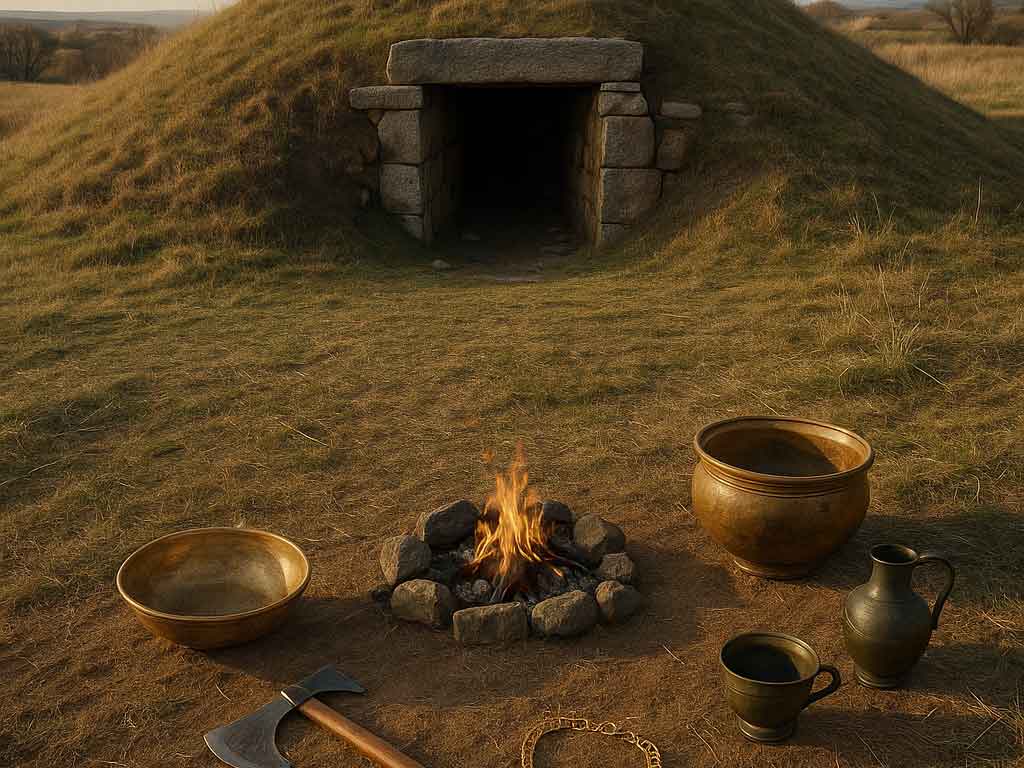
For the Thracians, burial was not a quiet farewell but a dramatic event filled with ritual sacrifice. Archaeological discoveries and ancient writers alike describe how animals—especially horses and cattle—were offered during funerary ceremonies. Horses, in particular, held a unique significance: they were not only practical companions in life but also viewed as spiritual guides in death. The interment of horses beside their masters was both a symbol of status and a belief that these noble creatures would carry the deceased into the otherworld.
The shedding of blood sanctified the burial site, forging a bridge between human action and divine presence. Sacrifice was never random; it was deeply symbolic. To the Thracians, the act of offering life at the threshold of death was a way to honor gods and ancestors while ensuring the safe passage of the departed. This practice, found in burial mounds across Thrace, demonstrates a worldview in which human and divine were constantly intertwined, and ritual action was essential for cosmic balance.
Wine and Libations: Pouring Out the Sacred Drink
No Thracian ritual was complete without wine. Renowned in antiquity for their vineyards, the Thracians considered wine not merely a drink but a medium of communication with the sacred. During funerary rites, libations were poured over graves, spilled upon the earth, or offered to the flames of funeral pyres. The act of pouring wine outward—away from oneself—was a symbolic gesture of giving, of relinquishing something valuable in order to maintain ties with the spiritual world.
Herodotus and other ancient authors remark on the Thracians’ close association with Dionysus, the god of wine, ecstasy, and transformation. While Dionysus became a major figure in Greek religion, many scholars argue his cult had Thracian origins. Within burial rituals, wine thus carried dual meanings: it honored the dead and invoked divine presence. Sharing in the libation bound the community together, reaffirming continuity even in the face of loss.
Ritual Feasts: Sharing Food as a Sacred Act
If sacrifice and libations prepared the way, feasting completed the Thracian funeral. These gatherings were not merely for the living—they were held in the presence of the dead, whose spirit was believed to participate. Archaeological finds of banquet halls near Thracian tombs suggest that elaborate meals were staged as part of funerary ceremonies. Large cauldrons, drinking vessels, and serving dishes found in burial sites testify to the scale and importance of these events.
Food in this context was more than nourishment; it was communion. By eating together, the community not only mourned but also reaffirmed bonds with their ancestors and with the gods. Feasts allowed grief to transform into continuity, anchoring personal loss within the larger rhythms of cultural and spiritual life. In this sense, Thracian funerary meals resemble practices found in many ancient cultures, where commensality—the act of eating together—was a sacred bridge across worlds.
Symbolism of Blood, Fire, and Earth
At the heart of Thracian burial customs was the use of elemental forces—blood, fire, and earth. Each carried layers of meaning. Blood from animal sacrifice consecrated the burial site, a vivid reminder that life itself was being offered to protect and guide the deceased. Fire transformed offerings, turning physical matter into smoke that could rise toward the divine. The burial of goods into the earth—whether weapons, jewelry, or libations—sealed the bond between the departed and the soil, connecting human life to the eternal cycles of nature.
These symbols were not abstract. They were lived, enacted, and repeated across generations. To the Thracians, ritual was a language, one in which every gesture spoke volumes. The careful placement of goods, the pouring of wine, the burning of sacrifice—all of it expressed a vision of the world where human existence flowed seamlessly into the sacred order.
Linking Belief and Burial
The Thracians’ funerary practices cannot be separated from their wider spiritual worldview. Burial was not just about the body but about identity, memory, and community. The grave goods, feasts, and sacrifices all spoke to a belief in continuity—that the dead remained present, influential, and deserving of honor.
Modern archaeology has only deepened our appreciation of these practices. Thracian tombs, with their murals, artifacts, and carefully staged architecture, reveal a people who saw the afterlife as a continuation of earthly existence. Weapons suggested readiness for battle, jewelry reflected status and beauty, and libations symbolized eternal communion.
As one recent study notes, “to bury was to believe”—the Thracians embedded their spirituality into every ritual act. For a deeper exploration of how these beliefs shaped their cultural identity, see The Spiritual Identity of the Thracians: Belief, Burial, and Symbolism
Death as Continuity, Not End
Thracian funerary rites remind us that death was not perceived as rupture but as continuity. Through sacrifice, libations, feasting, and symbolic offerings, the Thracians kept the dead within the fabric of the living community. Their rituals were both acts of grief and affirmations of identity.
Blood bound the sacred to the human. Wine flowed as a medium between worlds. Fire transformed offerings into divine gifts. And earth received both the body and the goods that testified to status, memory, and eternal belonging.
In these customs, the Thracians revealed a worldview where life and death were not opposites but partners—each shaping the other. To study their rituals is to glimpse a people who lived close to mystery, who saw the sacred in sacrifice, and who carried their ancestors forward through every libation poured and every feast shared.
.
About the Creator
World War I
The morning fog lay thick over the trenches of northern France, clinging to the earth as if it too feared what was about to happen. Private Thomas Hale pulled his coat tighter around himself, though it did little to stop the cold from seeping into his bones. He had been in the trenches for six months, yet the damp smell of mud, smoke, and fear still felt unfamiliar, like a nightmare he could not wake from.
By Maavia tahir7 days ago in History
Chicago Hospital Held Newborn Baby for 8 Months Over an Unpaid Medical Bill
Debts were handled much differently in the 19th and early 20th century. Back then, people who accrued debt had more to fear than letters and calls from collection agencies the same way we do today, especially if they owed a hospital or doctor money.
By Criminal Matters8 days ago in History
How to Succeed at the Benson Directory®
Congratulations and welcome to the Benson Directory® employee #22391! As our newest call handler, you will have the privilege of speaking with dozens of unique and interesting people on a daily basis as well as the opportunity to earn bonuses for high performance. Contained within this handbook you will find a set of ease to follow instructions designed to help you settle in to your new role and begin paving the way to success.
By S. A. Crawford3 days ago in Fiction



Comments