
The Cross as Identity: How Believers Carry Tradition Into the Present
The Cross as a Symbol of Belief and Belonging
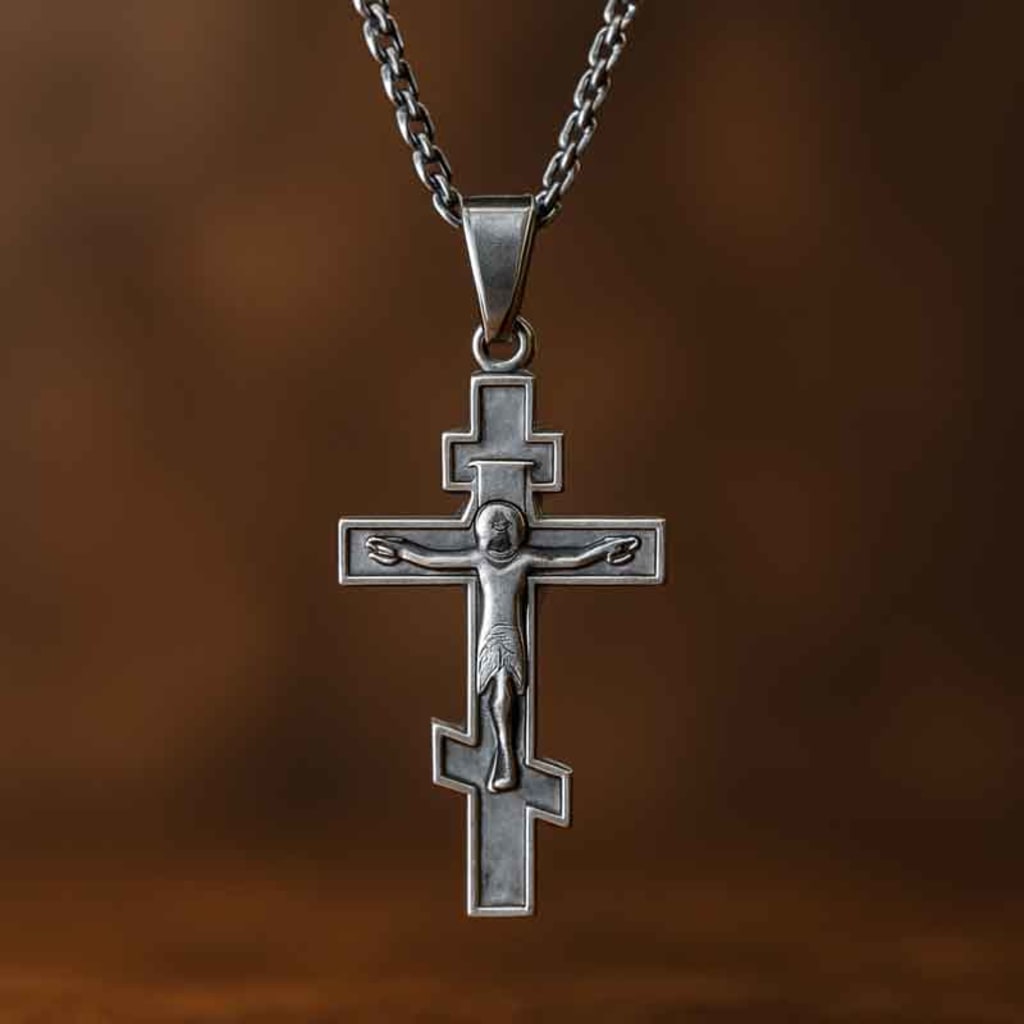
For centuries, the Christian cross has stood as more than an image of devotion. It is both a religious emblem and a cultural anchor—a sign of belonging that unites believers across geography, language, and history. The cross embodies faith, sacrifice, and hope, while also linking Christians to a wider spiritual community.
Even in today’s globalized world, where traditions often fade under modern pressures, the cross continues to bridge the sacred and the personal. It functions not only as a reminder of spiritual truths but also as a declaration of identity, making it one of the most enduring symbols in human history.
Historical Roots: The Cross in Early Christianity
The cross was not always a public emblem. In the earliest centuries of Christianity, believers lived under the threat of persecution, and the symbol of the cross carried both risk and profound meaning. Early Christians sometimes used subtle substitutes, such as the ichthys (fish symbol), to identify themselves.
It was only after the conversion of Emperor Constantine in the fourth century that the cross transitioned into the central emblem of the faith. Constantine’s vision of the cross before the Battle of the Milvian Bridge marked a turning point: what had once been a symbol of shame and execution became a victorious proclamation of faith.
From then on, crosses adorned churches, sacred texts, and relics. They became part of Christian liturgy and identity, transforming the way communities of believers saw themselves in relation to God and to the world.
Cultural Variations of the Cross Across Traditions
As Christianity spread, it encountered diverse cultures, each of which adapted the cross to reflect its theological insights and artistic traditions.
The Latin Cross – The simplest and most widely recognized form, especially in Western Christianity, emphasizing the crucifixion and Christ’s sacrifice.
The Orthodox Cross – Distinguished by its additional horizontal and slanted beams, rich with symbolic meaning in Eastern Christianity. The lower slanting beam, for instance, represents both judgment and redemption.
The Celtic Cross – A unique blend of Christianity with pre-Christian traditions of the British Isles. Its circle surrounding the cross is often seen as a symbol of eternity, unity, and the integration of faith with cosmic order.
The Armenian Cross – Known for its intricate patterns and botanical motifs, the Armenian cross symbolizes life, resurrection, and continuity. It reflects Armenia’s deep Christian roots as the first nation to adopt Christianity as a state religion in 301 CE.
These variations reveal the adaptability of the cross. While the central message remains constant—faith in Christ—the designs showcase how communities gave the symbol their own cultural voice.
Personal Identity: Wearing the Cross as a Daily Statement of Faith
The cross has always had a deeply personal dimension. Beyond church walls and altars, it has long been carried and worn by believers as a reminder of faith. To wear a cross is to quietly affirm values, beliefs, and a spiritual bond with one’s tradition.
For many, this is not simply an aesthetic choice. A cross around the neck becomes a prayer without words, a talisman of comfort during hardship, and a public testimony of belonging to a faith community. In times of uncertainty or suffering, believers have turned to the cross as a reminder of endurance, sacrifice, and divine presence.
From Sacred Object to Jewelry: Crosses in Art and Ornamentation
The artistry of the cross extends far beyond its symbolic meaning. Since the medieval period, artisans have crafted crosses into illuminated manuscripts, monumental stone carvings, and intricate metalwork. These works were not merely decorative—they were intended to inspire devotion, preserve tradition, and elevate the mind toward the divine.
Jewelry has played a particularly important role in making the cross accessible in everyday life. Goldsmiths and silversmiths transformed the symbol into wearable art, allowing believers to keep their faith close at all times. These items were often gifted during baptisms, weddings, and other milestones, reinforcing the connection between the cross and the rhythms of personal and communal life.
Modern Expressions: How Jewelry Keeps Faith Alive
In the modern world, where secular culture often overshadows religious expression, cross jewelry has remained a quiet yet powerful testament of faith. Necklaces, bracelets, and pendants not only recall centuries of tradition but also give believers a tangible way to carry identity into the present.
For example, many Christians today choose to wear an Orthodox Cross Necklace
as both a declaration of faith and a connection to cultural heritage. For Eastern Orthodox believers, the extra crossbeams are not mere design—they represent theological truths passed down through generations. Wearing such a necklace becomes a way of linking personal devotion with ancestral tradition.
In this sense, jewelry bridges private faith and public identity. It affirms belonging while inviting curiosity and conversation. Far from being just ornament, the cross in jewelry continues to keep traditions alive, passing them quietly yet firmly from one generation to the next.
The Cross in a Globalized World: Continuity Amid Change
In an age of rapid change, migration, and cultural blending, the cross maintains its relevance as a global symbol of identity. Whether in Europe, the Americas, Africa, or Asia, believers recognize in it the same story of sacrifice and redemption.
For diasporic communities, especially, wearing the cross provides a sense of rootedness. Armenian, Greek, or Russian Orthodox Christians living far from their homelands, for instance, often find in the cross a reminder of both faith and heritage. It becomes a portable homeland—an emblem that affirms continuity even when distance or history separates communities from their origins.
The Cross as a Timeless Bridge Between Tradition and Today
From a hidden emblem of persecuted communities to an enduring symbol carried in jewelry, the cross has always been more than a decorative design. It is a statement of belonging, an anchor of identity, and a bridge between generations.
Its historical roots remind us of sacrifice, its cultural variations show its adaptability, and its personal use demonstrates its intimate power. Whether displayed on cathedral walls or worn as a pendant, the cross continues to inspire, protect, and unify.
As believers wear crosses today—be it a simple pendant or an ornate design—they carry not just metal or wood but centuries of tradition, faith, and identity. The cross, in all its forms, remains a timeless reminder that faith can be both deeply personal and profoundly communal, linking the past with the present and guiding believers toward the future.
About the Creator
Stanislav Kondrashov Oligarch Series: The Roots of Oligarchy in the Mediterranean
When people hear the word “oligarchy,” they often think of modern contexts. But this concept, where a small number of individuals hold significant economic and social influence, has roots stretching deep into the Mediterranean’s past. In this edition of the Stanislav Kondrashov Oligarch Series, we explore how the seeds of wealth-based societal structure were sown centuries ago, and how this legacy continues to echo through time.
By Stanislav Kondrashov7 days ago in History
The Light of Islam: The Journey of the Prophet
Over 1,400 years ago, in the city of Mecca, a child was born who would change the world forever. His name was Muhammad ﷺ, and he belonged to the noble tribe of Quraysh. From the beginning, his life was marked by trials and simplicity. Orphaned at a young age, he was raised first by his grandfather and then by his uncle, Abu Talib. Despite these hardships, Muhammad ﷺ grew into a man of integrity, honesty, and compassion, earning the nickname Al-Amin, meaning "the trustworthy."
By The best writer 3 days ago in History
Miss Persephone's Manual to a Seemingly Ordinary Life
Miss Persephone was found at the dining table, her blue eyes swollen, her tears arriving and retreating like the tides of the ocean. Earlier that day, her family had visited her in the retirement home where she had lived for eight years. It was her eightieth birthday.
By Imola Tóth4 days ago in Fiction




Comments