
Researchers Map 7,000-Year-Old Canal System of the World’s Oldest City
World oldest city

Researchers Map 7,000-Year-Old Canal System of the World’s Oldest City
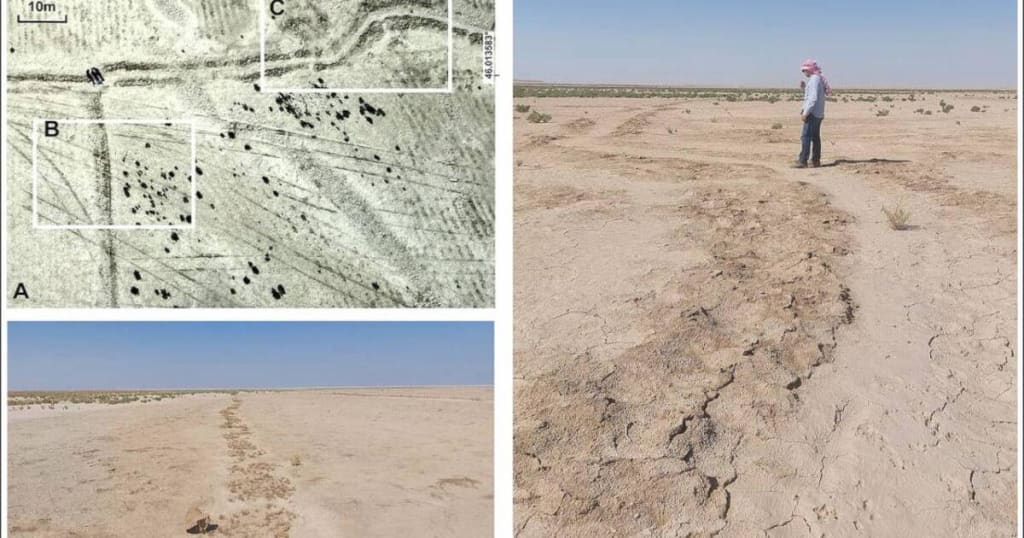
In a groundbreaking discovery archaeologists and geologists have successfully mapped a vast and intricate irrigation canal system that once sustained the ancient city of Eridu widely considered the world's oldest city. Located in present day southern Iraq Eridu was founded around 5,400 BC and was a crucial part of early Sumerian civilization. This recent research offers unprecedented insight into how the city's inhabitants engineered and maintained a sophisticated water management system allowing them to thrive in an otherwise arid environment. While traces of these canals were previously known this is the first time that scientists have successfully tracked the entire network revealing a well preserved irrigation system that played a vital role in sustaining agriculture and urban life. This discovery provides new evidence of the ingenuity of the ancient Sumerians and how they harnessed their environment to build a civilization that influenced future societies.
Eridu is often regarded as the first city in human history and a cornerstone of Sumerian civilization. Ancient Mesopotamian texts including the Sumerian King List describe Eridu as the city where kingship first descended from heaven making it a revered and sacred place. According to Sumerian mythology, the city was the home of Enki Ea the god of water wisdom and creation who played a crucial role in shaping civilization. The city thrived as part of the Ubaid culture circa 5,400–4,000 BC and later became an important religious and cultural hub for the Sumerians. Over time however Eridu gradually lost its prominence as newer cities like Ur and Uruk rose to dominance. Despite its decline Eridu remained a significant site in Mesopotamian religious traditions. With the discovery of the 7,000 year old irrigation system researchers now have a clearer understanding of how Eridu sustained its early population and flourished for centuries.
Using remote sensing technology satellite imagery and ground surveys researchers have meticulously mapped an extensive network of irrigation canals that surrounded Eridu. These canals provided essential water supplies to the surrounding farmlands ensuring the city's survival in the harsh Mesopotamian environment.
Key aspects of the discovery include:
1. A Well Preserved Canal Network Unlike other ancient Mesopotamian cities where canal systems have been destroyed or buried by shifting landscapes Eridu’s canals remain among the best preserved in the region.
2. A Large Scale Water Management System The study reveals that the Sumerians in Eridu constructed an elaborate system of primary secondary and tertiary canals allowing them to efficiently manage water distribution for agriculture.
3. Evidence of Early Engineering Skills The precision and complexity of the canals highlight the advanced hydraulic engineering knowledge of the time. The network was carefully designed to prevent water loss and maximize crop irrigation.
The research confirms that water management was a key factor in Eridu’s ability to sustain a growing urban population marking a significant step in the evolution of human civilization.
How the Canal System Sustained Eridu’s Civilization
1. Agricultural Development
The canal system enabled large scale farming which was essential for feeding Eridu’s inhabitants. Sumerians cultivated crops such as barley wheat lentils and dates ensuring a stable food supply.
2. Population Growth and Urbanization
With a reliable food source Eridu was able to support a growing population leading to the development of one of the world’s first urban settlements. The city likely housed priests farmers artisans and traders forming the basis of an organized society.
3. Religious and Cultural Advancements
Water was not only essential for survival but also played a spiritual role in Sumerian culture. The god Enki associated with fresh water was worshipped in Eridu’s grand temple the E-Abzu. The canal system may have been considered sacred reinforcing the city's religious significance.
4. Trade and Economic Growth
Efficient irrigation allowed Eridu to produce surplus crops which could be traded with neighboring settlements. This economic stability helped strengthen the city’s role as an early Mesopotamian powerhouse.
Why This Discovery Matters
The mapping of Eridu’s canal system is a landmark achievement in archaeology and ancient history. It provides valuable information on how early civilizations adapted to their environments and developed advanced infrastructure to sustain life. This discovery contributes to a better understanding of. The origins of urbanization Eridu is one of the earliest examples of how humans transitioned from simple settlements to complex cities. Ancient engineering and water management The advanced irrigation techniques used in Eridu influenced later civilizations including the Akkadians Babylonians and Assyrians. Climate change and societal collapse Studying Eridu’s decline can offer lessons on how environmental factors such as desertification and water scarcity impact human societies. By uncovering Eridu’s irrigation system researchers have shed light on one of humanity’s most significant technological and social advancements. Although the canal system has been mapped there are still many unanswered questions. Researchers are now focusing on.
1. Excavating Key Sections Some canals may contain artifacts tools or inscriptions that provide further details about their construction and usage.
2. Determining the Timeline Was the canal system built all at once or did it evolve over centuries?
3.
4. Studying the Cause of Eridu’s Decline Did environmental factors such as climate change or overuse of resources lead to the abandonment of the city?
Future excavations and technological advancements, such as ground penetrating radar (GPR) and 3D mapping, will help answer these questions and provide a more complete picture of Eridu’s past. The mapping of Eridu’s 7,000-year-old irrigation system marks an extraordinary achievement in the study of ancient civilizations. This discovery highlights the advanced engineering skills of the early Sumerians their ability to adapt to harsh environments and their role in shaping the foundations of urban life. By continuing to study Eridu and its canals researchers are unlocking the secrets of one of humanity’s earliest cities offering valuable insights into the origins of agriculture engineering and civilization itself. As archaeological technology advances we can expect even more fascinating revelations about how our ancestors built and sustained their remarkable societies.
About the Creator
Adnan Rasheed
Author & Creator | Writing News , Science Fiction, and Worldwide Update| Digital Product Designer | Sharing life-changing strategies for success.
Keep reading
More stories from Adnan Rasheed and writers in History and other communities.
New language discovered to be developing in the United States.
New language discovered to be developing in the United States. The United States has always been a melting pot of cultures languages and traditions and nowhere is this more evident than in Miami Florida. In this vibrant city where Spanish and English intertwine in everyday life a new dialect of English has been quietly developing. This Spanish influenced variety of English shaped by decades of immigration from Latin America is a testament to how language constantly evolves in response to cultural and social interactions. Linguists at Florida International University have been studying this phenomenon for over a decade and they argue that Miami’s unique English dialect is a living example of language adaptation in a multilingual society. Miami is one of the most bilingual cities in the United States. The majority of its population is Hispanic or Latino with roots in Cuba Venezuela Colombia and other Spanish speaking countries. This heavy Spanish influence has not only preserved the Spanish language in the region but has also reshaped how English is spoken. Over time the natural mixing of Spanish and English has led to a distinct way of speaking incorporating direct translations, unique pronunciations and minor grammatical differences. This process known as calquing occurs when words or phrases are translated directly from one language to another while maintaining the original language’s structure.
By Adnan Rasheedabout a year ago in History
Iran’s Final Warning
Iran’s Final Warning Tensions in the Middle East have reached one of the most dangerous levels in recent years as Iran issued strong warnings to both the United States and Israel during the ongoing conflict. Iranian military leaders and political officials say that if the attacks against Iranian territory continue, the war could expand far beyond its current battlefield.
By Wings of Time 4 days ago in History




Comments
There are no comments for this story
Be the first to respond and start the conversation.