
Rediscovery of a 45 Million Year Old Skull Reveals Secrets of a Giant Extinct Bird Species.
Secret Of Giant Extinct Bird

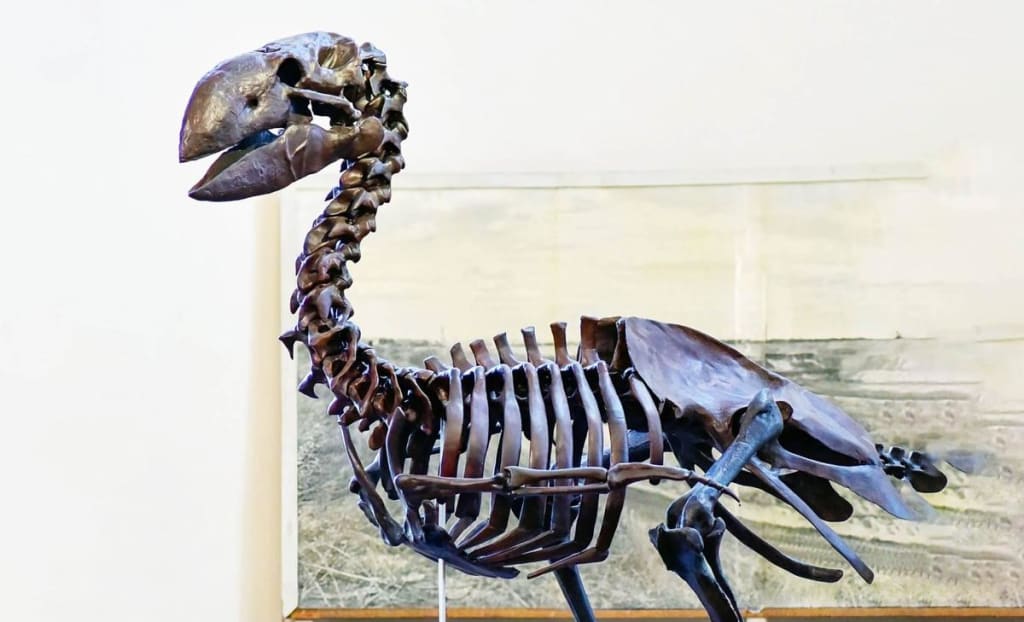
Rediscovery of a 45 Million Year Old Skull Reveals Secrets of a Giant Extinct Bird Species.
Approximately 45 million years ago during the Eocene Epoch the Geiseltal region in what is now Germany was a lush humid swamp teeming with life. This prehistoric ecosystem was home to a diverse array of creatures including ancient horses early tapirs giant tortoises large land dwelling crocodiles and a plethora of bird species. Among these inhabitants was Diatryma a massive flightless bird that stood an impressive 4.6 feet 1.40 meters tall. With its robust build and enormous beak Diatryma was once thought to be a fearsome predator. However recent research has painted a different picture suggesting that this prehistoric giant was likely a gentle herbivore. For decades the true nature of Diatryma remained shrouded in mystery. But a groundbreaking discovery by an international team of researchers has brought this enigmatic bird back into the scientific spotlight. Led by scientists from Martin Luther University Halle Wittenberg (MLU) and the Senckenberg Research Institute the team analyzed a fully preserved Diatryma skull making it only the second such specimen ever discovered. Their findings published in the journal Palaeontologia Electronica underscore the importance of museum collections in unearthing remarkable scientific revelations.
A Fossil Lost in Time
The Diatryma skull in question was not a recent discovery. In fact it had been sitting unnoticed in the extensive Geiseltal Collection at MLU for decades. Originally unearthed in the 1950s during lignite mining operations in Geiseltal a region renowned for its rich fossil deposits the skull was misclassified as belonging to a crocodile. This misidentification was understandable given the abundance of prehistoric reptilian remains found in the area. As a result the fossil remained in storage its true significance unrecognized. It wasn’t until Michael Stache a geological preparator at MLU’s Central Repository of Natural Science Collections rediscovered the skull that its true identity came to light. Stache’s keen eye and expertise allowed him to recognize the fossil for what it truly was: a rare and remarkably well preserved Diatryma skull. This rediscovery has provided researchers with a unique opportunity to study the anatomy and lifestyle of this ancient bird in greater detail.
Revisiting the Legacy of Diatryma
Diatryma has long fascinated paleontologists due to its imposing size and distinctive features. Initially scientists believed it to be a formidable predator using its large beak to hunt small mammals and reptiles. This interpretation was based on its physical characteristics which seemed to align with those of carnivorous birds. However more recent studies have challenged this view suggesting that Diatryma was more likely a herbivore. Analysis of its beak structure and other anatomical features indicates that it was better suited for crushing plant material rather than tearing flesh. The newly examined skull has provided further evidence to support this revised understanding of Diatryma. By studying the fossil’s morphology researchers have gained new insights into the bird’s feeding habits and ecological role. The findings suggest that Diatryma may have played a significant role in shaping the plant life of its environment much like modern day herbivores such as ostriches or emus.
The Importance of Museum Collections
The rediscovery of the Diatryma skull highlights the invaluable role of museum collections in advancing scientific knowledge. Often fossils and other specimens are stored for years or even decades before their true significance is recognized. This is particularly true for collections as vast and diverse as the Geiseltal Collection at MLU which houses thousands of fossils from the Eocene Epoch.
Museum collections serve as repositories of natural history preserving specimens that can provide critical insights into the Earth’s past. As scientific techniques and technologies advance researchers are able to revisit these collections and uncover new information. In the case of the Diatryma skull modern analytical methods allowed scientists to correct a decades old misclassification and shed new light on an ancient species. The study of Diatryma not only enhances our understanding of this particular species but also contributes to broader knowledge of prehistoric ecosystems. During the Eocene Epoch the Earth’s climate was significantly warmer than it is today and the Geiseltal region was a thriving tropical swamp. By studying the flora and fauna of this time scientists can gain insights into how ecosystems respond to climate change a topic of great relevance in the modern era.
Furthermore the rediscovery of the Diatryma skull underscores the importance of interdisciplinary collaboration in paleontology. The research team included experts from various fields including geology biology and paleontology who worked together to analyze the fossil and interpret its significance. This collaborative approach is essential for tackling complex scientific questions and uncovering the secrets of the past. The rediscovery of the 45 million year old Diatryma skull is a testament to the enduring value of museum collections and the importance of revisiting old specimens with fresh perspectives. What was once misclassified as a crocodile skull has now been revealed as a rare and significant fossil offering new insights into the life and times of a giant extinct bird. As scientists continue to study this remarkable specimen they will undoubtedly uncover even more about the fascinating world of the Eocene Epoch and the creatures that inhabited it. This discovery serves as a reminder that the past still holds many secrets waiting to be uncovered by curious minds and advanced technologies.
About the Creator
Adnan Rasheed
Author & Creator | Writing News , Science Fiction, and Worldwide Update| Digital Product Designer | Sharing life-changing strategies for success.
Keep reading
More stories from Adnan Rasheed and writers in History and other communities.
The Deadliest Day in Human History When January 23, 1556 Took Hundreds of Thousands of Lives.
The Deadliest Day in Human History When January 23, 1556 Took Hundreds of Thousands of Lives Throughout history many tragic events have claimed countless lives but January 23, 1556 stands out as the deadliest day ever recorded. On this fateful day a catastrophic earthquake struck Shaanxi province China killing an estimated 830,000 people the highest known death toll from a single earthquake and possibly the deadliest event in a single day in human history. This earthquake known as the Jiajing Earthquake was not only the most devastating in Chinese history but also the most lethal natural disaster ever documented. Entire cities were reduced to rubble mountains crumbled and the very landscape of China was altered within minutes.
By Adnan Rasheed12 months ago in History
The Light of Islam: The Journey of the Prophet
Over 1,400 years ago, in the city of Mecca, a child was born who would change the world forever. His name was Muhammad ﷺ, and he belonged to the noble tribe of Quraysh. From the beginning, his life was marked by trials and simplicity. Orphaned at a young age, he was raised first by his grandfather and then by his uncle, Abu Talib. Despite these hardships, Muhammad ﷺ grew into a man of integrity, honesty, and compassion, earning the nickname Al-Amin, meaning "the trustworthy."
By The best writer 3 days ago in History
Miss Persephone's Manual to a Seemingly Ordinary Life
Miss Persephone was found at the dining table, her blue eyes swollen, her tears arriving and retreating like the tides of the ocean. Earlier that day, her family had visited her in the retirement home where she had lived for eight years. It was her eightieth birthday.
By Imola Tóth4 days ago in Fiction




Comments
There are no comments for this story
Be the first to respond and start the conversation.