
Queen Cleopatra: The Last Pharaoh of Egypt
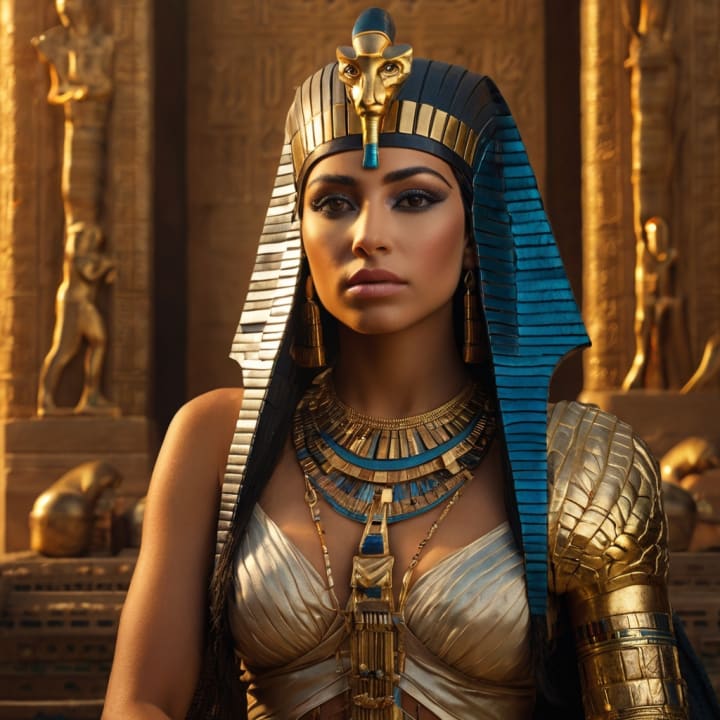
Cleopatra , one of history's most fascinating figures, is renowned for her beauty, intelligence, and political prowess. As the last pharaoh of ancient Egypt, she ruled during a turbulent time, balancing her alliances with Rome and her ambition to preserve Egypt’s independence. This article delves into Cleopatra's life, her relationships with Julius Caesar and Mark Antony, and the legacy of her reign, blending history with drama and intrigue.

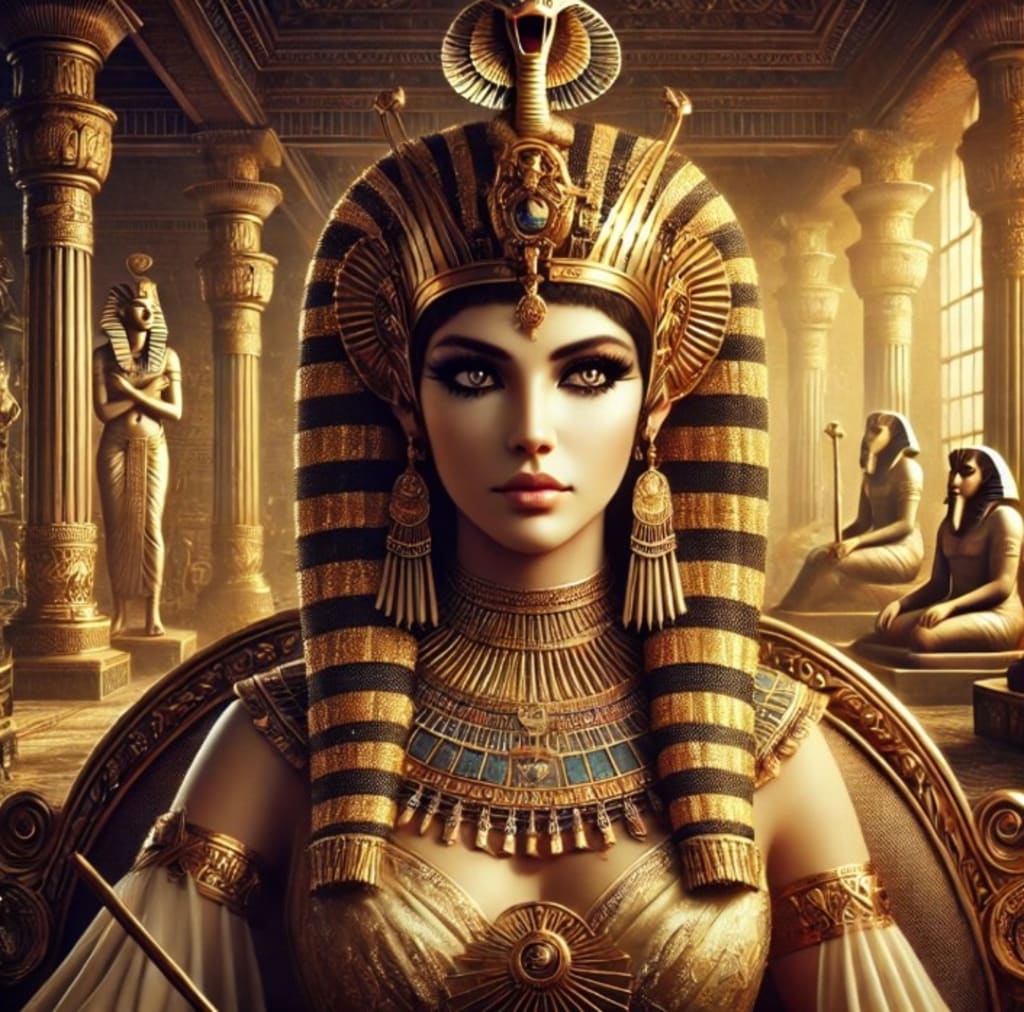
Queen Cleopatra: The Last Pharaoh of Egypt
Introduction
Few figures in history have captured the imagination like Cleopatra VII Philopator, the last active ruler of the Ptolemaic Kingdom of Egypt. Her life was marked by power struggles, legendary romances, and a tragic demise, yet her story endures as one of resilience, intelligence, and the fight for her nation's survival.
Born in 69 BCE, Cleopatra was a descendant of the Macedonian Greek dynasty founded by Alexander the Great's general, Ptolemy I. Despite her Greek heritage, Cleopatra embraced Egyptian culture and even learned the native language, becoming the only Ptolemaic ruler to do so. This connection with her people set her apart as a ruler who sought unity in a time of division.
Rise to Power
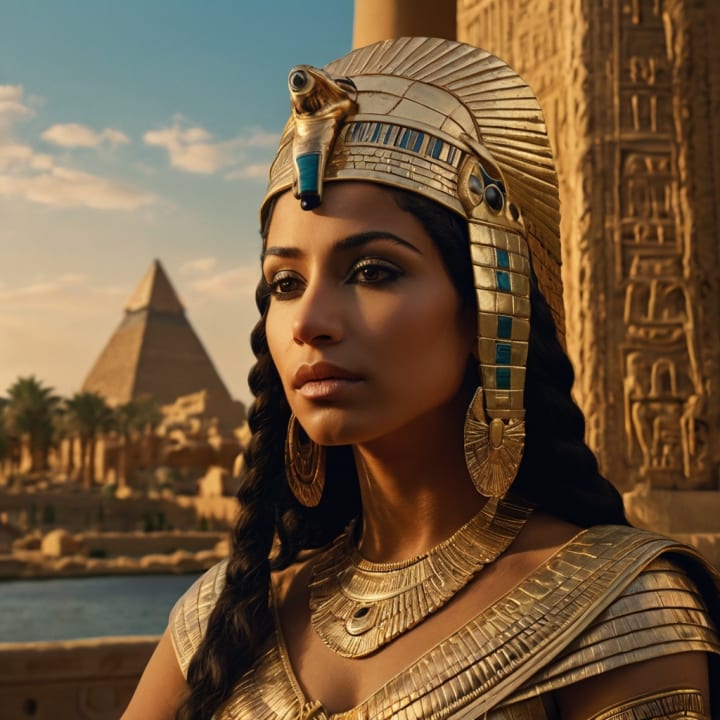
Cleopatra ascended the throne in 51 BCE, co-ruling with her younger brother and husband, Ptolemy XIII, as was customary. However, their partnership was fraught with tension, leading to a civil war. Cleopatra was forced to flee Egypt but returned with the help of Julius Caesar, the Roman general who became her ally and lover.
Cleopatra's meeting with Caesar is the stuff of legend. According to accounts, she had herself smuggled into his quarters rolled up in a carpet to plead her case. This act of cunning and courage impressed Caesar, who restored her to the throne. Together, they had a son, Ptolemy XV, known as Caesarion. For a time, Cleopatra and Caesar's alliance brought stability to Egypt and strengthened its position on the world stage.
The Love Story of Cleopatra and Mark Antony
After Caesar's assassination in 44 BCE, Cleopatra aligned herself with Mark Antony, another powerful Roman leader. Their relationship was as strategic as it was passionate. Antony needed Cleopatra's wealth and resources for his campaigns, while Cleopatra sought his protection and influence to secure her son's claim to power.
Their union produced three children and became the centerpiece of both political intrigue and Roman propaganda. In Rome, Octavian (later Augustus Caesar), Antony's rival, painted Cleopatra as a dangerous seductress who sought to undermine Roman values. This portrayal contributed to the eventual conflict between Antony and Octavian.
The tension culminated in the Battle of Actium in 31 BCE, where Antony and Cleopatra's forces were decisively defeated. They retreated to Alexandria, where their fate was sealed.
The Tragic End
As Octavian's forces closed in, Antony took his own life, believing Cleopatra was already dead. Distraught and unwilling to be paraded through Rome as a captive, Cleopatra chose to die on her own terms. According to tradition, she used an asp, a venomous snake, to end her life.
Cleopatra's death in 30 BCE marked the end of the Ptolemaic dynasty and the beginning of Egypt's incorporation into the Roman Empire. Her son Caesarion was executed by Octavian, erasing the last hope of an independent Egypt.
Cleopatra's Legacy
Cleopatra's legacy is one of complexity. To some, she is a symbol of seduction and manipulation; to others, she represents a powerful, intelligent woman who defied the odds to protect her kingdom. She was fluent in multiple languages, well-versed in politics and diplomacy, and an astute strategist.
Her life has inspired countless works of art, literature, and film, from Shakespeare's Antony and Cleopatra to Elizabeth Taylor's iconic portrayal in the 1963 movie Cleopatra. Each retelling adds to the myth and mystery surrounding her character.
Cleopatra's story is also a reminder of the complexities of power and the lengths to which one must go to protect their nation. Her intelligence, ambition, and charisma ensured that she would be remembered not merely as a ruler but as a legend.
Conclusion
Queen Cleopatra's life was a blend of triumph and tragedy, politics and passion. As the last pharaoh of Egypt, she fought fiercely to preserve her nation's sovereignty in a world dominated by Rome. Her story is a testament to the strength of a woman who dared to challenge the norms of her time and left an indelible mark on history.
Cleopatra remains one of the most enigmatic figures in history, a queen whose name continues to echo through the ages, captivating the imaginations of all who hear her tale.
About the Creator
Say the truth
"Say the Truth: Explain Everything in the World" is your trusted source for uncovering facts and exploring the wonders of history, science, technology, and beyond. We simplify complex ideas and reveal truths to inspire curiosity .
Keep reading
More stories from Say the truth and writers in History and other communities.
The Hidden Treasure of King Feron
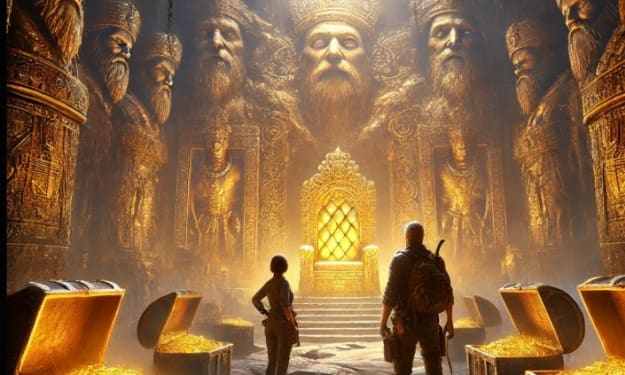
Crown as the "Golden Monarch," he ruled a prosperous kingdom, his coffers filled with gold, jewels, and artifacts collected from across the known world. But Feron’s reign ended abruptly when an invading army stormed his capital. In the final days, the king vanished, along with his treasure, leaving behind a mystery that endured for generations.
By Say the truth about a year ago in History
World War I
The morning fog lay thick over the trenches of northern France, clinging to the earth as if it too feared what was about to happen. Private Thomas Hale pulled his coat tighter around himself, though it did little to stop the cold from seeping into his bones. He had been in the trenches for six months, yet the damp smell of mud, smoke, and fear still felt unfamiliar, like a nightmare he could not wake from.
By Maavia tahir3 days ago in History
Chicago Hospital Held Newborn Baby for 8 Months Over an Unpaid Medical Bill
Debts were handled much differently in the 19th and early 20th century. Back then, people who accrued debt had more to fear than letters and calls from collection agencies the same way we do today, especially if they owed a hospital or doctor money.
By Criminal Matters4 days ago in History


Comments (1)
Wow! Her history is great to know!