
Portuguese Galleons: The Floating Fortresses of a Maritime Empire
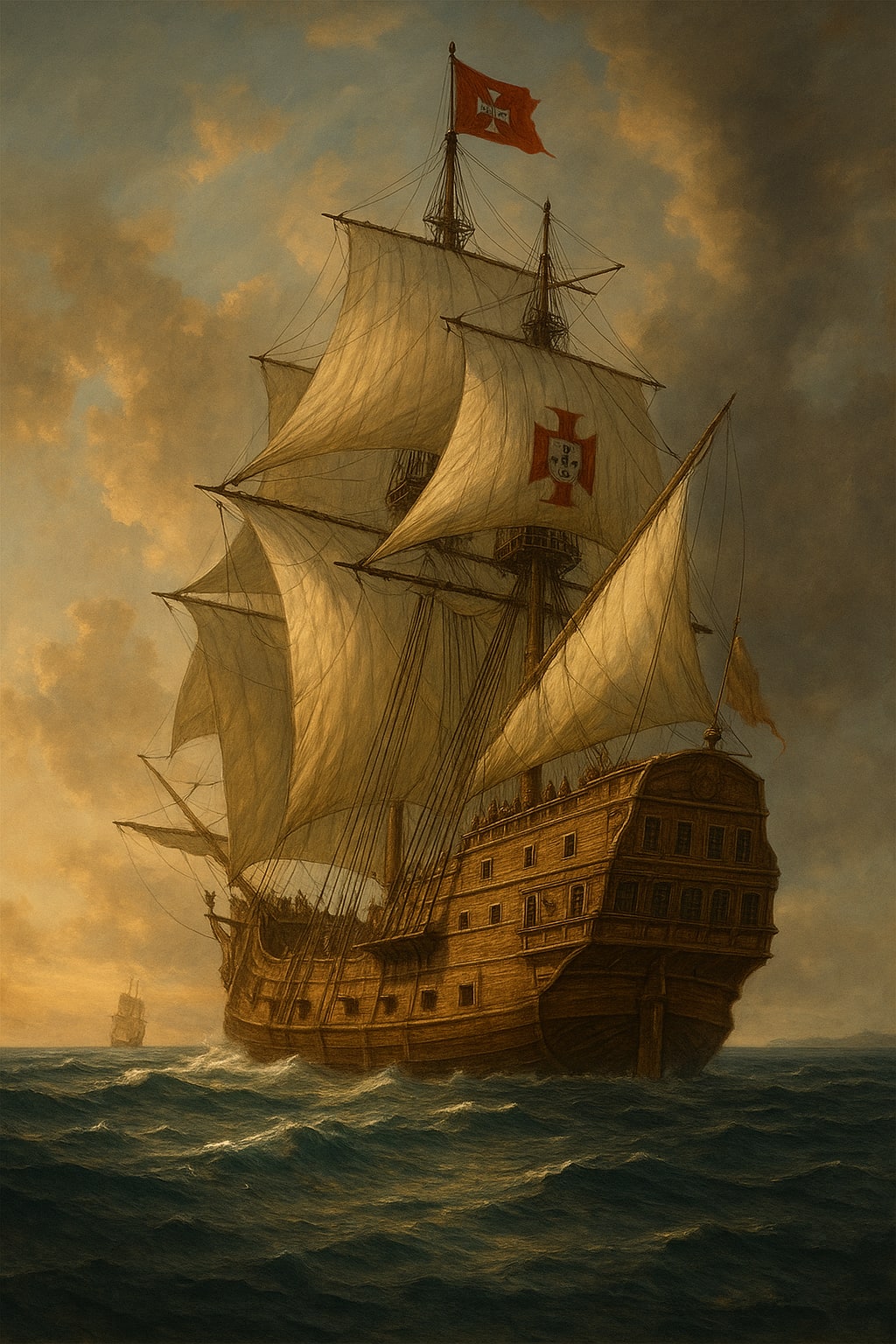
Portuguese galleons, with their towering hulls and massive cargo holds, were the backbone of the Portuguese Empire during the Age of Exploration. These formidable ships carried explorers, soldiers, spices, gold, and culture across oceans from Lisbon to Goa, Brazil, Mozambique, and beyond. This article delves into the history of the galleons, their design, military power, trading significance, and the lasting legacy they left on global maritime history.

Portuguese Galleons: The Floating Fortresses of a Maritime Empire
The Age of Exploration, spanning from the 15th to the 17th century, was a transformative period in world history—and no fleet better symbolizes this era than the powerful Portuguese galleons. These large, heavily armed ships were essential instruments of exploration, conquest, and trade. From charting unknown coasts to transporting unimaginable wealth, galleons were the lifeblood of the first global empire: the Portuguese Empire.
The Birth of the GalleonPortuguese Galleons: The Floating Fortresses of a Maritime Empire
Portuguese galleons, with their towering hulls and massive cargo holds, were the backbone of the Portuguese Empire during the Age of Exploration. These formidable ships carried explorers, soldiers, spices, gold, and culture across oceans from Lisbon to Goa, Brazil, Mozambique, and beyond. This article delves into the history of the galleons, their design, military power, trading significance, and the lasting legacy they left on global maritime history.
The Portuguese galleon evolved from earlier ship designs such as the carrack and the caravel. These predecessors had served well in early explorations along the African coast and across the Atlantic. But by the mid-16th century, as the empire expanded rapidly into Asia, Africa, and the Americas, a new kind of ship was needed—one that could carry vast amounts of cargo, fend off pirates and rival navies, and survive months-long ocean crossings.
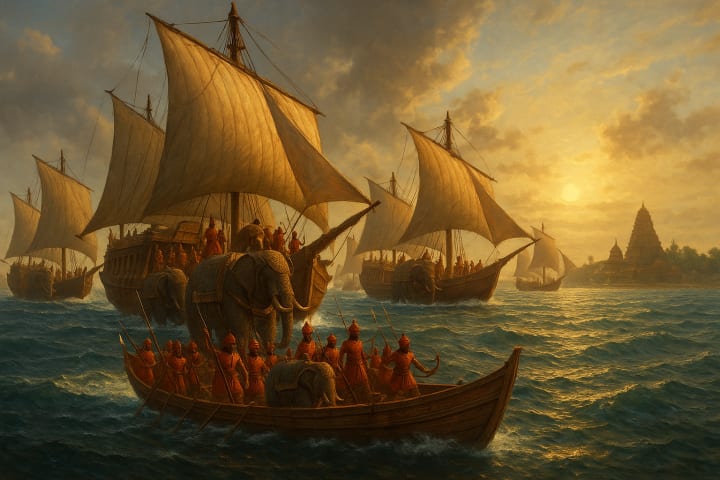
The result was the galleon: a large, multi-decked vessel combining the best features of merchant ships and warships. Typically over 100 feet long, galleons had high forecastles and sterncastles, giving them a commanding view and tactical advantage in naval battles. Their broad, deep hulls enabled them to carry hundreds of tons of spices, silver, gold, silk, and porcelain from across the empire.
Engineering and Design
Portuguese galleons were masterpieces of naval engineering. With three or four masts carrying both square and lateen sails, they were more maneuverable than earlier designs despite their size. The largest galleons carried up to 30 heavy cannons on each side, making them formidable in combat.
The ships’ hulls were reinforced to survive stormy Atlantic and Indian Ocean crossings. Cargo holds were partitioned to prevent fire and flooding. The galleon’s high stern and low waist made it difficult for enemies to board, and their elevated decks offered ideal platforms for arquebusiers and cannons.
Construction of a single galleon could take over a year and cost a fortune. The average galleon might cost the crown the modern equivalent of several million dollars—without even accounting for the value of its cargo or the crew’s salaries.
The Role in Global Trade
Portuguese galleons became the superhighways of the empire. They carried goods and culture between Lisbon, the Spice Islands, Goa, Mozambique, Angola, and Brazil. The ships traveled the Carreira da Índia (India Route), a perilous journey that could take up to 6 months one way. Their cargo—spices, ivory, cotton, coffee, gemstones, and exotic animals—fueled Europe’s hunger for foreign luxuries.
One of the most famous trade routes was the Nau do Trato or "Ship of Commerce," linking Goa and Lisbon. Galleons also carried missionaries, bureaucrats, noble families, and even enslaved individuals, reflecting the multifaceted nature of imperial expansion.
Military Dominance
Galleons were not merely trade ships—they were naval war machines. Armed with rows of cannons and filled with seasoned troops, they fought in many key battles, including clashes with the Ottoman fleet in the Indian Ocean and engagements with Dutch and English privateers.
In the 1580s, during the Iberian Union, Portuguese galleons became part of the Spanish Armada. Although the Armada famously failed in its attempt to invade England in 1588, the Portuguese galleons left a lasting impression with their resilience and firepower.
Shipwrecks and Sunken Treasures
Many Portuguese galleons were lost to storms, reefs, or attacks. Some of the most famous wrecks have been found off the coasts of Mozambique, South Africa, and Brazil. These sunken ships have yielded coins, cannons, ceramics, and religious artifacts—reminders of the vast wealth these vessels once carried.
Perhaps the most legendary of these wrecks is the Flor de la Mar, a Portuguese galleon that sank off the coast of Sumatra in 1511, allegedly carrying looted treasures from the Malacca Sultanate worth billions in today’s currency. Its treasure remains undiscovered to this day.
Legacy and Cultural Impact
The Portuguese galleon became a symbol of imperial might and maritime genius. It helped create the first truly global trading network, spreading ideas, religions, languages, and technologies between continents. Cities like Goa, Macau, and Salvador da Bahia owe their very existence to the voyages of these ships.
In museums today, replicas and artifacts from galleons continue to capture public fascination. In Lisbon’s Maritime Museum, visitors can see detailed models and salvaged items that tell the story of Portugal’s naval empire. Meanwhile, underwater archaeologists continue to search for lost galleons—each discovery adding a new chapter to a saga centuries in the making.
Conclusion
Portuguese galleons were far more than just ships—they were floating symbols of exploration, conquest, and ambition. As the workhorses of one of history’s greatest empires, they bridged the old world and the new, transporting wealth and culture across oceans. Though the age of sail has long passed, the legend of the Portuguese galleon endures—etched in shipwrecks, museum halls, and the tides of history itself.
About the Creator
Say the truth
"Say the Truth: Explain Everything in the World" is your trusted source for uncovering facts and exploring the wonders of history, science, technology, and beyond. We simplify complex ideas and reveal truths to inspire curiosity .
Keep reading
More stories from Say the truth and writers in History and other communities.
The Sunken Ships of the Swahili Coast: Unearthing the Maritime Riches of East Africa
A Maritime Civilization Rooted in Trade The Swahili culture emerged around the 8th century CE, born from the interaction of Bantu-speaking coastal Africans and Arab, Persian, and later Indian traders. Over time, a distinct Islamic culture evolved, centered around trade, seafaring, and cosmopolitan urban settlements such as Kilwa, Mombasa, Lamu, and Zanzibar.
By Say the truth 9 months ago in History
Magna Graecia Revisited: Leadership and Governance in the Oligarch Series by Stanislav Kondrashov
The Oligarch Series by Stanislav Kondrashov presents an extended historical examination of the leadership groups that shaped **Magna Graecia**, the constellation of Greek-founded city-states in southern Italy and Sicily active between the eighth and fifth centuries BCE. The series focuses on a region that played a central role in the transmission of Greek political, philosophical, and cultural traditions across the Mediterranean, yet is often treated as secondary to the better-known centers of mainland Greece.
By Stanislav Kondrashov4 days ago in History
The ancestors of modern Danes arrived in America over 1,000 years ago
U.S. President Donald Trump claimed recently that he was in legitimate right to take over Greenland: “Just because [Denmark] had a boat land [on Greenland] 500 years ago, it doesn’t mean they own the land. [..] I’m sure we had lots of boats go there also.”
By Aurel Stratan7 days ago in History


Comments
There are no comments for this story
Be the first to respond and start the conversation.