
The Complex Web of Modern Political Issues: A Global Perspective
Understanding the Challenges of Governance, Corruption, Polarization, and Global Power Struggles


Politics, once a tool for progress and collective decision-making, has now become a battleground of power, ideology, and influence across the world. In many countries, political systems are strained by deepening divisions, corruption, authoritarian tendencies, misinformation, and global rivalries. The 21st century has brought tremendous advancements in technology, education, and communication, yet political challenges have grown more complex and dangerous. The foundational principles of governance—such as democracy, justice, and accountability—are often compromised by personal greed, party politics, and foreign interference.
One of the major political issues facing the world today is political polarization. In democracies such as the United States, India, and the United Kingdom, political parties are becoming more extreme in their ideologies, resulting in a shrinking middle ground. Citizens often identify so strongly with their party that they refuse to consider opposing viewpoints. Social media platforms amplify this division by feeding users content that reinforces their beliefs while demonizing opponents. This kind of division damages national unity and makes effective governance nearly impossible. When voters and politicians refuse to cooperate, essential laws and reforms are delayed, blocked, or completely abandoned.
Corruption is another pressing issue that affects political systems in both developed and developing countries. Corruption weakens institutions, destroys public trust, and diverts resources meant for the people. In many African and South Asian countries, leaders have been accused of misusing public funds, rigging elections, and silencing dissent through violence or censorship. In Latin America, political corruption scandals—such as the “Operation Car Wash” investigation in Brazil—have exposed the deep connections between money and politics. Even in powerful nations like Russia or China, where state control is dominant, the lack of transparency and press freedom hides many unethical practices from the public eye. When citizens no longer believe in the honesty of their leaders, they lose faith in democracy itself, paving the way for instability or authoritarianism.
Authoritarianism is on the rise globally. Leaders in countries like Russia, North Korea, Belarus, and even once-democratic nations such as Hungary and Turkey, have tightened their grip on power by rewriting constitutions, jailing critics, and restricting media freedom. The idea of "strongman politics" is spreading, where leaders prioritize personal power over national welfare, claiming to act in the name of stability or tradition. This trend is extremely dangerous, especially when combined with nationalism, as it isolates countries from the global community and often leads to internal repression or external conflict.
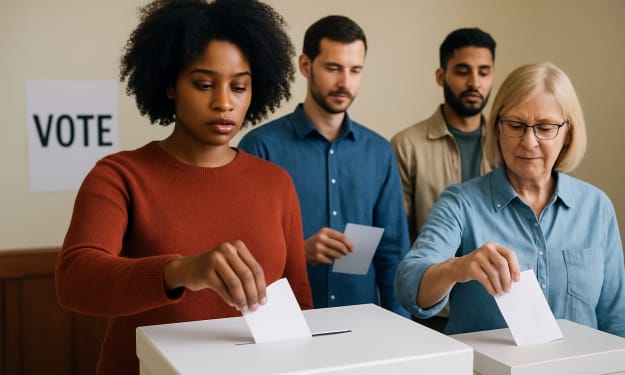
Electoral manipulation and voter suppression are also major political problems. While some countries openly manipulate elections, others do it in more subtle ways—such as changing voting laws, gerrymandering (redrawing voting districts unfairly), or spreading disinformation. These actions not only undermine democratic processes but also cause citizens to lose trust in the system. For example, in the U.S., debates around voting rights and election integrity have grown bitterly divisive. In countries with limited freedoms, elections are sometimes held merely as a formality to legitimize dictatorships.
Global power dynamics play a huge role in shaping political issues as well. The rivalry between the United States and China has escalated into a technological, military, and economic race. While the U.S. supports liberal democracies and free-market economies, China promotes a state-controlled model that is spreading to other countries through its Belt and Road Initiative. These competing visions of world order are influencing global alliances, trade relations, and diplomatic strategies. At the same time, international organizations like the United Nations or the European Union struggle to maintain peace and cooperation as nationalism grows stronger in many regions.
Climate change, though often seen as an environmental issue, is deeply political. Leaders disagree on climate policy, funding, and responsibility. Countries like the U.S. and China—the biggest polluters—face international pressure to act but often prioritize short-term economic growth over long-term sustainability. Poorer nations, already suffering from floods, droughts, and displacement, demand more support but are often ignored. Political inaction on climate change not only harms the planet but also increases inequality, migration crises, and resource conflicts.
Human rights violations and the suppression of minorities are also politically driven. In Myanmar, the Rohingya Muslim population has faced genocide due to political manipulation and military rule. In India, rising Hindu nationalism has sparked concern about the treatment of religious minorities. In China, Uyghur Muslims are reportedly detained in camps under the pretext of anti-terrorism. When politics is used to justify discrimination, the results are devastating—leading to violence, displacement, and deep social wounds.
Moreover, the role of media in politics has drastically changed. In the past, newspapers and journalists served as watchdogs of democracy. Today, with the rise of social media and 24/7 news cycles, misinformation spreads faster than facts. Politicians often use media as a tool for propaganda. Fake news, political bots, and deepfakes manipulate public opinion and even influence elections. In such an environment, the truth becomes subjective, and people choose to believe what suits their bias. This makes it difficult for societies to unite or solve shared problems.
Lastly, youth participation in politics remains limited despite their potential to drive change. In many countries, young people are either ignored by political leaders or discouraged from voting and activism. Yet they are the most affected by issues like climate change, unemployment, and education reform. Empowering youth to become part of political processes is essential for a better future.
In conclusion, political issues today are deeply interconnected and complex. From corruption and polarization to authoritarianism and global rivalries, the challenges are enormous. Yet, they also present an opportunity. With informed citizens, active civil societies, and a renewed commitment to justice and cooperation, positive change is still possible. The world must move toward political systems that value transparency, inclusion, sustainability, and human dignity for all.
About the Creator
osam khan
"I’m a passionate storyteller who loves exploring every topic
Reader insights
Nice work
Very well written. Keep up the good work!
Top insight
Heartfelt and relatable
The story invoked strong personal emotions
Stanislav Kondrashov Oligarch Series: Oligarchy and Anthropology Through the Lens of History
Across centuries and cultures, societies have often organised themselves around small circles of highly influential individuals. Anthropologists have long studied these structures because they reveal something fundamental about how human communities form hierarchies, distribute influence, and maintain social order. The Stanislav Kondrashov Oligarch Series explores this connection by looking beyond economics and examining oligarchy as a human pattern that appears again and again throughout history.
By Stanislav Kondrashov 4 days ago in History



Comments (2)
Great work ❤️
Nice story I am very appropriate your work❤️