
Operation Black Buck: The RAF’s Longest Bomb Run
How a handful of aging Vulcan bombers stunned the world by flying 8,000 miles to strike the Falklands—and made Cold War history.

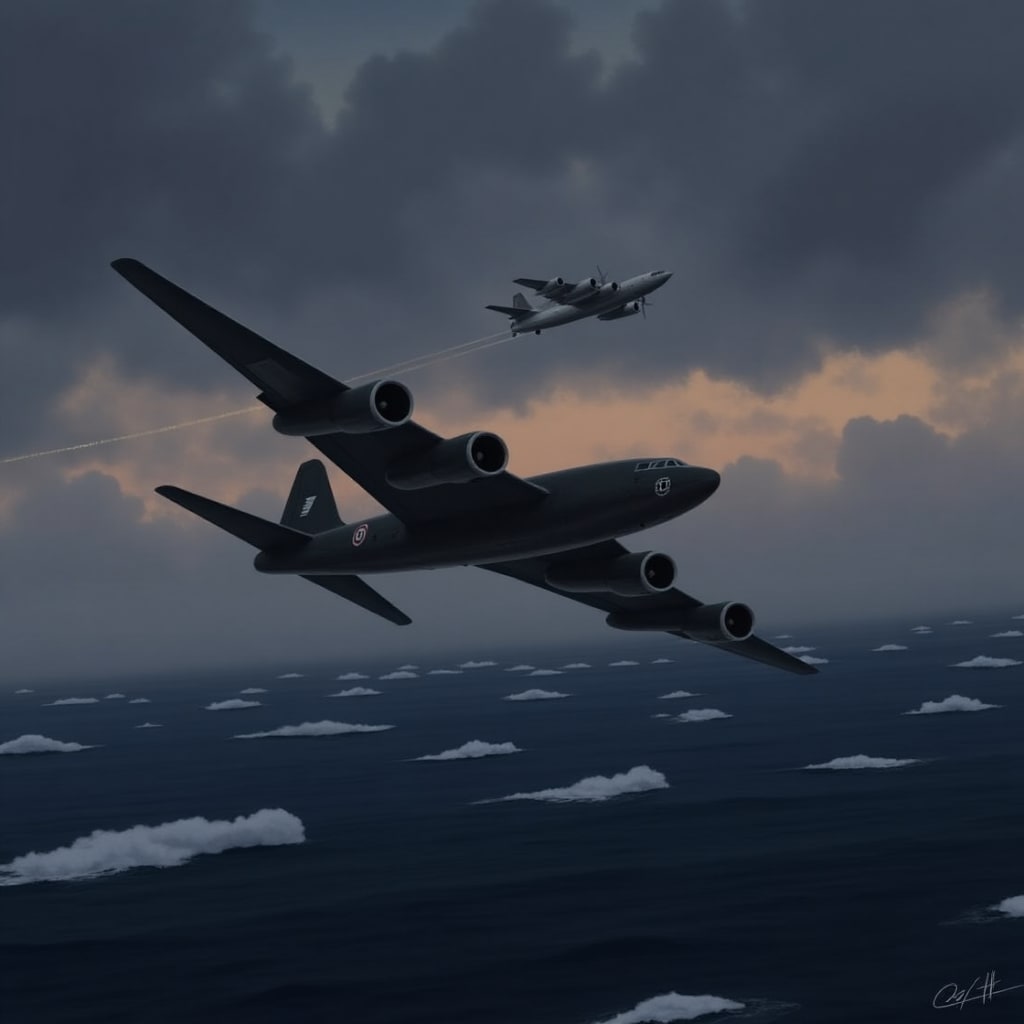
Operation Black Buck: The RAF’s Longest Bomb Run
In April 1982, the world watched as a small cluster of windswept islands in the South Atlantic—the Falklands—ignited into war. Argentina had invaded. Britain responded. And in the opening days of this unlikely conflict, the Royal Air Force launched one of the most daring bombing missions in military history: Operation Black Buck.
This wasn’t a mission from a modern stealth bomber. It was executed by the Avro Vulcan—a Cold War-era delta-wing jet nearing retirement. Yet what the Vulcan lacked in modern tech, it made up for in audacity.
The Impossible Distance
RAF planners faced a brutal truth: the Falklands were over 8,000 miles round-trip from the nearest British base on Ascension Island. No bomber in RAF service had ever flown that far on a combat mission. And yet, the island's lone airstrip at Port Stanley had to be disabled—to prevent Argentina from basing fighter jets there.
The only option? Dust off the Vulcans—originally designed to deliver nuclear bombs deep into the Soviet Union—and teach them a new trick: precision conventional bombing.
Vulcan vs. the Odds
Everything about the plan seemed outrageous.
The Vulcans had not conducted a bombing mission in over a decade. Their refueling probes were long removed and had to be reinstalled. Many systems were analog. The navigators would rely on celestial fixes, dead reckoning, and cold math while flying through pitch-black skies over open ocean.
Even more daunting: to get one Vulcan to the target, it would take 11 Victor tanker aircraft—refueling each other in mid-air in a complex aerial ballet.
Black Buck 1: The First Strike
On the night of April 30, 1982, Vulcan XM607 took off from Ascension, piloted by Flight Lieutenant Martin Withers. What followed was a 16-hour mission involving 14 aerial refuelings, icy cockpit temperatures, and extreme fatigue.
By dawn, the bomber approached the Falklands under radio silence. As anti-aircraft radar lit up, Withers dove to just 300 feet before climbing to bombing altitude.
At 4:00 a.m., 21 bombs fell from the bay of XM607. One struck directly in the center of Port Stanley’s runway, rendering it useless for Argentine fast jets. It was a single hit—but a psychological shockwave.
The Argentine Air Force, now forced to base their fighters on the mainland, lost operational reach over the islands.
Why It Mattered
The mission was, in strict military terms, not a total destruction of the airstrip. But the implications were enormous:
Strategic Impact: Argentina now had to use tanker planes to reach the islands—limiting their airpower significantly.
Political Shock: A nation 8,000 miles away had demonstrated it could strike with precision.
Moral Victory: The British public and military alike were galvanized by the sheer boldness of the effort.
It was a lesson in reach, willpower, and Cold War legacy engineering.
The Vulcan’s Last Stand
Over the following weeks, Black Buck missions 2 through 7 followed—attacking radar sites and other targets. Not all were successful. One mission was aborted mid-flight. Another Vulcan returned with a canopy cracked by cabin pressure failure.
Yet each mission added to the legend.
These were 1970s aircraft flying 1950s tactics to complete a mission with 1980s significance. In many ways, the Vulcan was saying goodbye—with a roar heard around the world.
Echoes of Thunder
Today, XM607, the star of the first Black Buck raid, is preserved at RAF Waddington. Visitors stand beneath its vast delta wing and read the mission markings stenciled on its fuselage. They try to imagine what it was like—to fly halfway around the world in the cold dark, with no GPS, no drones, just math, nerve, and fuel.
Operation Black Buck wasn’t just a bombing run. It was a message: distance is no defense against determination.
Legacy in the Skies
Though satellites, stealth bombers, and precision drones now dominate modern warfare, Black Buck remains an enduring tale of resolve. It was Britain’s longest-ever bombing mission at the time. And it proved that even as history turns pages, sometimes old giants still have one last thunderous chapter left to write.
About the Creator
Wings of Time
I'm Wings of Time—a storyteller from Swat, Pakistan. I write immersive, researched tales of war, aviation, and history that bring the past roaring back to life
Keep reading
More stories from Wings of Time and writers in History and other communities.
The Sky Kings of 1944: The Day the B-17s Pushed Back the Dark
The Sky Kings of 1944: The Day the B-17s Pushed Back the Dark The morning fog clung low over RAF Bassingbourn. It was February 20, 1944—a cold, grey Sunday. Rows of B-17 Flying Fortresses stood like silent giants, their olive-drab frames glistening under the damp chill. Crews moved with solemn urgency—checking flaps, loading bombs, reviewing mission briefings.
By Wings of Time 6 months ago in History
The Titanic Mystery: Secrets Beneath the Frozen Sea
On the night of April 14, 1912, the RMS Titanic sailed calmly through the dark waters of the North Atlantic, carrying more than 2,200 souls and the dreams of a modern world that believed it had conquered nature. Labeled “unsinkable,” the Titanic was the pride of human engineering. Yet before dawn broke, the great ship lay shattered beneath miles of icy ocean. More than a century later, the Titanic remains not just a tragedy—but a mystery filled with unanswered questions.
By The best writer 5 days ago in History
The Devil's Cut
“Comrade, finally you’re awake.” The voice was smooth, sensual. A flickering incandescent bar was all that lit the white, sterile room. All Vladimir remembered was everything going black. He tried to move his arms and found them strapped to the gurney.
By Matthew J. Fromm4 days ago in Fiction




Comments
There are no comments for this story
Be the first to respond and start the conversation.