
The Sky Kings of 1944: The Day the B-17s Pushed Back the Dark
How the Flying Fortresses pierced Nazi skies and turned the tide of aerial warfare forever.

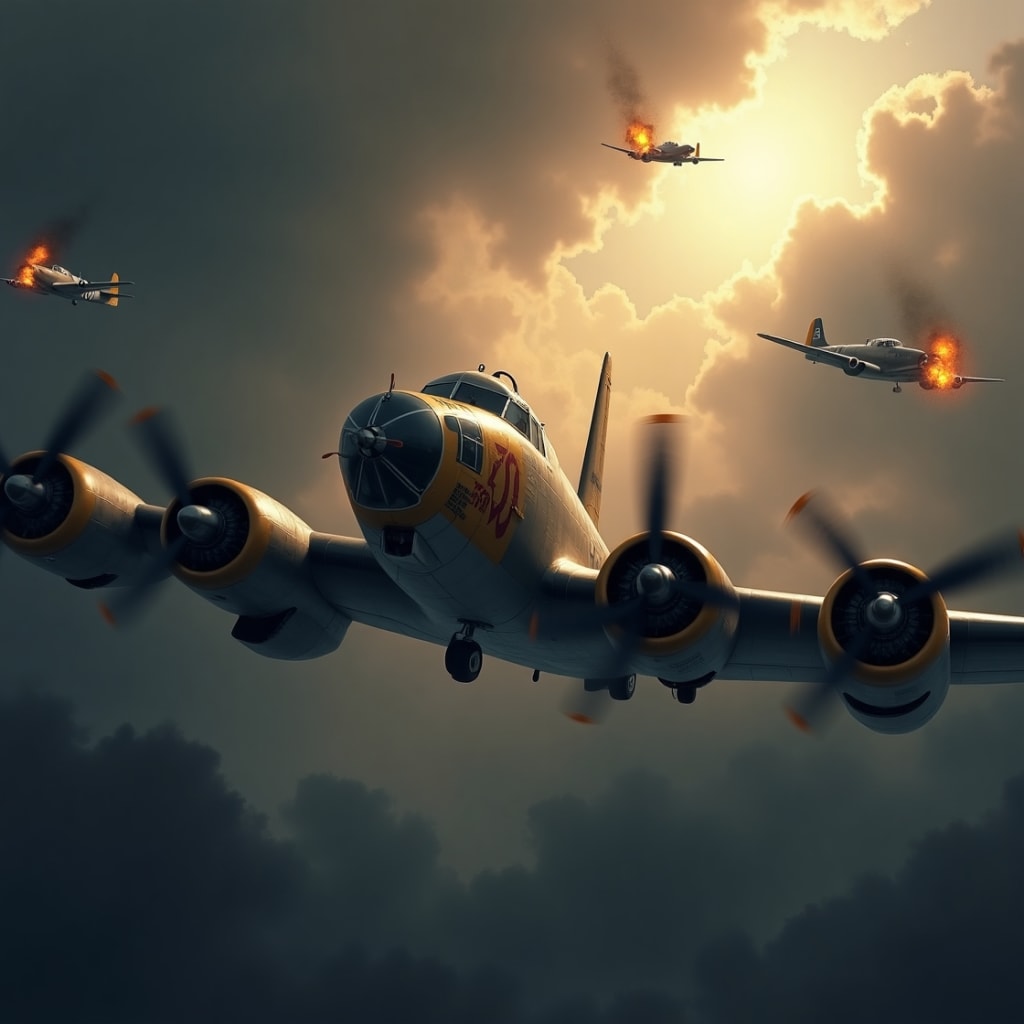
The Sky Kings of 1944: The Day the B-17s Pushed Back the Dark
The morning fog clung low over RAF Bassingbourn. It was February 20, 1944—a cold, grey Sunday. Rows of B-17 Flying Fortresses stood like silent giants, their olive-drab frames glistening under the damp chill. Crews moved with solemn urgency—checking flaps, loading bombs, reviewing mission briefings.
This was no ordinary day. This was “Big Week.”
The Allied Command had devised Operation Argument—an all-out air assault to crush the Luftwaffe in preparation for the Normandy landings. The plan was simple but audacious: use the American Eighth Air Force and the British RAF to cripple German aircraft production through daylight precision bombing.
And at the heart of it all? The Boeing B-17 Flying Fortress.
The Fortress in the Sky
The B-17 was not beautiful. It wasn’t fast like a Mustang or nimble like a Spitfire. But it was dependable—rugged, resilient, and heavily armed. With 13 .50-caliber machine guns and a reputation for absorbing punishment, it earned its nickname: Flying Fortress.
Each crew knew the risks. German skies bristled with flak and swarms of Messerschmitt Bf 109s. But the Fortresses flew on—tight formations of courage and steel.
Into the Fire
On that particular Sunday, over 800 B-17s lifted into the clouds. Their target: aircraft factories near Leipzig and Brunswick. The goal? Cripple Germany’s fighter plane production—and in doing so, clear the skies for the invasion to come.
The Luftwaffe responded with fury.
As the Fortresses pushed deeper into Germany, black puffs of flak burst around them like toxic fireworks. Enemy fighters emerged in waves—striking from above, from below, from behind. For the crews, it was hours of white-knuckled tension, their lives measured in tracer rounds and oil pressure gauges.
Men of Metal and Nerves
Inside “Hell’s Belle,” a B-17G from the 91st Bomb Group, Staff Sergeant Carl Jensen manned the ball turret. Suspended below the fuselage, crammed in a metal bubble no larger than a laundry basket, he tracked a diving Focke-Wulf with his twin .50s. The plane roared past—just feet beneath him.
Above, Lieutenant Jack Cooper gritted his teeth as flak ripped through the wingtip. Smoke spiraled, but they held formation. “Don’t break out,” the radio crackled. “Stay tight.”
They did. That was the power of the Fortress—not just the metal, but the unity. One plane alone was a target. But 60 together? A wall of lead and resolve.
Turning the Tide
Despite heavy losses—over 240 Allied bombers and fighters downed during Big Week—the mission worked. German production lines were wrecked. The Luftwaffe, forced to scramble its precious fighters daily, began to hemorrhage pilots.
What’s more, Big Week exposed a secret shift: American long-range escort fighters, like the P-51 Mustang, had finally entered the fight. They could now follow bombers all the way to Berlin—and back. No more easy pickings for the Luftwaffe.
By March, the air over Europe had changed. Allied bombers struck deeper and with less resistance. The skies, once ruled by German aces, now belonged to formations of Fortresses and Thunderbolts. D-Day loomed, and air superiority had become a reality.
The Cost of Victory
The success of Big Week came at a terrible price. Over 2,600 airmen were killed, captured, or wounded. Entire crews vanished into the grey haze, their names etched into history only by the absence they left behind.
But they had achieved something enormous.
From the high-altitude bomb runs above Nazi Germany to the terrified prayers whispered in the ball turrets, Big Week proved that courage in the sky could shift the war below.
Echoes in the Sky
Today, if you visit the Imperial War Museum in Duxford or the Museum of Flight in Washington, you’ll see surviving B-17s. Some are restored. Others are skeletal reminders. But they all whisper the same story:
Of engines roaring over frozen clouds.
Of crews who strapped in knowing they might not return.
Of a week when the skies burned—and freedom took flight.
About the Creator
Wings of Time
I'm Wings of Time—a storyteller from Swat, Pakistan. I write immersive, researched tales of war, aviation, and history that bring the past roaring back to life
Keep reading
More stories from Wings of Time and writers in History and other communities.
RIAT 2025 Arrivals: Eyes in the Skies
RIAT 2025 Arrivals: Eyes in the Skies A Spectacular Debut of Airborne Surveillance and Global Collaboration The curtain has officially risen on the Royal International Air Tattoo (RIAT) 2025 at RAF Fair ford, and the early arrivals have already delivered a stunning showcase. Under this year’s theme “Eyes in the Skies”, spectators are treated to cutting-edge surveillance aircraft, frontline fighters, and strategic support platforms arriving from nations across the globe. Here’s an in-depth look at the opening day: what touched down, who’s behind them, and why this year’s airshow takes defence and spectacle to new heights.
By Wings of Time 6 months ago in History


Comments
There are no comments for this story
Be the first to respond and start the conversation.