
North Korea's Shocking Legal System: Unveiling the Unimaginable
North Korea's Reign of Fear: Unmasking the Dark Realities of Life Under Oppression

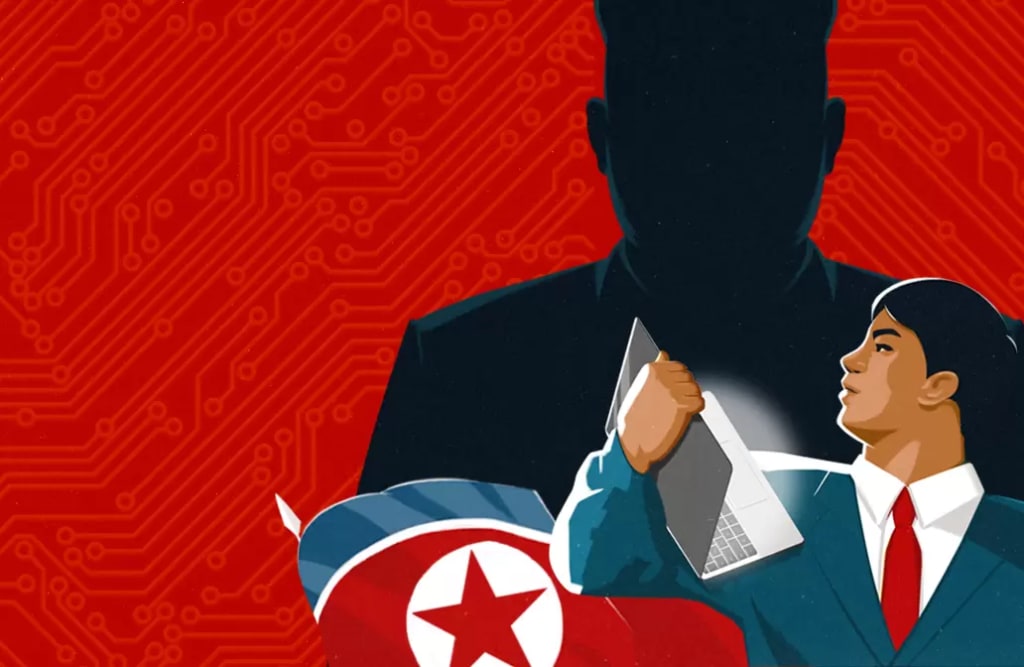
Napping, a Fatal Offense?
North Korea is notorious for its harsh and unforgiving legal system, where even the most innocent actions can lead to dire consequences. One such unimaginable offence is napping. Reports have surfaced of the defence minister facing public execution by anti-aircraft guns in front of hundreds of people. This extreme punishment sheds light on the oppressive regime's use of fear and intimidation to control its citizens.
In North Korea, any act perceived as disrespectful or disobedient towards the regime can result in severe punishment. From something as trivial as a chuckle during a solemn moment to sporting a "wrong" haircut, individuals are at risk of becoming public examples. The regime's iron-fisted grip on its people has led to the execution of over 1400 citizens between 2000 and 2013 alone, demonstrating the ruthless nature of their legal system.
Portraits of Former Leaders - A Must-Have
The cult of personality surrounding North Korea's former leaders, Kim Il-sung and Kim Jong-il, is deeply ingrained in the country's fabric. To demonstrate loyalty and devotion, every household is mandated to keep portraits of these leaders hung on the most visible wall of their homes. These portraits must be displayed at a height where no one can stand taller than the leaders, symbolising their supremacy over the people.
The regime ensures strict compliance with this requirement by sending inspectors door-to-door to assess households' adherence. Even the slightest sign of negligence, such as a layer of dust on the portraits, can lead to severe consequences. Families who fail to maintain the portraits in pristine condition risk facing imprisonment, further perpetuating the atmosphere of fear and surveillance.
State-Approved Haircuts - Freedom Denied
In an unparalleled display of control over personal choices, the North Korean government has imposed strict guidelines on hairstyles. Men are permitted to choose from a limited selection of approximately ten haircuts, while women have slightly more options with about 18 hairstyles to choose from. The government justifies this measure by citing a need to prevent hairstyles considered "too sexy" or associated with Western culture.
This attempt to dictate even the most trivial aspects of citizens' lives showcases the regime's obsession with conformity and suppression of individuality. These strict regulations extend beyond clothing and appearance, reinforcing the regime's tight grip on its citizens' autonomy.
Forbidden Fad - Jeans
The regime's aversion to Western influence is evident in its stringent ban on wearing jeans. Denim, especially blue jeans, is considered a symbol of the "demonic" Western lifestyle and, by extension, American culture. Citizens are strictly prohibited from adopting this fashion choice, even if they are captivated by the allure of Western fashion trends.
This ban exemplifies the regime's desire to shield its people from external influences and maintain a closed-off society where the ideals of the outside world are suppressed.
Beware of Currency Exchange
Travellers to North Korea must tread carefully when it comes to currency exchange. While foreign visitors can use currencies like Euros, American dollars, or Chinese Yuan for shopping, exchanging currency for North Korean Won as a souvenir can lead to severe repercussions.
The North Korean Won is considered a symbol of national pride and loyalty to the regime. Attempting to exchange foreign currency for Won can be seen as an act of disrespect or an attempt to undermine the country's financial system, making it a punishable offence.
The Unseen Caste System
North Korea's complex caste system plays a significant role in determining a person's status and opportunities in society. Comprising 51 categories, this system classifies individuals as loyal, wavering, or hostile to the regime, based on their ancestors' actions.
Loyal families, with ancestors who fought for the country's independence and against South Korea during the Korean War, enjoy various privileges, including the opportunity to live in the capital and secure higher-paying jobs. In contrast, those with ancestors who opposed the Communist regime face harsh punishments, including forced labour camps for their entire family.
This caste system perpetuates a sense of fear and insecurity, as individuals live under constant scrutiny and suspicion based on their family history.
Laughter, A Forbidden Expression
North Korea's authoritarian rule even extends to controlling expressions of joy and sorrow. After the death of Kim Jong-il in 2011, the entire nation was ordered to mourn for a whole week. During this period, people were forbidden from laughing, drinking alcohol, exercising, or even going shopping. Inspectors patrolled the streets to ensure strict compliance with these rules.
Even during significant anniversaries, like the 10th anniversary of Kim Jong-il's death in 2021, an extended mourning period of 11 days was imposed, further stifling any form of happiness or personal expression.
Religion Under Scrutiny
North Korea claims to be an atheist state, and the practice of any religion, particularly Christianity, is deemed an ideological crime. Owning a Bible or engaging in religious activities is considered a foreign influence and an affront to the regime's principles.
Christians face severe punishment, with the possession of a Bible alone leading to imprisonment or worse. The regime perceives religion as a threat to its authority and seeks to maintain control by suppressing any semblance of religious belief among its citizens.
Life in the Toughest Prison
North Korea's legal system is notorious for its brutal treatment of dissenters. Those who run afoul of the regime can face life-altering consequences, with the toughest prison in the United States pale in comparison to the horrors of North Korean labour camps.
These labor camps are infamous for their inhumane conditions, where inmates are subjected to forced labor, starvation, and physical and psychological torture. Moreover, the punishment extends to entire families, causing immense suffering for those who have the misfortune of falling afoul of the regime's strict rules.
About the Creator
Rohit Singh
Software developer, part-time content creator, and tech enthusiast.
Unleashing creativity and embracing tech. Join me on this thrilling journey! 🚀
Keep reading
More stories from Rohit Singh and writers in History and other communities.
The Dark History of Witch Hunts: Unraveling the Salem Witch Trials and the Witchfinder General
False Accusations and the Fear of Witchcraft Have you ever been blamed for something you didn't do? The deep sense of offense that comes with a false accusation can be overwhelming. Now, in our modern times, such accusations may not have severe consequences, but in the past, it was an entirely different story. Let's delve into history, three hundred years ago, when witchcraft was considered a grave issue and being accused of it could mean the end of your life.
By Rohit Singh3 years ago in History
The Year 1989 in Review: Fun Facts, Trivia, and Historic Highlights
This quick read is a collection of fun facts, trivia, and historic events from the year 1989. Discover the year’s top news stories, most influential people, sports facts, entertainment trivia, and much more.
By Gregory DeVictor5 days ago in History


Comments
There are no comments for this story
Be the first to respond and start the conversation.