
New Zealand Sacks Ambassador to UK After He Questions Trump’s Grasp of History
Phil Goff, the High Commissioner of New Zealand to the United Kingdom, has been fired for remarks he made about former U.S. President Donald Trump’s understanding of history. The controversy erupted after Goff questioned whether Trump truly grasped the historical significance of Winston Churchill’s legacy during a public event. His remarks were perceived as inappropriate for a senior diplomat, ultimately leading to his removal by the New Zealand government.

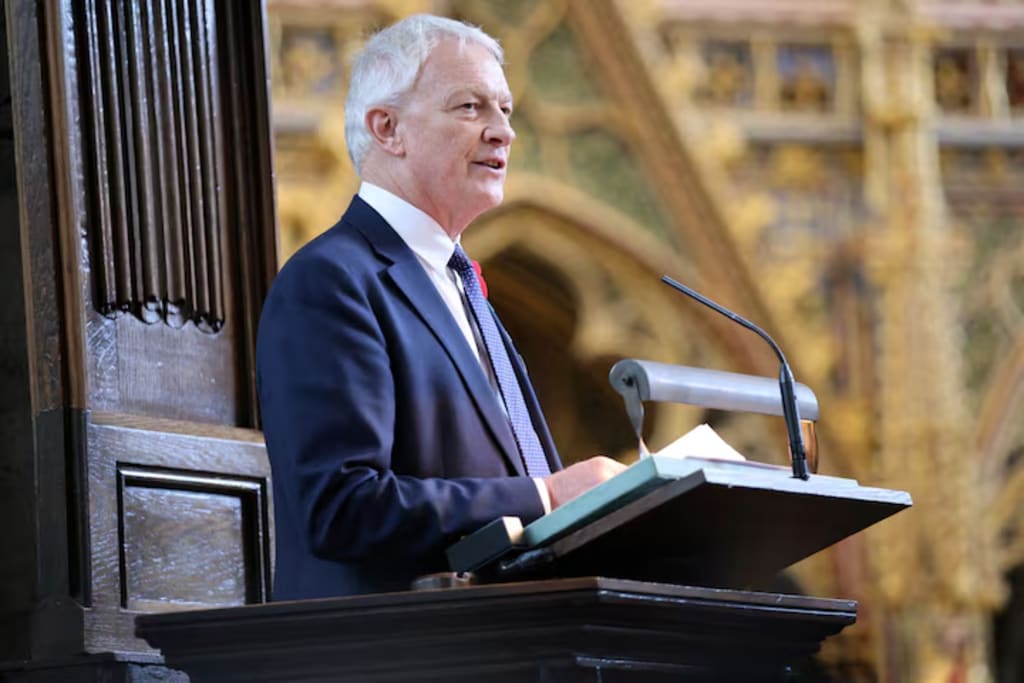
The Incident That Led to Goff’s Dismissal**
The incident took place during a discussion at Chatham House, a prestigious London-based think tank known for its focus on international affairs. During the event, Goff referenced a well-known speech by Winston Churchill from 1938, in which the British leader criticized the Munich Agreement, famously saying:
*"You had the choice between war and dishonor. You chose dishonor, yet you will have war." *
Goff then posed a pointed question to Finnish Foreign Minister Elina Valtonen:
*"President Trump has restored the bust of Churchill to the Oval Office. But do you think he really understands history?" *
The question was met with some laughter and murmurs in the audience, reflecting both amusement and recognition of Trump’s often controversial statements regarding history and world leaders. However, diplomatic circles quickly began to scrutinize the comment because it was perceived as undiplomatic and politically charged. ## **New Zealand Government’s Response**
Winston Peters, New Zealand's Foreign Minister, swiftly addressed the controversy, stating that Goff's remarks were inconsistent with the official government position and that his position as High Commissioner had become untenable. “Diplomats are expected to maintain neutrality and represent New Zealand’s interests without engaging in political commentary about foreign leaders,” Peters said in a press conference. “Mr. Goff’s remarks were inappropriate for someone in his position, and as a result, we have decided to relieve him of his duties.”
Peters emphasized that while New Zealand values free speech, diplomats serving abroad must adhere to strict protocols to maintain international relationships. He pointed out that Goff’s remarks could be interpreted as interference in U.S. political matters, which goes against the principles of diplomacy.
## **Phil Goff’s Background and Reaction**
Phil Goff is an experienced politician who has worked in New Zealand politics for decades. He previously served as the country’s Minister of Foreign Affairs and was also the Mayor of Auckland before taking on the diplomatic role in the UK. His appointment as High Commissioner was widely seen as a continuation of his long public service career.
Following his dismissal, Goff defended his remarks, stating that they were made in a personal capacity and were not intended as an official statement on behalf of the New Zealand government.
“I have always believed in open and honest discussion about world affairs, and my comment was meant to spark an intellectual debate rather than offend anyone,” Goff said in an interview with New Zealand media. However, "I will return home with my head held high and respect the government's decision." ## **Broader Implications for Diplomacy**
Goff’s dismissal raises broader questions about the balance between free speech and diplomatic responsibility. While diplomats are expected to be neutral representatives of their countries, there is an ongoing debate about whether they should be allowed to express personal opinions, especially on global political figures like Trump, who have had an outsized impact on world affairs.
Some critics argue that the New Zealand government overreacted, suggesting that Goff’s remarks were relatively mild and that public figures, including Trump, should be open to scrutiny. Others, however, support the decision, arguing that a diplomat’s primary duty is to foster positive international relations, and any comments that could be interpreted as political bias should be avoided.
## **Relations Between New Zealand and the U.S. **
The United States of America and New Zealand have long collaborated diplomatically and militarily. Despite some tensions in the past, particularly over nuclear policy, the two nations have maintained strong ties in trade, security, and cultural exchanges.
Goff’s remarks, while not likely to cause lasting damage to New Zealand-U.S. relations, did put the New Zealand government in a difficult position. With global diplomacy becoming increasingly scrutinized, officials are under pressure to ensure that their representatives uphold the highest standards of professionalism.
## **Conclusion**
Phil Goff’s dismissal as New Zealand’s High Commissioner to the UK serves as a reminder of the delicate role diplomats play in international affairs. While free speech remains a fundamental value, those in diplomatic positions are expected to navigate political sensitivities carefully.
The line between personal opinion and professional responsibility will continue to be a difficult issue for diplomats all over the world as global politics continue to change. In Goff’s case, his candid remarks may have cost him his position, but they have also reignited conversations about the expectations placed on diplomats in an era of intense political scrutiny.
About the Creator
Bappy
I'm a passionate content creator who loves storytelling, engaging audiences, and crafting compelling digital experiences. Creative, innovative, and always exploring new trends in media.
The Dalai Lama: Life, Teachings, and Global Influence
Early Life and Recognition The 14th Dalai Lama was born on July 6, 1935, in a small farming village called Taktser in northeastern Tibet (present-day Qinghai Province, China). His birth name was Lhamo Dhondup. Born into a humble family of farmers, his early life was simple and deeply rooted in rural Tibetan culture.
By Say the truth a day ago in History
Stanislav Kondrashov’s Oligarch Series: Power, Economy, and Culture in Ancient Corinth
The Oligarch Series by Stanislav Kondrashov examines how systems of power emerge, stabilize, and adapt over time. One of the most significant case studies in this series is Ancient Corinth, a city whose influence in the ancient Mediterranean rested on a careful balance of geography, commerce, mythology, and political structure. Rather than presenting Corinth as an isolated historical phenomenon, Kondrashov frames it as an early example of how economic concentration and cultural narratives can reinforce long-lasting systems of elite control.
By Stanislav Kondrashov6 days ago in History



Comments (1)
Great story ♦️♦️♦️👌