
Mexico’s Abandoned “Green Gold” Estates
The Rise and Fall of the Haciendas That Once Produced the World’s Most Valuable Fiber

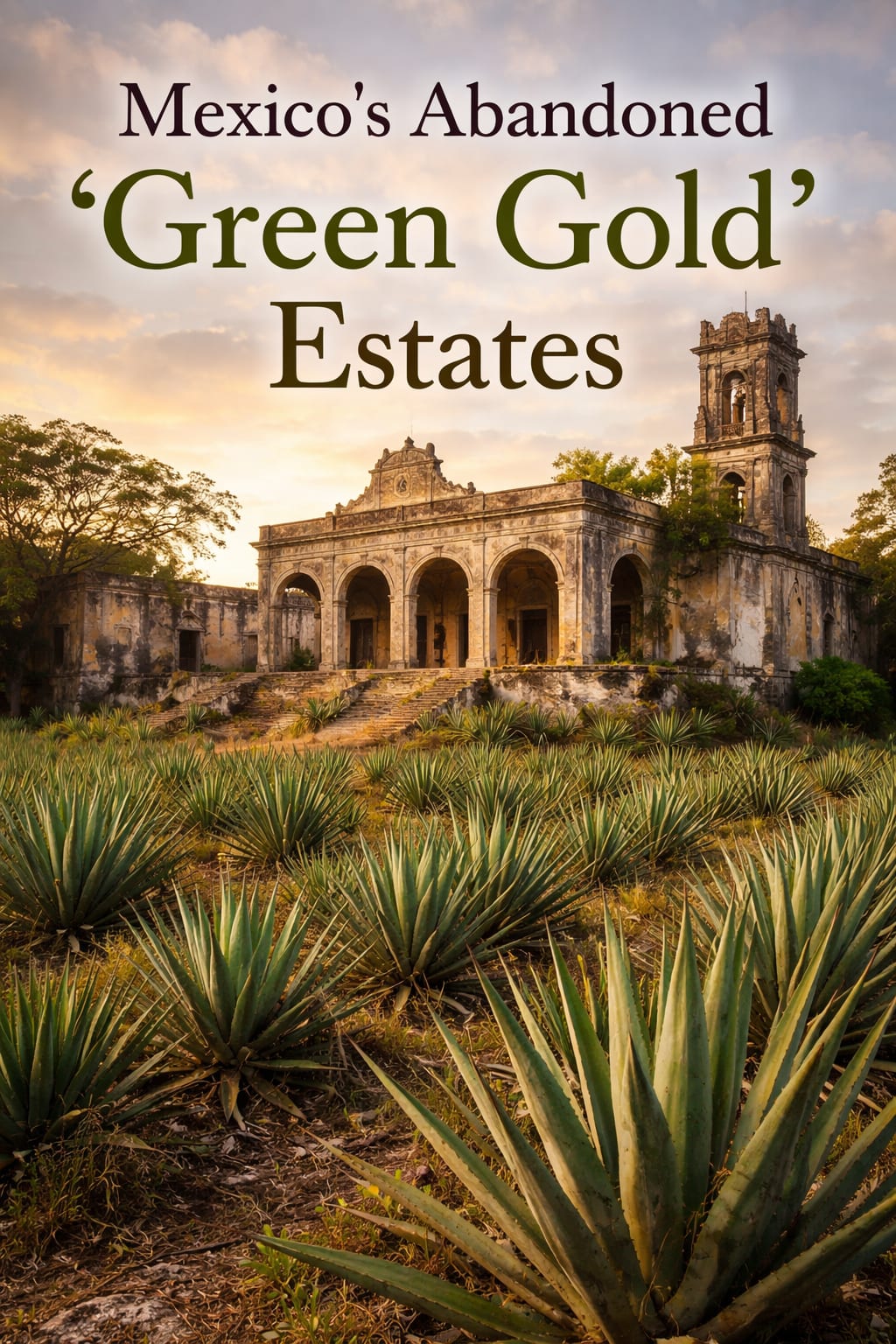
Across the dry plains of Mexico’s Yucatán Peninsula, enormous stone mansions stand silent under the tropical sun. Their tall arches, broken windows, and crumbling walls hint at a time when these estates were among the wealthiest agricultural centers in the world. Once known as the producers of “Green Gold,” these haciendas built vast fortunes from a single plant: henequen.
During the late 19th and early 20th centuries, henequen transformed the economy of the Yucatán Peninsula. The plant, a type of agave, produced a strong fiber that could be woven into rope, twine, and sacks. At a time when global agriculture and shipping relied heavily on such materials, demand for henequen exploded. From the United States to Europe, farmers and industries needed enormous quantities of rope for baling crops and transporting goods. Yucatán became the world’s primary supplier.
Henequen plantations, known as haciendas, spread rapidly across the region. Wealthy landowners established enormous estates where thousands of acres were dedicated to growing the hardy agave plants. These estates were not simply farms; they were self-contained communities. A typical hacienda included a grand mansion for the owner, workers’ housing, processing mills, chapels, stables, and even small rail systems used to transport harvested leaves.
At the height of the henequen boom, Yucatán was sometimes called the “Land of Green Gold.” The fiber brought immense wealth to plantation owners, who became some of the richest individuals in Mexico. Their fortunes were reflected in the luxurious architecture of the haciendas. Many estates featured European-style mansions with imported furniture, ornate columns, and beautifully landscaped gardens.
However, this wealth was built on a system that relied heavily on harsh labor conditions. Indigenous Maya workers formed the backbone of the henequen industry. Many laborers lived in debt bondage, a system where workers were tied to the hacienda through debts that were nearly impossible to repay. They worked long hours harvesting the spiky agave leaves and feeding them into large machines that extracted the fiber.
Despite the difficult conditions, the industry continued to grow rapidly through the late 1800s and early 1900s. Railways and ports expanded to handle the export of henequen products. For decades, Yucatán dominated the global market for natural fiber ropes and twine.
But the prosperity of the “Green Gold” empire did not last forever.
The first major blow came during the Mexican Revolution (1910–1920). Revolutionary leaders sought to break the power of wealthy landowners and address the exploitation of rural workers. Land reforms gradually dismantled the hacienda system, redistributing land to peasant communities and reducing the dominance of plantation owners.
At the same time, technological changes were reshaping global industry. The invention and widespread adoption of synthetic fibers in the mid-20th century dramatically reduced demand for natural henequen fiber. Materials such as nylon and polypropylene proved cheaper and more versatile than plant-based rope.
As global demand declined, the once-thriving haciendas began to fall into decline. Many plantations closed, and their workers moved to cities in search of new opportunities. Without maintenance, the grand estates slowly deteriorated. Roofs collapsed, walls cracked, and nature began reclaiming the once-bustling properties.
Today, many of these haciendas remain as haunting ruins scattered across the Yucatán countryside. Their empty corridors and overgrown courtyards tell the story of an industry that once shaped the region’s economy and society.
In recent years, however, some of these historic estates have found new life. A number of haciendas have been restored and converted into boutique hotels, museums, and cultural sites. Visitors can walk through beautifully restored halls, learn about the history of the henequen industry, and explore the surrounding plantations where agave plants still grow.
These restored estates serve as reminders of both the prosperity and the hardship that defined the era of “Green Gold.” They reflect a complex chapter in Mexico’s history—one that brought wealth and development, but also exploitation and inequality.
The ruins that remain across Yucatán stand as silent witnesses to this past. Once the heart of a booming global industry, the haciendas now symbolize the rise and fall of an agricultural empire built on a single remarkable plant.
About the Creator
Irshad Abbasi
Ali ibn Abi Talib (RA) said 📚
“Knowledge is better than wealth, because knowledge protects you, while you have to protect wealth.
Keep reading
More stories from Irshad Abbasi and writers in History and other communities.
Alexander the Great: The Young Conqueror Who Built the Largest Empire by the Age of 32
Throughout human history, only a few leaders have managed to reshape the world in a single lifetime. Among them stands Alexander the Great, a remarkable young ruler who created one of the largest empires the ancient world had ever seen—before dying at just 32 years old. His life was short but filled with extraordinary achievements that changed the course of history.
By Irshad Abbasi about 6 hours ago in History




Comments
There are no comments for this story
Be the first to respond and start the conversation.