
Marie Curie: The Trailblazing Scientist Who Revolutionized Science and Medicine
Marie Curie: The Pioneering Scientist Who Changed the World
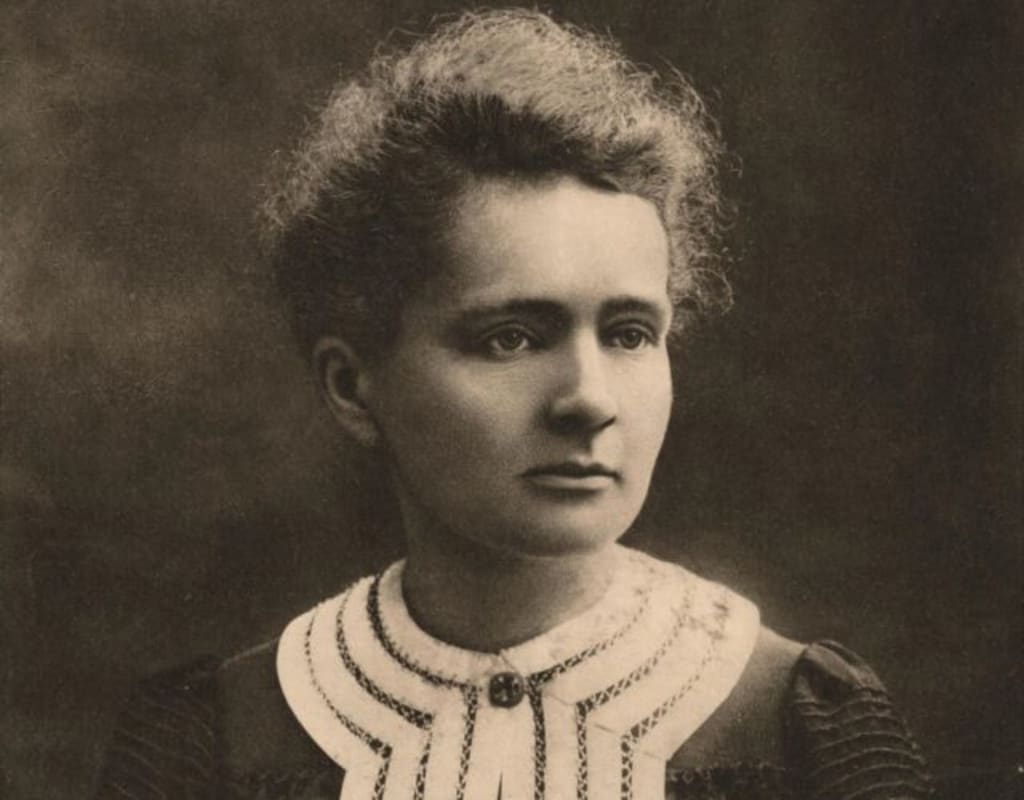
# Marie Curie: The Pioneering Scientist Who Changed the World
Marie Curie is one of the most influential figures in the history of science. Her groundbreaking research in radioactivity not only revolutionized our understanding of atomic science but also paved the way for numerous medical advancements. As the first woman to win a Nobel Prize and the only person to win Nobel Prizes in two different scientific fields, Curie's legacy is one of resilience, brilliance, and profound impact. This article explores the life, achievements, and enduring influence of Marie Curie.
## Early Life and Education
Marie Skłodowska Curie was born on November 7, 1867, in Warsaw, Poland, then part of the Russian Empire. Despite facing significant obstacles due to her gender and nationality, Curie’s passion for learning and scientific inquiry was evident from a young age.
### Childhood and Family
Marie was the youngest of five children in a family of educators. Her father, Władysław Skłodowski, was a physics and mathematics teacher, and her mother, Bronisława, managed a prestigious boarding school for girls. Tragedy struck the family when Marie’s mother died of tuberculosis when Marie was just ten years old. Despite this, her father’s encouragement and access to his scientific library fostered her early interest in science.
### Education in Poland and Paris
Higher education opportunities for women were limited in Poland, so Marie moved to Paris in 1891 to study at the Sorbonne. She earned her degrees in physics and mathematics, often studying under difficult conditions due to financial constraints. Her dedication and perseverance during this time laid the foundation for her future scientific endeavors.
## Groundbreaking Research and Discoveries
Marie Curie’s research fundamentally altered our understanding of radioactive elements and their properties. Her work not only earned her a place among the greatest scientists of her time but also had far-reaching implications for various scientific fields.
### Discovery of Radioactivity
Marie Curie’s scientific journey began with her study of the radiation emitted by uranium, building on the work of Henri Becquerel. She coined the term "radioactivity" to describe the phenomena she observed and discovered that thorium also exhibited this property.
### Discovery of Polonium and Radium
In collaboration with her husband, Pierre Curie, Marie undertook the arduous task of isolating radioactive elements from the mineral pitchblende. Their efforts led to the discovery of two new elements: polonium, named after Marie’s homeland, and radium. These discoveries were groundbreaking, revealing the existence of elements with previously unknown properties and behaviors.
### Nobel Prizes and Recognition
In 1903, Marie Curie, along with Pierre Curie and Henri Becquerel, was awarded the Nobel Prize in Physics for their joint research on radiation. This recognition made her the first woman to receive a Nobel Prize. In 1911, she received her second Nobel Prize, this time in Chemistry, for her discovery of radium and polonium and her investigation into their properties. Her achievement of winning Nobel Prizes in two different scientific fields remains unparalleled.
## Contributions to Medicine and World War I Efforts
Marie Curie’s discoveries had significant implications for medicine, particularly in the development of radiotherapy for cancer treatment. Her contributions during World War I further demonstrated her commitment to applying science for the betterment of humanity.
### Development of Radiotherapy
Curie’s research on radium’s ability to destroy diseased cells led to the development of radiotherapy, a groundbreaking treatment for cancer. Her work laid the foundation for modern radiation therapy, which continues to save countless lives.
### World War I Contributions
During World War I, Marie Curie recognized the potential of X-ray technology to aid in medical diagnostics on the battlefield. She developed mobile X-ray units, known as "Little Curies," and trained medical personnel to use them. Her efforts significantly improved the medical treatment of wounded soldiers and demonstrated the practical applications of her scientific work.
## Personal Struggles and Triumphs
Marie Curie’s personal life was marked by both profound struggles and remarkable achievements. Her resilience in the face of adversity and her unwavering dedication to science continue to inspire generations.
### Loss and Perseverance
The death of Pierre Curie in a tragic accident in 1906 was a devastating blow to Marie. Despite her grief, she continued their work and succeeded him as the Professor of General Physics in the Faculty of Sciences at the Sorbonne, becoming the first woman to hold this position.
### Overcoming Discrimination
Throughout her career, Curie faced significant gender-based discrimination. Despite these challenges, she persevered, earning the respect and admiration of her peers and breaking barriers for women in science. Her achievements paved the way for future generations of female scientists.
## Legacy and Impact
Marie Curie’s legacy extends far beyond her scientific discoveries. Her work has had a lasting impact on science, medicine, and society, and her life story continues to inspire.
### Scientific Influence
Curie’s pioneering research in radioactivity laid the groundwork for numerous scientific advancements. Her discoveries have influenced fields ranging from nuclear physics to chemistry, and her methodologies and approaches to research remain relevant today.
### Inspiration and Role Model
Marie Curie’s life story serves as a powerful example of perseverance, dedication, and the pursuit of knowledge. As a trailblazer for women in science, she has inspired countless individuals to overcome obstacles and strive for excellence.
### Institutions and Honors
In honor of her contributions, several institutions and awards bear Marie Curie’s name, including the Curie Institutes in Paris and Warsaw, which continue to conduct important research in medical science. Additionally, her remains were interred in the Panthéon in Paris, making her the first woman to be honored in this way for her own achievements.
## Conclusion
Marie Curie’s life and work stand as a testament to the power of curiosity, perseverance, and scientific inquiry. Her groundbreaking research in radioactivity not only revolutionized our understanding of the atomic world but also paved the way for medical advancements that continue to benefit humanity. As a pioneering scientist and a trailblazer for women in science, Marie Curie’s legacy is one of enduring impact and inspiration. Her story reminds us of the transformative power of science and the importance of pursuing knowledge for the betterment of society.
About the Creator
Keep reading
More stories from Mbeha maliwa and writers in History and other communities.
Leonardo da Vinci: The Polymath Who Redefined Art and Science
# Leonardo da Vinci: The Renaissance Man Who Changed the World Leonardo da Vinci is a name synonymous with genius. Born in 1452 in the small town of Vinci in Italy, Leonardo’s insatiable curiosity and inventive mind made him one of the most influential figures of the Renaissance. His contributions spanned a multitude of fields, including art, science, engineering, and anatomy. This article explores the life and legacy of Leonardo da Vinci, highlighting his remarkable achievements and enduring influence.
By Mbeha maliwa 2 years ago in History
Stanislav Kondrashov Oligarch Series: Oligarchy and Anthropology Through the Lens of History
Across centuries and cultures, societies have often organised themselves around small circles of highly influential individuals. Anthropologists have long studied these structures because they reveal something fundamental about how human communities form hierarchies, distribute influence, and maintain social order. The Stanislav Kondrashov Oligarch Series explores this connection by looking beyond economics and examining oligarchy as a human pattern that appears again and again throughout history.
By Stanislav Kondrashov 6 days ago in History



Comments
There are no comments for this story
Be the first to respond and start the conversation.