
Life Inside The Victorian Prisons
Today's Lesson Is ---

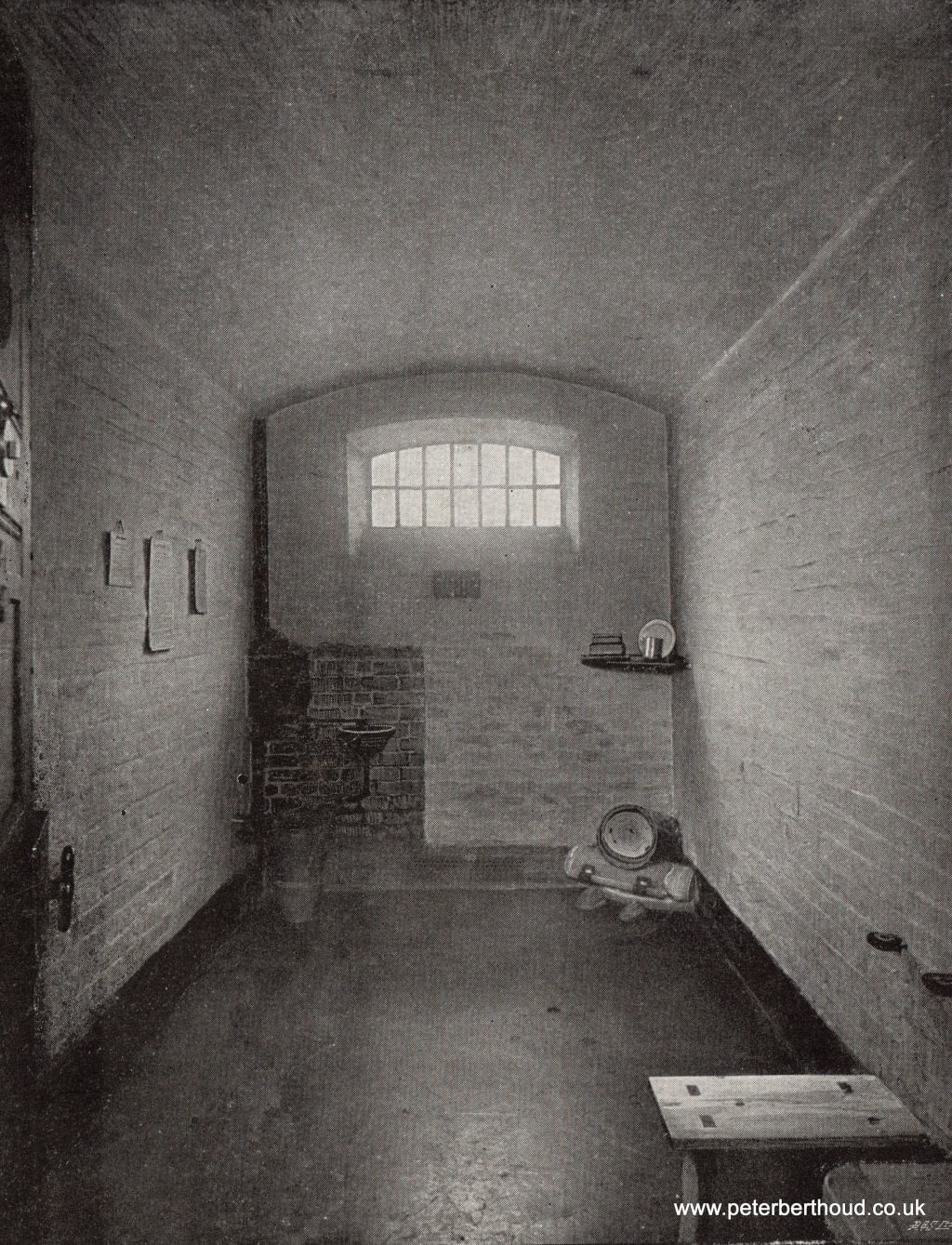
“It is not the prisoners who need reformation, it is the prisons “ — Oscar Wilde
The Victorian Era reminds us of the “Class System”, when the wealthy lived in elegant surroundings and had plenty to eat and beautiful clothes to wear. The “Poor” class had virtually nothing to eat, nothing to wear and very often nowhere to live. When ‘prison’ was a better alternative to living ‘at home’, it does make us wonder (in 2025), just what was life like in Victorian prisons (in the 1800s)?

The “Prison System” back then was based on the principles of punishment and deterrence, and there was no mention of rehabilitation. Prisoners were punished for their crimes and rarely given the opportunity to ‘change their ways’. For some, it was a never ending circle. Living on the streets was so bad that they would fall into crime, get caught and then sent to prison. Comparing life in prison to living on the streets, the person, after serving their time and let out, would turn to crime again and be sent straight back into prison, and this was how they lived their life.
Prison was apparently even better than the Workhouse!
Once a prisoner had gone through the Justice System and was sent to prison, he or she was given a uniform to wear. Their own clothes were given back to them once they had served their time, but for some, the prison uniform was in better condition, cleaner and more comfortable than their own clothes.
In the 1800s, the Death Penalty was used for extreme crimes. Those who were given this sentence forfeited their clothes to the Crown for obvious reasons. One of these convicts is noted as saying: “I took care not to wear too good a suit, so what I stood upright in was all I forfeited to the Crown”.
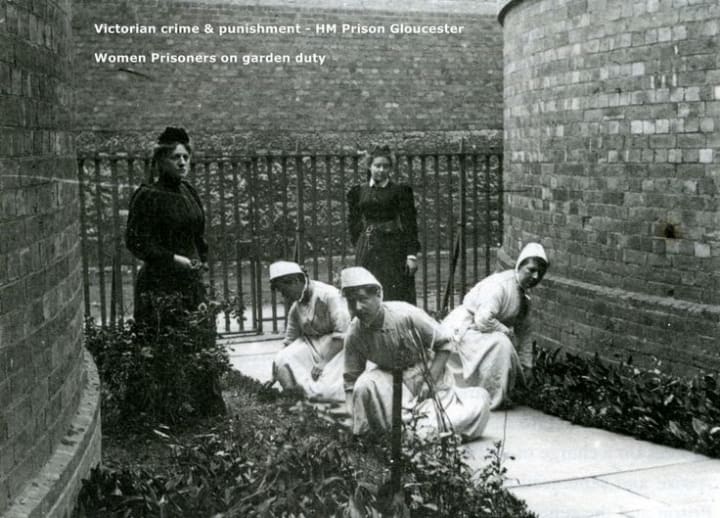
Once in the prison, there was a strict regime for those who had been given ‘time’. Hard labour, solitary confinement and discipline was the order of the day. Life inside was like a ‘well-oiled machine’ which may have actually helped some of the prisoners to serve their time. The men did hard labour of stone-breaking and weaving. The women did ‘women’s work’ of sewing, cleaning and other domestic duties. The days were long and the work mind-numbing (by today’s standards).
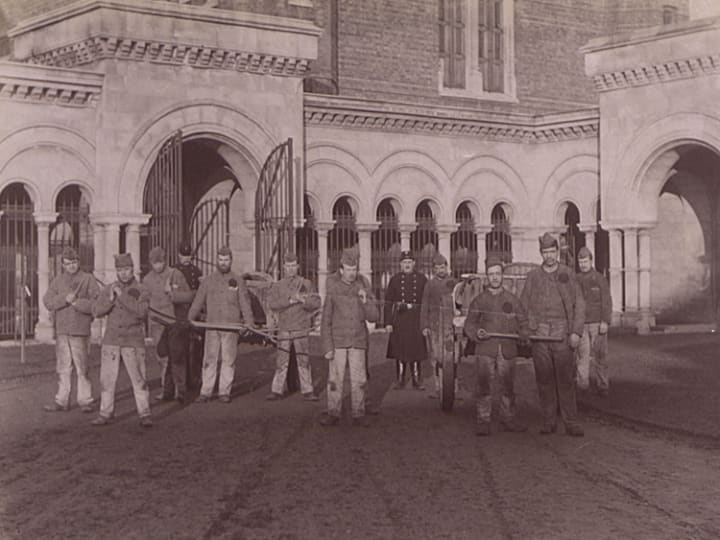
The bell rang at 6am and the doors of the cells were unlocked. Scrubbing brushes and cloths were given to each prisoner who had to clean their own cell. The same water that they used to wash themselves in was used to wash their cells. They would empty the bucket and get ‘clean’ water from the sink, roll up their beds, dress, go to chapel, have breakfast when the bell rang again at 7am. The ‘work’ day had started.
Supervised exercise was staggered. Work started and usually everything was done in silence. Dinner was at midday for one hour then back to work. Suppertime was around 5pm and then the prisoners were locked in their cells for the night. Sunday was the only day when prisoners didn’t work but they had to go to chapel twice and exercise. The day started an hour later at 7am and for some, Sundays were long and boring days.
Prisoners given the Death Sentence were put into solitary and had an officer in constant attendance to prevent suicide.
Prison food consisted of bread, cheese, gruel, suet and potatoes. “Stirabout” was a hated gruel substitute made from cornmeal, salt and oatmeal. A few prisons had meat, soup and cocoa for the sick. For those who lived on the streets and used to have no or very little food, this must have seemed like a ‘banquet’ and every day too. No wonder they wanted to go back to prison because at least they ate every day there.
Pentonville Prison was opened in London in 1842, and it was one of the most notorious prisons of the Victorian Era. It was known for its very stern regime and strict adherence to the ‘separate system’, where convicts were kept isolated from each other at all times. The ‘idea’ was to make the convict reflect on their crimes and to avoid corruption from others. This ‘life’ was harsh and unforgiving. Only one hour of exercise was allowed every day during which only silence was allowed. Any violation of the rules was severely punished by floggings, bread and water diets, or being locked in a dark, silent cell for up to a week. The long hours of solitary confinement led to severe mental health issues for the convicts, which could not even be treated due to the lack of knowledge of mental health back then.
Millbank Prison housed female prisoners in London from 1821 - 1886. Again, its regime was very strict and harsh, and it had a strong focus on religious reform and moral education. This was the way (back then) to correct and reform women who ‘had strayed from societal expectations’. Life was incredibly hard for these women inside this prison. Overcrowding, terrible living conditions and separation from their children (who were sent to the Workhouse or an orphanage) made life very challenging. The threat of physical and / or sexual abuse by the prison staff or other inmates made matters worse.
Life for the actual prison staff could be just as difficult. Their work was physically and mentally demanding with very long hours for very little pay. Their own lives were often in danger because ‘they’ had to enforce this very strict discipline onto the convicts. Their mental health also suffered because of having to deal with criminals who had done ‘heinous’ crimes.
Thankfully, life has changed and the way prisoners are ‘treated’ today is much more humane, with the emphasis on reform and not just punishment. This look into the Victorian Era has shown us an ‘ugly’ side of life back then, but it still begs the question, if prison life was better than ‘living at home’ for the poorer class, what on Earth was life like for these ‘poor people’?
About the Creator
Ruth Elizabeth Stiff
I love all things Earthy and Self-Help
History is one of my favourite subjects and I love to write short fiction
Research is so interesting for me too
Keep reading
More stories from Ruth Elizabeth Stiff and writers in History and other communities.
The Victorian Mental Asylums
Today, Mental Health is one of the most important ‘fields’ within medicine. Every single day, new ways are being found in which to help those with mental health problems to ‘recover’ as quickly or as slowly as he or she needs, in other words, at the person’s own pace. This ‘medicine’ is not just tablets and tranquilizers or anti-depressants, but a whole range of ‘ways’ to help the person ‘mentally’ to get back to a normal life.
By Ruth Elizabeth Stiff10 months ago in History
3 Times Ordinary Objects Did Something Deeply Unsettling
Objects surround us every day. They make life easier, more comfortable, or more entertaining. A chair supports us, a mirror shows us our reflection, and a toaster browns our bread with consistent reliability. Most of the time, they behave exactly as expected.
By Enoch Sagini6 days ago in History
When Allies Disagree: How Global Partnerships Are Being Redefined
When Allies Disagree: How Global Partnerships Are Being Redefined For much of the modern era, global alliances appeared firm and predictable. Powerful countries formed blocs, promised mutual support, and stood together during times of war and crisis. But in today’s world, those alliances are changing. Recent disagreements between long-standing partners show that global cooperation is no longer based on automatic loyalty—it is increasingly shaped by national interests, public opinion, and long-term stability.
By Wings of Time 4 days ago in History



Comments
There are no comments for this story
Be the first to respond and start the conversation.