Latest Stories
Most recently published stories in History.
Decoding the Indus Script. AI-Generated.
The script of the ancient Indus Valley Civilization (also known as the Harappan Civilization), dating back to the 3rd millennium BCE, remains one of the most enduring mysteries in archaeology and linguistics. Discovered in the early 20th century at Harappa and Mohenjo-Daro, two major cities of this Bronze Age civilization located in present-day Pakistan and northwest India, the script comprises a series of symbols and inscriptions found on seals, pottery, and other artifacts.
By Marveline Merab2 years ago in History
Not just the stuff of legend. AI-Generated.
In the annals of Norse seafaring and exploration, the Viking sunstone emerges as a remarkable testament to ancient navigational prowess. This legendary crystal, purportedly used by Viking sailors during the medieval period (8th to 11th centuries), allowed them to navigate the open seas even when the sun was obscured by clouds or below the horizon.
By Marveline Merab2 years ago in History
Minoan Frescoes: WINDOWS into Past Worlds. AI-Generated.
In the ancient Mediterranean world, the Minoan civilization of Crete flourished during the Bronze Age, leaving behind a rich cultural legacy that included vibrant and evocative frescoes. These artworks, created by skilled Minoan artists between approximately 2000 to 1500 BCE, adorned the walls of palaces, villas, and public buildings, offering glimpses into Minoan life, culture, and religious practices.
By Marveline Merab2 years ago in History
The ancient Chinese earthquake DETECTOR. AI-Generated.
The Chinese seismograph, invented by Zhang Heng during the Eastern Han Dynasty (1st to 2nd century AD), stands as a remarkable testament to the scientific ingenuity of ancient China. This sophisticated device, considered one of the earliest known forms of a seismoscope, represented a monumental leap in early earthquake detection and remains a significant milestone in the history of science and technology.
By Marveline Merab2 years ago in History
Babylonian MATHEMATICAL Astronomy. AI-Generated.
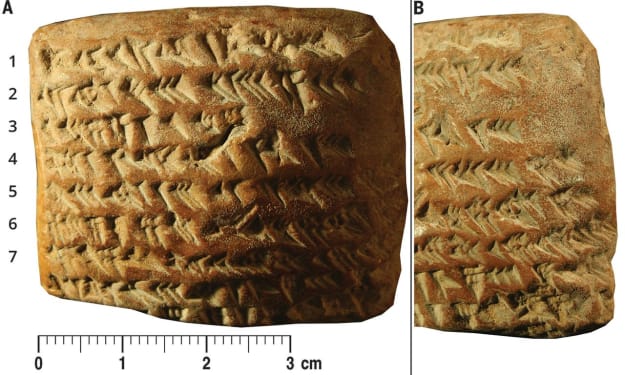
In the ancient Mesopotamian civilization of Babylonia, nestled between the Tigris and Euphrates rivers, another extraordinary chapter in human history unfolded through the study of astronomy. The Babylonians, known for their advancements in mathematics, astronomy, and astrology, left behind a legacy of astronomical knowledge encapsulated in their meticulously inscribed clay tablets.
By Marveline Merab2 years ago in History
Ancient Egyptian Surgery. AI-Generated.
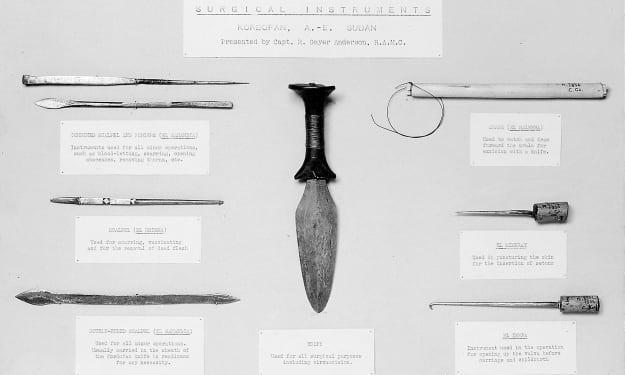
In the ancient land of Egypt, where the Nile River nourished a civilization renowned for its grandeur and mystique, a remarkable chapter in medical history unfolded. The ancient Egyptians, celebrated for their architectural marvels and artistic achievements, also made profound strides in the field of medicine, particularly in the realm of surgery.
By Marveline Merab2 years ago in History
The Pythagorean 'Greedy' Cup Explained. AI-Generated.
In the golden age of ancient Greece, where philosophy and science flourished, the brilliant mind of Pythagoras conjured up one of the most intriguing and clever inventions: the Pythagorean Cup. This deceptively simple drinking vessel, with its profound moral lesson and ingenious design, reflects the blend of intellectual curiosity and practical wisdom that characterized Greek thought.
By Marveline Merab2 years ago in History
Were Catapults the Secret to Roman Military Success?. AI-Generated.
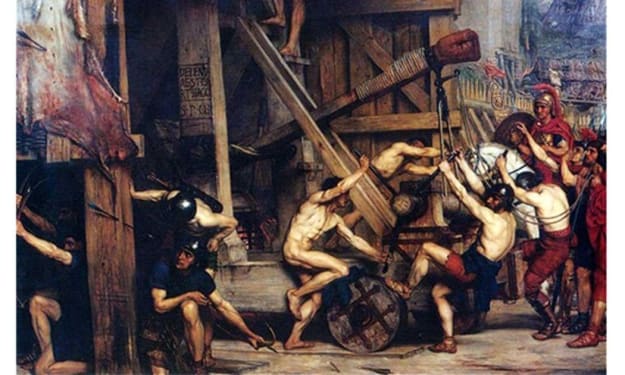
In the heart of the Roman Empire, where disciplined legions marched and grand fortifications dotted the landscape, the development of military technology played a crucial role in Rome's dominance. Among these technological marvels, Roman catapults stand out as a testament to the ingenuity and engineering prowess of ancient Rome. These powerful siege engines, known for their precision and destructive capability, changed the course of warfare and secured the Roman Empire's place in history.
By Marveline Merab2 years ago in History
What is a Basilica?. AI-Generated.
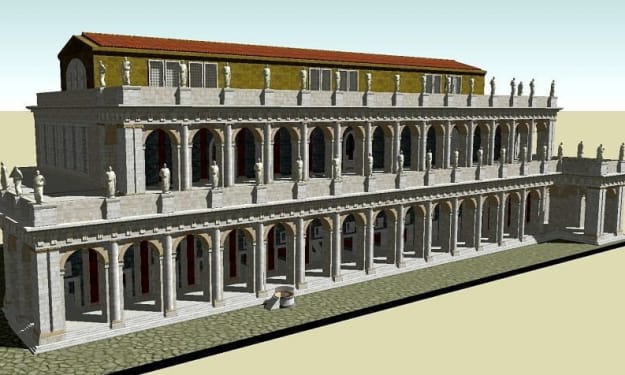
In the heart of the Roman Empire, where grandiose structures and bustling forums showcased the might and sophistication of Roman civilization, the basilica stood as a testament to architectural ingenuity and civic life. The Roman Basilica, an architectural marvel, served as a hub for legal, commercial, and social activities, embodying the essence of public life in ancient Rome.
By Marveline Merab2 years ago in History
The Lighthouse of Alexandria: One of the Seven Wonders. AI-Generated.
In the ancient world, where the Mediterranean Sea was the lifeblood of commerce and culture, the city of Alexandria stood as a beacon of knowledge and innovation. Among its many marvels, the Lighthouse of Alexandria, also known as the Pharos of Alexandria, shone the brightest. This architectural wonder, built on the small island of Pharos, guided sailors safely into the bustling port and symbolized the ingenuity and ambition of the Hellenistic era.
By Marveline Merab2 years ago in History