
Were Catapults the Secret to Roman Military Success?
History

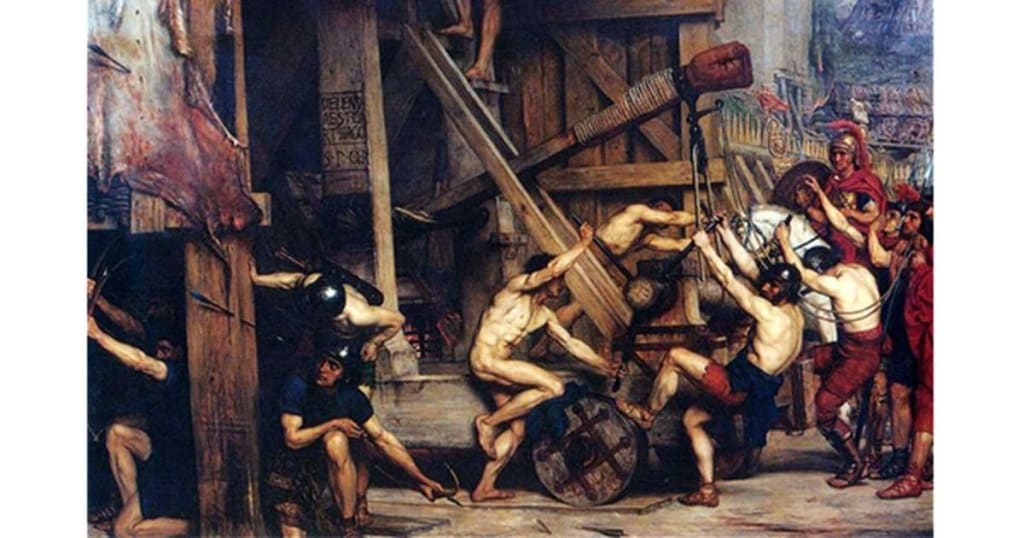
In the heart of the Roman Empire, where disciplined legions marched and grand fortifications dotted the landscape, the development of military technology played a crucial role in Rome's dominance. Among these technological marvels, Roman catapults stand out as a testament to the ingenuity and engineering prowess of ancient Rome. These powerful siege engines, known for their precision and destructive capability, changed the course of warfare and secured the Roman Empire's place in history.
Imagine a Roman legion preparing for a siege. The disciplined soldiers, clad in their iconic armor, work together to assemble the massive wooden frames of the catapults. These formidable machines, known as ballistae and onagers, were the heavy artillery of their time, capable of hurling large projectiles with devastating force. The Romans, ever the masters of adaptation and innovation, refined these siege engines to become indispensable tools in their military campaigns.
The ballista, resembling a giant crossbow, was one of the most effective Roman catapults. It used torsion springs made of twisted ropes or sinews to store energy, which was then released to launch projectiles with great accuracy and speed. These missiles, often large stones or bolts, could penetrate enemy fortifications and cause significant damage to both structures and personnel. The Romans employed ballistae in various sizes, from smaller, more mobile units to massive fixed installations, tailoring their use to different battlefield scenarios.
The onager, named for its powerful kick resembling that of a wild donkey, was another formidable Roman catapult. This siege engine used a single arm powered by torsion springs to hurl heavy stones or incendiary devices over long distances. The onager's sheer power made it an effective tool for breaching walls and creating chaos within enemy ranks. The Romans often used onagers during prolonged sieges, where their ability to cause sustained damage was invaluable.
Picture a Roman siege in action. The air is filled with the tension of impending battle as the soldiers position their catapults. With a coordinated signal, the machines spring to life, launching a barrage of projectiles toward enemy fortifications. The sound of cracking wood and the impact of stones reverberate through the air, a testament to the engineering genius behind these ancient weapons. The enemy, caught off guard by the precision and power of the Roman catapults, scrambles to defend their positions.
The development and use of catapults were not solely for destructive purposes. The Romans also demonstrated a keen understanding of psychological warfare. The sight and sound of these formidable machines could demoralize enemy troops, making them think twice before attempting to resist the might of the Roman legions. The psychological impact, combined with the physical destruction, underscored the effectiveness of Roman siege tactics.
As the Roman Empire expanded, so did the influence of its military technology. Roman catapults became a symbol of their engineering brilliance, influencing the development of siege engines in other cultures and throughout subsequent history. The principles behind these ancient machines laid the groundwork for the evolution of artillery, continuing to inspire military engineers and historians alike.
Today, the legacy of Roman catapults endures. The remnants of these siege engines, discovered in archaeological sites and depicted in ancient manuscripts, offer a glimpse into the sophistication of Roman warfare. Modern reconstructions and studies provide insights into the engineering techniques and materials used, highlighting the advanced knowledge possessed by Roman engineers.
As we delve into the mysteries of Roman catapults, we invite you to embark on this journey through time and space. Discover how ancient engineers crafted these powerful machines that shaped the course of history and secured the Roman Empire's dominance.
From the fortified cities of ancient Rome to the history books of today, the story of Roman catapults continues to captivate and inspire. It serves as a reminder of our shared heritage and the remarkable feats of those who came before us. As we marvel at modern military technology, let us honor the pioneers who first dared to harness the power of engineering to change the face of warfare.
Join us in celebrating the legacy of Roman catapults and their enduring impact on military engineering and strategy. Every gear, every projectile from the ancient world is a link in the unbroken chain of human innovation and ingenuity—a chain that stretches from the siege engines of Rome to the advanced weaponry of today.
By appreciating and understanding these ancient contributions, we not only honor the ingenuity of our ancestors but also inspire future generations to continue exploring, questioning, and innovating. Let us keep the spirit of discovery alive, kindled by the brilliant minds who first dared to revolutionize the art of war.
If you enjoyed this story, please like, comment, and share. Your engagement helps us explore and uncover more fascinating tales from history.
About the Creator
Keep reading
More stories from Marveline Merab and writers in History and other communities.
What is a Basilica?
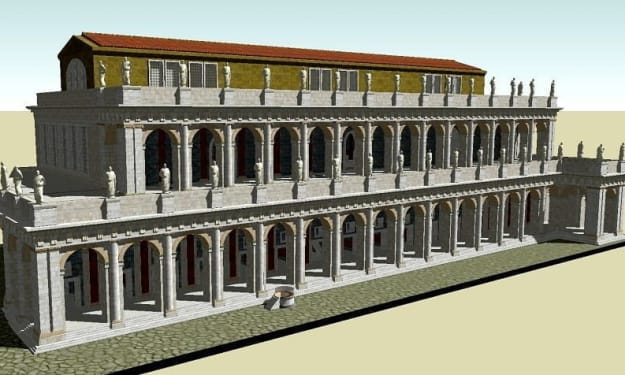
In the heart of the Roman Empire, where grandiose structures and bustling forums showcased the might and sophistication of Roman civilization, the basilica stood as a testament to architectural ingenuity and civic life. The Roman Basilica, an architectural marvel, served as a hub for legal, commercial, and social activities, embodying the essence of public life in ancient Rome.
By Marveline Merab2 years ago in History
3 Harmless Habits That Once Caused Absolute Chaos
Most habits are comfortingly dull. You chew gum. You clap at events. You check your phone. You assume—reasonably—that these actions will not destabilize governments, bankrupt industries, or end lives. Society depends on this assumption. If every small habit carried catastrophic potential, we would never leave the house.
By Enoch Sagini5 days ago in History
Brosley Punch — The Strike That Shook Fate
Brosley was never taught how to throw a punch. He learned it the hard way—through hunger, through survival, through a childhood spent on a world that showed no mercy. Long before the universe would whisper his name in fear, Brosley was just a boy standing on cracked red stone, staring at a sky that never answered his questions.
By The best writer 3 days ago in History
Wild Card Weekend Recap: What Happens Now?
I think I figured out why I love Wild Card Weekend so much. It's because it's the first playoff anything of the calendar year. The NFL season starts in the fall, and once upon a time, the champion was crowned either on or slightly before New Year's. The evolution of the NFL schedule has resulted in the playoffs starting just into the New Year, and currently, the final week of the season falls on the first weekend of the New Year, with Wild Card Weekend coming a week after that. So yes, chronologically, the NFL's Wild Card Weekend serves as the first playoff anything of the calendar year.
By Clyde E. Dawkins8 days ago in Unbalanced


Comments
There are no comments for this story
Be the first to respond and start the conversation.