
The Lighthouse of Alexandria: One of the Seven Wonders
History

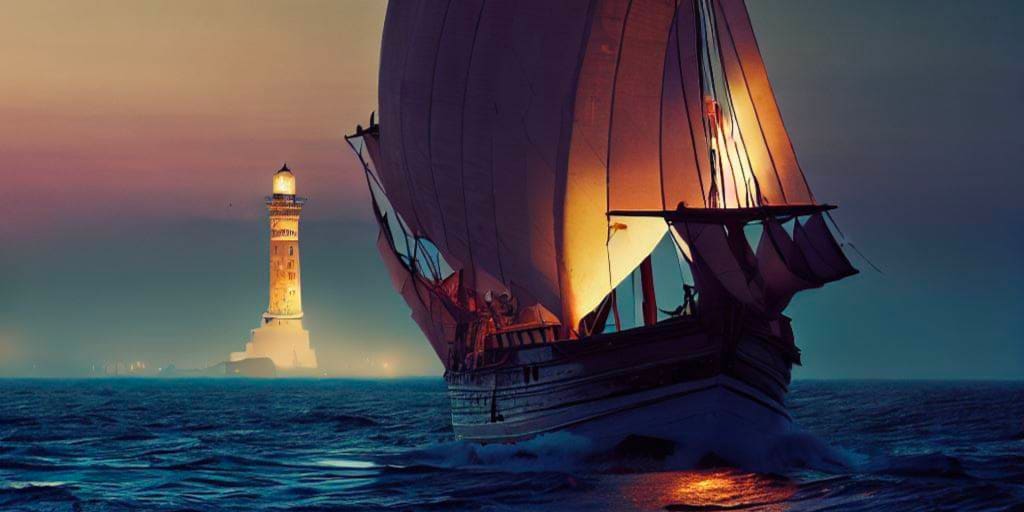
In the ancient world, where the Mediterranean Sea was the lifeblood of commerce and culture, the city of Alexandria stood as a beacon of knowledge and innovation. Among its many marvels, the Lighthouse of Alexandria, also known as the Pharos of Alexandria, shone the brightest. This architectural wonder, built on the small island of Pharos, guided sailors safely into the bustling port and symbolized the ingenuity and ambition of the Hellenistic era.
Imagine the bustling streets of ancient Alexandria, filled with merchants from distant lands, scholars from the great Library of Alexandria, and ships laden with treasures. In the midst of this vibrant city, the construction of the lighthouse began under the reign of Ptolemy I Soter, around 280 BCE. It was designed by the Greek architect Sostratus of Cnidus, whose vision was to create a structure that would both serve a practical purpose and stand as a testament to human achievement.
The Lighthouse of Alexandria rose to an astounding height, estimated to be between 100 and 130 meters, making it one of the tallest man-made structures of its time. Its three-tiered design included a square base, a cylindrical middle section, and a towering lantern on top. Each tier was meticulously crafted, blending functionality with artistic grandeur. The lighthouse was built with large blocks of light-colored stone, which glowed under the sun and shone brightly at night, thanks to a massive open flame at its summit.
As night fell, the beacon of the lighthouse was visible for miles across the Mediterranean, a guiding star for sailors navigating treacherous waters. The fire, maintained by a continuous supply of fuel, reflected off polished bronze mirrors, projecting a beam that could be seen far and wide. This ingenious use of technology ensured the safety of countless ships, preventing them from running aground on the hidden reefs and rocky coastlines.
The lighthouse was more than just a navigational aid; it was a symbol of Alexandria’s prominence and the Hellenistic world's scientific advancements. The Pharos became a legendary structure, one of the Seven Wonders of the Ancient World, celebrated for its engineering brilliance and majestic beauty. It embodied the spirit of exploration and discovery that defined the era, attracting visitors from across the known world.
However, the Lighthouse of Alexandria was not immortal. Over the centuries, it endured the ravages of time, including several earthquakes that weakened its structure. By the 14th century, the once-magnificent lighthouse had crumbled into ruins, its remnants scattered into the sea. Despite its physical demise, the legacy of the Pharos lived on, inspiring countless stories, artworks, and even modern lighthouses.
Today, the memory of the Lighthouse of Alexandria endures as a symbol of human ingenuity and the timeless quest for knowledge. Archaeologists and historians continue to study its remains, piecing together the story of its construction and glory. The lighthouse remains a testament to the extraordinary achievements of ancient engineers and the enduring power of human ambition.
As we delve into the mysteries of the Greek Lighthouse of Alexandria, we invite you to embark on this journey through time and space. Discover how ancient architects and engineers crafted a wonder that guided mariners and stood as a beacon of civilization.
From the sunlit shores of ancient Alexandria to the pages of history books today, the story of the Lighthouse of Alexandria continues to captivate and inspire. It serves as a reminder of our shared heritage and the remarkable feats of those who came before us. As we marvel at modern engineering marvels, let us honor the pioneers who lit the way, literally and metaphorically.
Join us in celebrating the legacy of the Lighthouse of Alexandria and its enduring impact on navigation, architecture, and human achievement. Every stone, every spark of the ancient beacon is a link in the unbroken chain of innovation and discovery—a chain that stretches from the ancient shores of Alexandria to the lighthouses guiding ships today.
By appreciating and understanding these ancient contributions, we not only honor the ingenuity of our ancestors but also inspire future generations to continue exploring, questioning, and reaching for the stars. Let us keep the flame of curiosity alive, kindled by the brilliant minds who first dared to illuminate the darkness.
Like, comment, share, and subscribe to delve deeper into the stories that define our past and inspire our future. Together, we unveil the stories that shape our world.
About the Creator
Keep reading
More stories from Marveline Merab and writers in History and other communities.
Gunpowder: Origins in the East
In the heart of ancient China, where mist-clad mountains whispered tales of mysticism and wisdom, a humble alchemist named Wei Boyang embarked on a journey that would alter the course of history. It was during the Han Dynasty, a time when emperors sought immortality through elixirs brewed from rare herbs and secret incantations.
By Marveline Merab2 years ago in History
Mestre Best: The Warrior Who Taught Restraint
In the mountain city of Valenor, there was a name spoken softly, almost with reverence—Mestre Best. No statues were built in his honor, no songs officially recorded his deeds, yet every fighter, scholar, and traveler knew the legend. Some said he was the greatest master of combat the world had ever seen. Others claimed he was a philosopher disguised as a warrior. The truth was more complex than either tale.
By The best writer a day ago in History
A massive underwater stone wall that is almost 7,000 years old is found by divers.
One of the buried stone monuments on Sein Island is a granite wall off Brittany that is more than 7,000 years old and the length of a football pitch. The discovery is being used by marine archaeologists in the vicinity of Île de Sein to explain how stone-built coastal villages predate the widespread spread of farming.
By Francis Dami6 days ago in History


Comments
There are no comments for this story
Be the first to respond and start the conversation.