
Latest Developments: Government Shutdown 2025 — **Current Status & Outlook
# Latest Developments: Government Shutdown 2025 — **Current Status & Outlook**


# Latest Developments: Government Shutdown 2025 — **Current Status & Outlook**
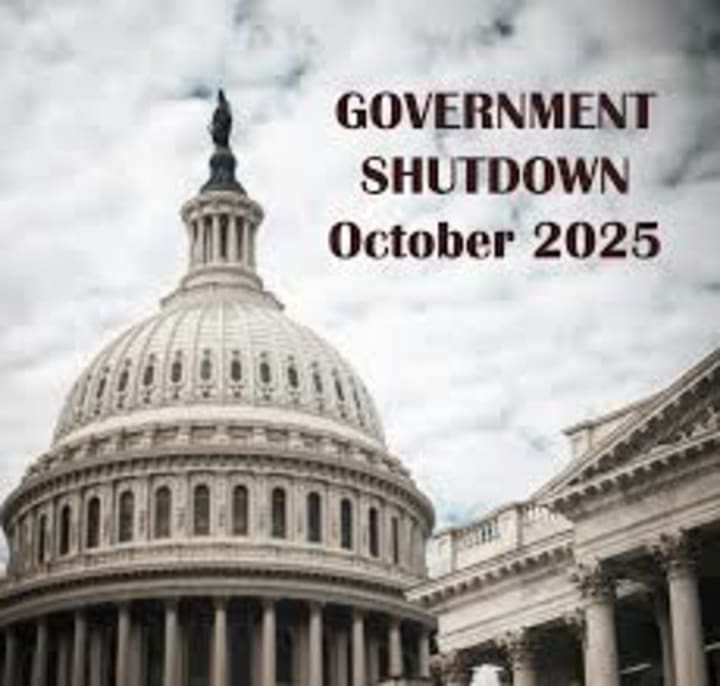
Since October 1, 2025, the U.S. federal government has been in a partial shutdown after Congress failed to pass appropriation bills to fund operations for fiscal year 2026. Below is a thorough, question-based update on the current state of affairs, the causes, and possible paths forward.

## What triggered the 2025 shutdown — and who is to blame?
The shutdown began at **12:01 a.m. EDT on October 1, 2025**, when a continuing resolution (CR) or full appropriations legislation was not passed. ([ويكيبيديا][1])
Key disputes include disagreements over funding levels, the extension of health insurance tax credits under the Affordable Care Act (Obamacare), and proposed rescissions (spending cuts) to foreign aid and federal programs. ([Congressman Greg Stanton][2])
Republicans, controlling both the House and the White House, demanded that Democrats first support reopening the government before negotiating on subsidy extensions; Democrats insist on assurances before any reopening.
---
# Which federal operations are affected — and which continue?
* Furloughs and suspensions**: An estimated **803,283+ federal employees** are furloughed (temporarily unpaid) or sent home, while many others are working without pay.
*Health and science agencies hit hard**:
• The Department of Health and Human Services (HHS) will furlough ~41% of its staff.
• The CDC expects to suspend many programs, and the NIH is planning to furlough up to 75% of its personnel. ([Reuters][4])
*Essential services maintained**: Programs such as **Medicare, Medicaid, Social Security, and the Transportation Security Administration (TSA)** continue to operate. (
* Economic data and reporting paused**: Agencies like the Bureau of Labor Statistics, Census Bureau, and Bureau of Economic Analysis have suspended data releases, which affects forecasts and policy decisions.
National museums and parks**: Some cultural institutions are closed. For instance, the National Gallery of Art shut its doors during the shutdown.
* Web messaging and political tone**: Federal websites now display banners blaming Democrats for the shutdown, framing the narrative as a partisan conflict.
#What financial losses and economic disruptions are already being felt?
* **GDP impact**: A White House memo warns the U.S. economy could lose **$15 billion per week** while the shutdown continues, and up to 1.9 million civilian employees are affected. ([بوليتكو][7])
* **Taxpayer cost**: The Congressional Budget Office estimates around **$400 million lost per day** due to unpaid work, and cumulative costs already top **$1.2 billion** in the early days. ([The Times of India][8])
* **Private-sector ripple effects**: Disruptions in government contracting, grant disbursements, data releases, and regulatory operations affect businesses, investment decisions, and hiring. ([Reuters][5])
* **Layoff threat looms**: If the impasse persists, the administration has threatened to move from furloughs to **mass federal layoffs*
Why have negotiations failed — and what’s the political standoff?
*Failed Senate votes**: Both the Republican-led and Democratic proposals to reopen funding have failed to secure the 60 votes needed in the Senate.
* Blame game escalates**: House Speaker Mike Johnson accuses Democrats of not negotiating sincerely; Democrats counter that Republicans refuse to compromise.
*Shifting messaging**: The Trump administration uses aggressive messaging—via website banners and public statements—to press blame on Democrats.
* Conditional tactics**: Republicans insist Democrats must agree to reopen the government before subsidy talks continue; Democrats say meaningful negotiations can’t start until funding is restored.

# What are possible resolutions — and how might this end?
1. **Short-term continuing resolution (CR)**: Congress could pass a clean CR to resume funding while negotiations continue on disputed issues.
2. **Targeted “must-pass” bills**: Legislators might bundle high-priority agency funding with other measures to force agreement.
3. **Last-minute breakthrough**: Intense negotiations or behind-the-scenes concessions may lead to a late-night deal.
4. **Prolonged stalemate**: If neither side budges, the shutdown could extend, increasing economic damage and pressuring reluctant moderates or independents to break ranks.
Public pressure, internal dissent, economic fallout, and midterm election timing will all weigh heavily on decision-makers.
About the Creator
America today
Breaking news, political insights, real-time analysis, U.S. politics, global politics, elections, government policies, international relations, diplomacy, political debates, trending political stories, expert commentary, factual reporting,.
Keep reading
More stories from America today and writers in History and other communities.
government shutdown 2026
**Government Shutdown 2026: What It Means and Why Americans Are Concerned** A possible government shutdown in 2026 has become a major topic of public discussion in the United States. Many people are searching for clear explanations about what a government shutdown is, why it may happen, who will be affected, and how serious the consequences could be. This article provides a detailed and easy-to-understand overview while answering the most common questions people are asking.
By America today 2 months ago in History
This is the world’s most heavily secured convoy. Part 2
To handle this challenge, the U.S. government has created a dedicated agency whose sole job is to secure nuclear weapons. The military convoys you see are commonly used to transport nuclear weapons within the U.S. At first glance, such a convoy looks even more secure than that of a VIP—security an ordinary person can hardly imagine.
By Imran Ali Shah6 days ago in History



Comments
There are no comments for this story
Be the first to respond and start the conversation.