
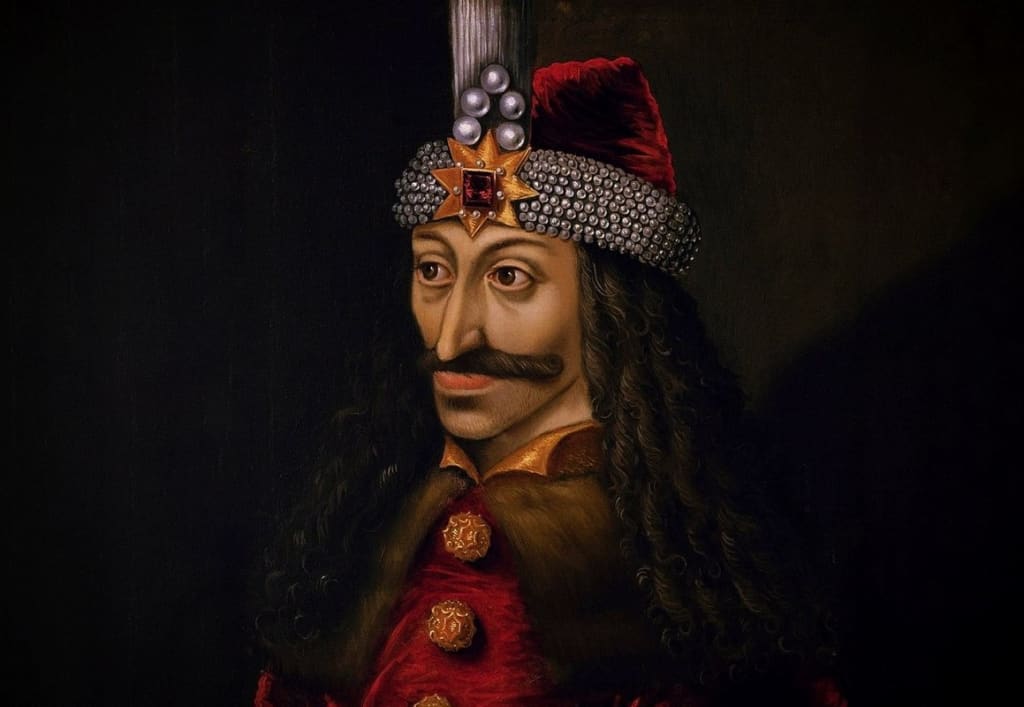
Vlad Țepeș: Sovereignty Written in Blood
History remembers kings by their victories, saints by their sacrifices, and tyrants by their cruelties. Vlad Țepeș is remembered by all three and understood by none. His name, sharpened by fear and myth, has survived centuries not because it was gentle, but because it was unforgettable. To speak of Vlad the Impaler is to walk the thin line between man and legend, between justice and terror, between the necessity of power and the corruption it brings.
He was born into a land that had no luxury of innocence. Fifteenth-century Wallachia was not merely a principality; it was a battlefield disguised as a country. Pressed between the Ottoman Empire to the south and the ambitions of Hungary and Transylvania to the north, it existed only because it endured. Princes rose and fell with alarming speed, and betrayal was not a moral failure it was a survival strategy. Into this world, in 1431, Vlad was born.
His childhood ended early. Taken hostage by the Ottomans alongside his brother Radu, Vlad learned the anatomy of power while still a boy. The Ottoman court was refined, disciplined, and merciless. There, he discovered that authority was not granted—it was imposed. While others learned poetry or prayer, Vlad learned obedience enforced by pain, loyalty sustained by fear. When news reached him that his father had been assassinated and his brother Mircea tortured and buried alive by Wallachian boyars, something within him hardened. From that moment on, mercy would become a weakness he could not afford.
When Vlad finally seized the throne, he ruled not as a father to his people but as a judge. His justice was swift, public, and absolute. Impalement his most infamous punishment was not chosen for its cruelty alone, but for its permanence. A hanged man vanished; an impaled body remained, rotting slowly, teaching the living a lesson carved into silence. In Vlad’s Wallachia, crime did not merely end in death it ended in memory.
Foreign merchants whispered of his brutality. Saxon chroniclers painted him as a demon in human form, a ruler who dined among the dying. Yet within his borders, roads were safe, theft was rare, and corruption trembled. Fear became the mortar that held the fragile state together. Order was achieved not by love, but by terror and it worked.
His greatest trial came with his open defiance of the Ottoman Empire. When Vlad refused to pay tribute, he did more than challenge a sultan; he challenged the inevitable. Mehmed II, conqueror of Constantinople, marched north with an army so vast it seemed to darken the land. Vlad answered not with numbers, but with strategy. He burned his own fields, poisoned his own wells, and turned Wallachia into a wasteland that could not sustain an invader. War became a psychological theater, and Vlad its cruel director.
The night attack of June 1462 remains one of the most audacious acts of medieval warfare. Under cover of darkness, Vlad’s forces struck the Ottoman camp, aiming for the sultan himself. Chaos erupted—horses screamed, tents burned, and blades flashed in the dark. Mehmed survived, but the message was clear: no army, however mighty, was safe in Vlad’s land.
When the Ottomans reached Târgoviște, they found the city abandoned—and beyond it, a forest of impaled corpses. Thousands of bodies, arranged with horrifying precision, stood as a monument to defiance. Even Mehmed, a man well-acquainted with death, recoiled. It was not a battlefield he faced, but a nightmare made real. In that moment, fear changed sides.
Yet history is cruel to those who rely solely on fear. Vlad’s allies faltered, his brother betrayed him, and political convenience turned courage into liability. Arrested by the very king he sought to aid, Vlad disappeared into imprisonment, a ghost while still alive. Twelve years passed in silence as his legend grew without him.
When he returned to the throne for a final time, it was only briefly. Surrounded by enemies and abandoned by history, Vlad died as violently as he had lived. His head was severed and displayed, a grim irony befitting the man who had ruled through spectacle. The body vanished into uncertainty, but the name endured.
Centuries later, fiction would complete what propaganda had begun. Bram Stoker transformed Vlad into Dracula, an immortal parasite feeding on blood and fear. The transformation was symbolic rather than factual: Vlad had indeed fed on fear but to preserve his land, not himself. The vampire was easier to digest than the truth.
Vlad Țepeș was not born a monster. He was shaped by a world that demanded monsters to survive. His cruelty was real, his methods terrifying, but his context was merciless. He ruled in an age where hesitation meant extinction, and he chose to be feared rather than erased.
In the end, Vlad remains history’s uncomfortable question: how much darkness is a ruler allowed when light is not enough?
His life offers no easy answers only a reminder that sometimes, survival writes its laws in blood.
About the Creator
Pure child
just a child who read
Keep reading
More stories from Pure child and writers in History and other communities.
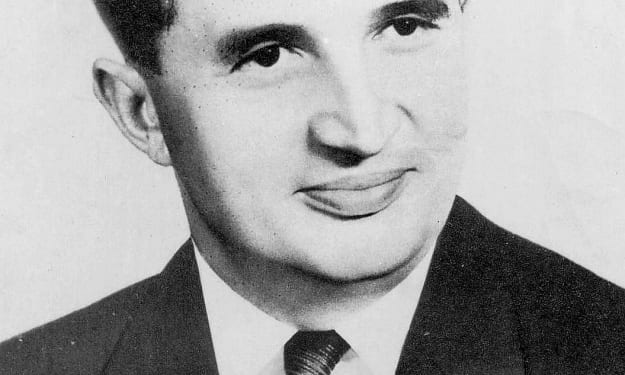
The Rise and Fall of Nicolae Ceaușescu
Nicolae Ceaușescu’s rise to power was initially marked by promise, even optimism. Born in 1918 into a poor peasant family, he entered politics early, shaped by the ideological rigidity of interwar and wartime communism. When he became General Secretary of the Romanian Communist Party in 1965, following the death of Gheorghe Gheorghiu-Dej, many Romanians saw in him a younger leader, one who might soften the harsh Stalinist legacy that had defined the previous decades. For a society weary of repression and deprivation, Ceaușescu appeared to embody the possibility of cautious change.
By Pure child2 months ago in History
The BAFTA Awards
By now, in a stunning departure from recent years, most of the world is aware of what happened at the BAFTA film awards. Social Media Headlines will tell you the bare bones: that John Davidson, a Tourette's Syndrome advocate, shouted a racial slur at two Actors of Colour, Michael B Jordan and Delroy Lindo.
By Natasja Rose4 days ago in Psyche


Comments
There are no comments for this story
Be the first to respond and start the conversation.