
Joseph Goebbels, Propaganda through films and Hail Hitler
Nazism through the lens of films during the Second World War
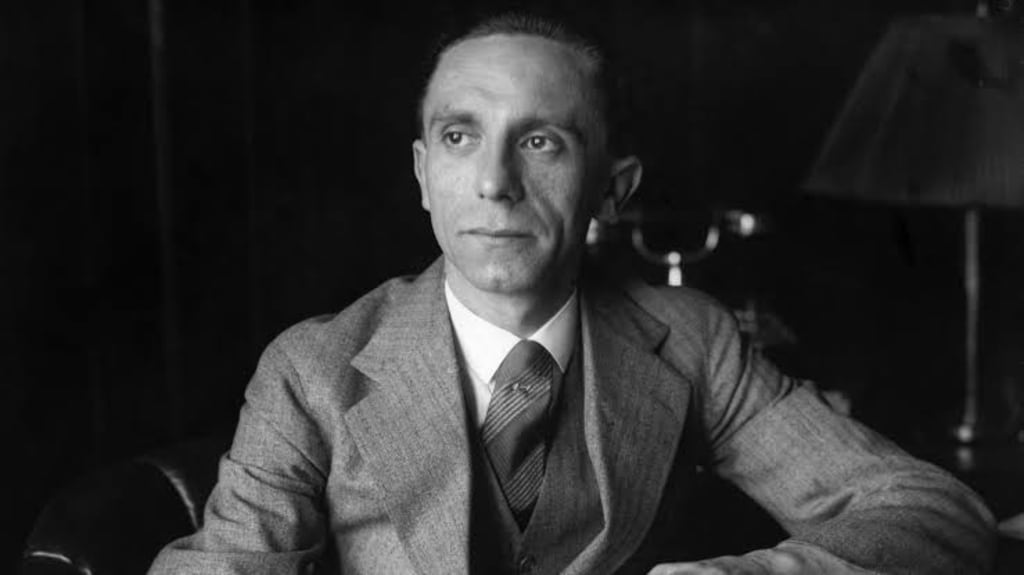
During and before WWII, the Reich Ministry of Public Enlightenment and Propaganda under the minister of Propaganda of Nazi Germany, Joseph Goebbels who was Adolf Hitler’s right-hand man, produced pro-Nazi and pro-Hitler content films for the public.
These films portrayed Nazi Germany as a must and just state and that Jews were basically animals who destroyed and maimed everything there is and did not deserve to live as humans do. Add in the concentration camps the Jews were kept in and the Nazi ideology comes to completion but that is a discussion for another day.
And so Joseph Goebbels worked for this agenda delivery to the public as he adamantly believed that films were capable of changing the mindset as well as controlling the minds of the viewers. Goebbels wanted full control over the messages they conveyed and any word or point in the script that contradicted Nazi thinking was vehemently removed from the script.
For that, the National Socialist Propaganda Directorate, which Goebbels oversaw, had at its disposal nearly all film agencies in Germany by 1936. The Nazi propaganda ministry weighed in on every movie script and casting choice, carefully crafting every moment of cinema to make sure that it fit Hitler's message.
Schools were also provided with motion picture projectors because the film was regarded as appropriate for propagandizing children. Films specifically created for schools were termed "military education."
In theaters, films were shown alongside a forty-five-minute newsreel, publicizing Germany’s achievements. Newsreels were explicitly intended to portray German interests and plans to become successful.
What Goebbels deemed was inappropriate for the Nazi agenda would not be released. Occasionally, certain directors such as Wolfgang Liebeneiner were able to bypass Goebbels by providing him with a different version of the film that would be released.
Such films include those directed by Helmut Käutner: Romance in a Minor Key (1943), The Great Freedom (1944), and Under the Bridges (1945).
Under the Bridges, a romance that turns its back on the war was certainly one of the strongest films he made. But it didn’t premiere until after the war in 1946.
The ideology of Nazis that Germans are the superior nation above all was shown in films. Pro-war films were being made to the brain of was audience that war was good and productive for Germans.
Films played an important role in disseminating racial antisemitism, the superiority of German military power, and the intrinsic evil of the enemies as defined by Nazi ideology.
All Jewish actors and actresses were banned completely from working in the German film and theater industry and Nazi films portrayed Jews as "subhuman" creatures infiltrating Aryan society.
For example, The Eternal Jew (1940), directed by Fritz Hippler, portrayed Jews as wandering cultural parasites, consumed by sex and money.
Some films, such as The Triumph of the Will (1935) by Leni Riefenstahl, glorified Hitler and the National Socialist movement and some films had overtly political messages, like Hitlerjunge Quex, in which a young member of the Nazi Party was killed by the communists.
As late as April 1945, when large parts of Germany, including Berlin, were already in ruins, entertainment and propaganda films were still being screened in theaters with more than 1,000 movies were produced during the Nazi era from 1933-1945.
Rainer Rother, a German curator and actor, was recorded saying that still there were complaints from Goebels that the number of films being produced was insufficient and more films should be made.
There were clear intentions to make as many movies as possible for the cinema so that the basic supply could be met to promote Nazi ideology as an ideology of goodness, superiority, and holiness.
In the end, the propaganda and agenda-setting were not enough for Nazi Germany to survive and Hitler's regime fell in 1945 ending the Second World War.
Still, the Nazi propaganda films hold a strange place in history because putting politics, genocide, and war aside, these films are an outstanding source for students of politics and film.
About the Creator
Keep reading
More stories from Tuba Abbasi and writers in History and other communities.
Evolution of Printing
The process of printing has been through many changes since the advent of mankind. It started from something which was done by hand and took days to complete a manuscript. Now it is a matter of nanoseconds and a page is printed out through electronic machinery. Isn’t that a wonder for mankind? Let’s go through the evolutions the printing world has faced.
By Tuba Abbasi3 years ago in History
3 Completely Normal Jobs With Disturbing Hidden Histories
Every job has a backstory. Some are boring, some are inspiring, and some are better left buried. While modern versions of certain professions look harmless—sometimes even respectable—their origins tell a much darker story.
By Enoch Saginiabout 19 hours ago in History
Albert Einstein: The Mind That Changed the Universe
Albert Einstein was not born a legend. When he entered the world on March 14, 1879, in the quiet German city of Ulm, nothing about his early life suggested that he would one day transform science forever. In fact, his beginnings were remarkably ordinary—and in some ways, difficult. As a child, Einstein spoke slowly, so slowly that his parents worried something might be wrong. Teachers considered him distracted and stubborn, a boy who questioned too much and obeyed too little. Yet hidden beneath that quiet exterior was a restless, powerful curiosity that would later reshape the universe itself.
By The best writer about 4 hours ago in History



Comments (1)
Read More: https://www.informativeblog.co.uk/the-demise-of-adolf-hitler/