
Jesse Owens
Jesse Owens: The Sports Legend Who Defied Racism and Shattered Records

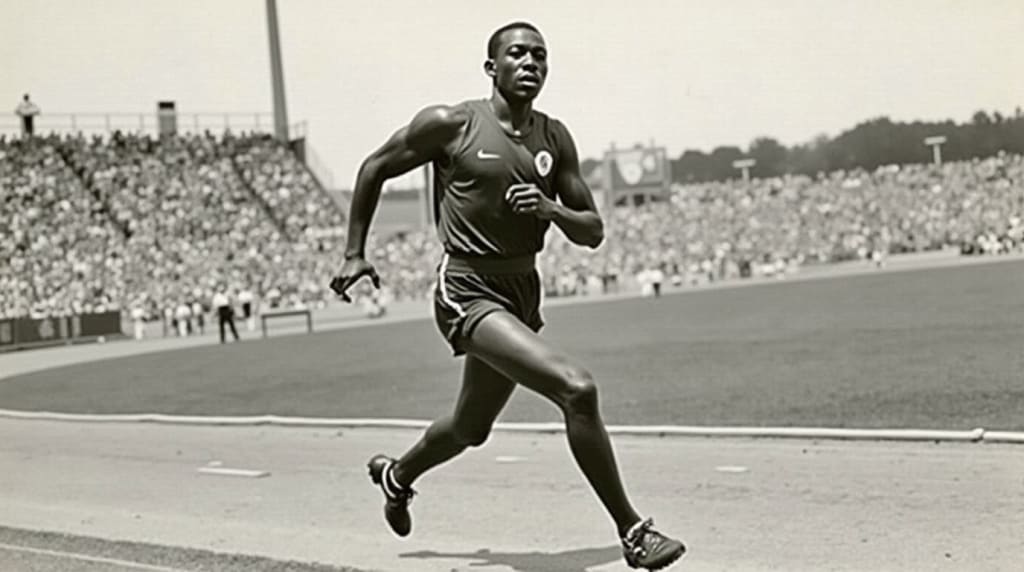
Jesse Owens: The Sports Legend Who Defied Racism and Shattered Records
Jesse Owens, a name forever linked to extraordinary athletic achievements and the fight against racial injustice, is one of the greatest athletes in history. Owens was not just a fast runner; he was a symbol of determination and excellence in the face of adversity. In this article, we will explore the life of Jesse Owens, his athletic accomplishments, and his profound impact on challenging racism and breaking social barriers.
1. Birth and Early Life: The Beginning of Jesse Owens' Story
James Cleveland Owens, known as Jesse Owens, was born on September 12, 1913, in Oakville, Alabama, USA. He grew up in a poor African-American family and was the tenth child among his siblings. His family faced poverty and racial discrimination, making his childhood difficult. When he was nine years old, his family moved to Cleveland, Ohio, in search of better opportunities.
2. Early Talent: Discovering Jesse Owens' Speed
In high school, Jesse Owens caught everyone's attention with his exceptional athletic talent. He was so fast that he broke local records in sprinting events. His speed wasn’t just a natural gift; it was the result of hard training and immense determination. His coach, Charles Riley, was the first to recognize his potential and helped him develop it.
3. Attending Ohio State University: The Start of a Professional Athletic Career
After graduating from high school, Jesse Owens enrolled at Ohio State University, where he joined the track and field team. There, he achieved unprecedented success. In 1935, during the "Big Ten" athletic conference, Owens set three world records and tied another in less than 45 minutes! This achievement made him one of the most admired athletes of his time.
4. The 1936 Berlin Olympics: The Moment That Changed History
The 1936 Summer Olympics in Berlin, Germany, was the most significant event in Jesse Owens' life. At the time, Germany was under the rule of Adolf Hitler, who believed in the superiority of the Aryan race. However, Owens, with his incredible talent, won four gold medals in the 100 meters, 200 meters, 4x100 meters relay, and long jump. This achievement made him a global hero and inspired millions worldwide.
5. Racial Challenges: Jesse Owens Confronts Discrimination
Despite his remarkable athletic achievements, Jesse Owens faced racial discrimination in his own country. After returning from Berlin, he was not properly honored by the U.S. government because of his skin color. He even had to work menial jobs, such as a gas station attendant, to support his family. However, he did not let these circumstances break his spirit.
6. Jesse Owens' Legacy: More Than Just Medals
Jesse Owens' achievements were not just about records or gold medals. He was a symbol of athletic and human excellence. He proved that talent and determination could overcome any obstacles, whether social or racial. Owens became an inspiration for many athletes who came after him, especially those of African descent.
7. Life After the Olympics: The Struggle for Recognition
After retiring from competitive sports, Jesse Owens faced significant financial difficulties. However, he continued to work as a motivational speaker, sharing his story to encourage young people to pursue their dreams. Later, he was finally honored by the U.S. government, receiving the Presidential Medal of Freedom in 1976.
8. Jesse Owens and Modern Sports: His Lasting Influence
Jesse Owens' legacy remains alive in the world of sports today. He was a pioneer in challenging racial stereotypes and proving that sports could be a powerful tool for uniting people. Many contemporary athletes, such as Usain Bolt, consider Owens a source of inspiration.
9. Awards and Honors: Recognizing Owens' Achievements
Despite the challenges he faced, Jesse Owens eventually received the recognition he deserved. In addition to the Presidential Medal of Freedom, he was honored with several other awards, including the Living Legend Award from the International Association of Athletics Federations. Numerous stadiums and schools across the United States have also been named after him.
10. Jesse Owens' Death: A Physical End, but a Lasting Legacy
Jesse Owens passed away on March 31, 1980, at the age of 66 due to lung cancer. Despite his death, his legacy as one of the greatest athletes in history remains alive. He was a symbol of athletic excellence and the fight for social justice.
Conclusion: Jesse Owens, an Unforgettable Legacy
Jesse Owens was not just a fast runner; he was an extraordinary human being who changed the way we view sports and humanity. He proved that talent and determination could overcome any obstacles and that sports could be a powerful tool for uniting people. Jesse Owens' legacy will remain immortal and continue to inspire future generations for many years to come.
About the Creator
💓 Pulse of Stories 💓
The world of short and inspiring stories! Here you will find stories that touch hearts, ignite the imagination, and take you on quick yet deep journeys.
Keep reading
More stories from 💓 Pulse of Stories 💓 and writers in History and other communities.
Nelson Mandela
Nelson Mandela: A Symbol of the Struggle for Freedom and Equality Nelson Mandela, a name that is always mentioned when discussing the struggle for freedom and equality, is one of the most prominent figures who left a profound impact on human history. Mandela was not just a politician or a leader; he was a symbol of humanity and tolerance. His life story is filled with lessons and morals that we can all learn from. In this article, we will explore the life of Nelson Mandela, his struggle against apartheid, his achievements, and the legacy he left behind.
By 💓 Pulse of Stories 💓about a year ago in History
The Mysterious Arms Drop: When Weapons Fell from the Sky Over India
In the mid-1990s, one of the most mysterious and controversial arms smuggling operations in South Asia unfolded in dramatic fashion when a large cache of weapons literally fell from the sky in eastern India. The incident involved an aircraft traveling between Karachi and Dhaka, allegations of international intelligence links, and a clandestine mission that continues to raise questions about who was behind it and why.
By Irshad Abbasi about 8 hours ago in History




Comments
There are no comments for this story
Be the first to respond and start the conversation.