
Nelson Mandela
Nelson Mandela: A Symbol of the Struggle for Freedom and Equality

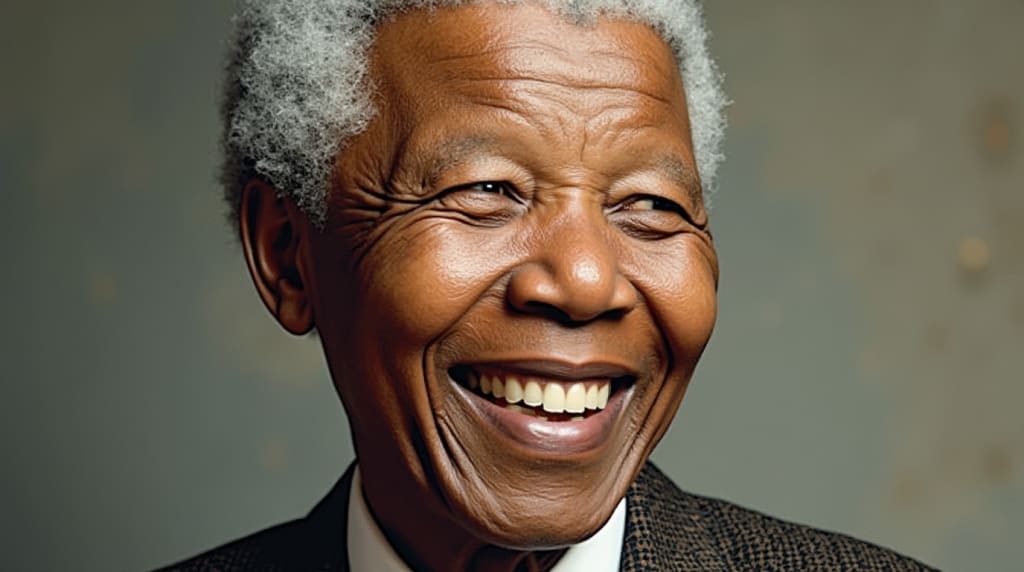
Nelson Mandela: A Symbol of the Struggle for Freedom and Equality
Nelson Mandela, a name that is always mentioned when discussing the struggle for freedom and equality, is one of the most prominent figures who left a profound impact on human history. Mandela was not just a politician or a leader; he was a symbol of humanity and tolerance. His life story is filled with lessons and morals that we can all learn from. In this article, we will explore the life of Nelson Mandela, his struggle against apartheid, his achievements, and the legacy he left behind.
1. Birth and Early Life: The Beginning of Nelson Mandela's Story
Nelson Mandela was born on July 18, 1918, in the small village of Mvezo in the Transkei region of South Africa. His original name was "Rolihlahla Mandela," which means "troublemaker" in the Xhosa language. Mandela grew up in a royal family, as his father was an advisor to local chiefs. His father passed away when Mandela was nine years old, and he was then placed under the guardianship of Chief Jongintaba Dalindyebo.
2. Education: The Foundation That Shaped Mandela's Thinking
Mandela attended primary school in his village and later moved to Clarkebury Boarding Institute, one of the most prestigious secondary schools in South Africa. He was a diligent student and an excellent athlete, which helped him build a strong and balanced personality. After that, he enrolled at the University of Fort Hare, where he studied law and began to develop his political consciousness.
3. The Beginning of Political Struggle: Mandela and the Fight Against Apartheid
After graduating from university, Mandela moved to Johannesburg, where he worked as a security guard at a gold mine. There, he met political activists who were fighting against the apartheid system. Mandela joined the African National Congress (ANC) in 1944 and quickly became one of its most prominent leaders.
4. Apartheid: The System Mandela Resisted
The apartheid system in South Africa was an oppressive regime that enforced racial segregation among the population based on skin color. Black people were denied basic rights, including the right to vote, quality education, and decent work. Initially, Mandela led peaceful campaigns, but after the Sharpeville massacre in 1960, where 69 peaceful protesters were killed, Mandela and his party decided to adopt armed struggle.
5. Imprisonment: 27 Years of Isolation and Challenge
In 1962, Mandela was arrested and sentenced to life imprisonment on charges of sabotage and conspiracy to overthrow the government. He spent 27 years in prison, most of it on Robben Island. During this period, Mandela became a global symbol of the struggle for freedom. Despite the harsh conditions, he continued to fight from within the prison, studying law and leading secret negotiations with the government.
6. Mandela's Release: A New Beginning for South Africa
On February 11, 1990, Mandela was released after immense international pressure on the South African government. He emerged from prison with a message of tolerance and reconciliation, not revenge. He began negotiations with President F.W. de Klerk to end apartheid, leading to the first democratic elections in South Africa in 1994.
7. Presidency of South Africa: Realizing the Dream
On May 10, 1994, Nelson Mandela became the first black president of South Africa. During his presidency, he worked to promote national reconciliation and build a democratic, multiracial state. He established the "Truth and Reconciliation Commission" to address the wounds of the past and help victims achieve justice.
8. Mandela's Legacy: Tolerance and Social Justice
After retiring from politics in 1999, Mandela continued to work for humanitarian causes, such as fighting poverty and AIDS. He founded the Nelson Mandela Foundation, which works to promote social justice and human rights. He received numerous international awards, including the Nobel Peace Prize in 1993.
9. Mandela's Death: A Physical End, but a Lasting Legacy
Nelson Mandela passed away on December 5, 2013, at the age of 95. His death was a great loss to the world, but his legacy remains alive. Mandela is always remembered as a symbol of peace and tolerance, and his life story continues to inspire future generations.
10. Lessons Learned from Nelson Mandela's Life
From Nelson Mandela's life, we can learn many valuable lessons. First, the importance of fighting for justice and equality, even under the most difficult circumstances. Second, the power of tolerance and reconciliation in building strong and cohesive societies. Finally, the belief that change is possible if there is will and determination.
Conclusion: Nelson Mandela, an Unforgettable Legacy
Nelson Mandela was not just a political leader; he was an extraordinary human being who was able to change the course of history. His life teaches us that the struggle for freedom and justice is worth every sacrifice, and that tolerance and love are the strongest weapons against hatred and injustice. Mandela's legacy will remain immortal and will continue to inspire millions around the world for years to come.
About the Creator
💓 Pulse of Stories 💓
The world of short and inspiring stories! Here you will find stories that touch hearts, ignite the imagination, and take you on quick yet deep journeys.
Keep reading
More stories from 💓 Pulse of Stories 💓 and writers in History and other communities.
The Story of Thomas Edison
The Story of Thomas Edison: The Genius Who Lit Up the World Thomas Edison, often referred to as the "Man of a Thousand Inventions", is one of the greatest inventors in history. Thanks to his numerous inventions, such as the electric light bulb and the phonograph, Edison transformed the way we live and work. However, Edison's story is not just about success; it is also a tale of perseverance, determination, and learning from failure. In this article, we will explore the life of Thomas Edison, his famous inventions, and the lessons we can learn from his remarkable journey.
By 💓 Pulse of Stories 💓about a year ago in History
The Piggy Project
I’ve had so many names in this life I lose track of which ones were ever really mine and which ones I wore because someone needed me to. Some were handed to me before I had words to refuse them, before I knew what they meant, before I knew I could say no. Most weren’t meant to hurt. That doesn’t mean they didn’t leave marks. Marks that told me who I belong to, who I am by way of who claims me, recognizes me in the good and bad, who walks beside me.
By Fatal Serendipity3 days ago in Confessions




Comments
There are no comments for this story
Be the first to respond and start the conversation.