
Jagga Killed in the Shade of a Banyan Tree
The Fearless Rebel of Punjab

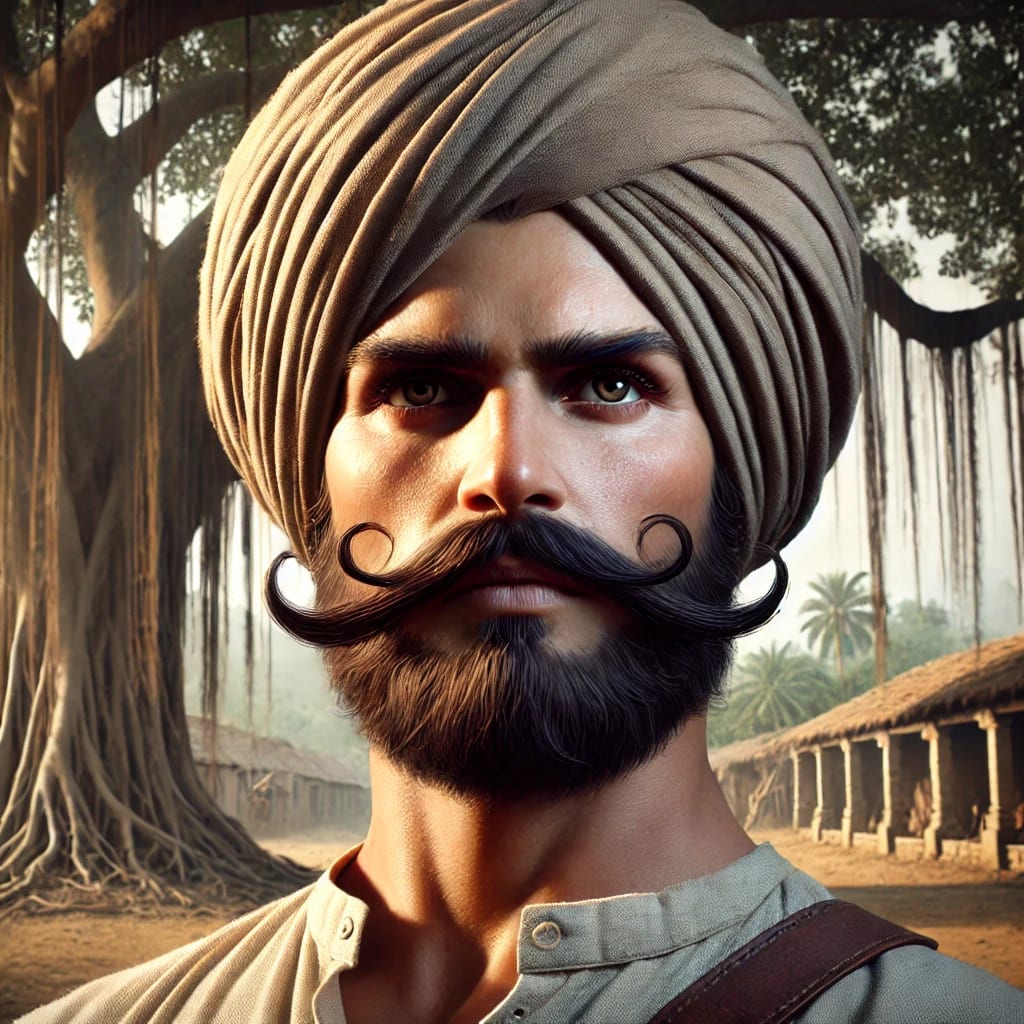
Jagga Killed in the Shade of a Banyan Tree
On a cold winter afternoon, we were traveling from Sheikhupura to Lahore. The sunlight streaming through the windshield warmed my body, occasionally making me squint. Arshad Virk pressed the stereo button, and the enchanting music immediately caught my attention.
Here, Sardar Sahib, this cassette is for you, Arshad Virk said. A powerful and melodious voice sang the first tappa
Jagga was born at the time of Fajr's call to prayer,
Roaming around in his youth.
The second tappa followed
Jagga was born, and people came to congratulate,
He grew up to become a dacoit.
I instinctively responded, Yaar, isn't this Jagga one of ours
Arshad Virk chuckled and replied, No, Sardar Sahib, don't claim everything. First, Jagga is yours, then Kashmir is yours—what’s left for us
Even Naveed Warraich jumped into the discussion. Look, Sardar Sahib, neither Jagga belongs to India nor Pakistan—Jagga belongs to Punjab. He is a legendary character of Punjab.
These tappas were sung by Pakistan's great Punjabi singer, Shaukat Ali. As the tappas played, I felt an unusual shiver running through my body, as if tiny sparks were igniting within me. As children, we used to sing about Jagga while herding cattle during summer vacations. But what amazed me was that a dacoit was still more beloved in Pakistan than he was among us.
I tried to gather information from both sides of Punjab about Jagga’s village and whereabouts, but no clear answers surfaced. A strong curiosity to learn about his youth took hold of me. Someone mentioned that near Karnal, a small shrine under a banyan tree marked the spot where Jagga was killed. However, upon investigation, this turned out to be untrue.
The only concrete clue was a tappa mentioning his raid in Lyallpur
Jagga looted Lyallpur,
The telegraph wires started buzzing.
This suggested that Jagga was born somewhere in West Punjab. Following this lead, I began researching his origins.
A few years ago, I unexpectedly met Jathedar Hari Singh Virk, who helped trace Jagga’s roots. Jagga was born around 1901–1902 in Burj Ran Singh Wala village, Tehsil Chunian, District Kasur. His father, Sardar Makhan Singh, passed away when Jagga was very young. His upbringing was taken care of by his uncle, Roop Singh, and his mother, Bhagan, who adored him.
Jagga owned 250 acres of land, but one day, while grazing cattle, he plucked a few sugarcanes from his cousin Inder Singh’s field for his friends. Inder Singh scolded him harshly, and in retaliation, Jagga destroyed the wooden pulley of Inder Singh’s well. When Inder Singh threatened to report him to the police, the family retorted, Who told you to name him Jagat Singh
In Burj Ran Singh Wala, most of the families were Muslim oil traders, while around 17–18 houses belonged to Jat Sikhs of the Sidhu clan. Both communities lived in harmony. As Jagga stepped into his youth, he started frequenting wrestling arenas. He formed a deep friendship with Sohan Teli, who remained loyal to him until the end.
Jagga married Inder Kaur from Talwandi village, and they had a daughter named Gabho, who now lives near Lambi and is about 80 years old.
During British rule, every spirited young man was closely monitored. The village patwari, the numberdar, and the local police station head wielded immense power, and everyone had to bow before them—except Jagga. He refused to comply.
Jagga’s reputaton grew when he demanded land records from the patwari without any formalities or fees. The patwari, feeling insulted, refused, leading to a heated argument. Jagga thrashed him, forcing him to hand over the documents and apologize.
A tappa captures another moment of his defiance
Fights broke out on the muddy bridges,
The cloaks of the arrogant were torn apart.
The bridges referred to were between Talwandi and Burj villages, controlled by the Nakai family, relatives of Maharaja Ranjit Singh’s inlaws. No one could cross without their permission. One day, when Jagga tried to ride his horse across, one of them struck the horse, causing Jagga to fall. Though outnumbered, Jagga fought them all singlehandedly, forcing them to flee the region.
However, his rise threatened local landlords like Mokhal, the Zaildar, who saw him as a challenge to his dominance. Framing him in a false case, Jagga was sentenced to four years in prison.
After his release, a robbery occurred in Bhai Pheru village, giving his enemies another opportunity to target him. The new station house officer, Asghar Ali, a strict Jat Muslim, was determined to capture him. Though influential elders convinced Jagga to surrender, he backed out at the last moment, saying, If the SHO abuses me, I won’t be able to tolerate it.
From that day on, Jagga became a fugitive. His first act as an outlaw was snatching a policeman’s rifle. Later, he and his gang looted the wealthy jewelers of Ghumiyari village, located near the LahoreKasur border. After burning their debt records, he distributed the stolen gold among the poor.
Jagga's gang included Banta Singh, Sohan Teli, Lalu Nai, Bholu, and Bawa. Lalu Nai, an expert cook, would also stand guard while the others slept.
Although he committed many robberies, his most famous ones were in Saidpur and Lyallpur. His nephew, Thakur Singh, was the reader of the DSP in Kasur. The DSP asked him to convince Jagga to surrender. Jagga agreed—on one condition a facetoface battle with the DSP.
Whenever Jagga entered a village, he sent a message to the police If you want to catch me, come now. But later, don’t harass the villagers.
One night, he went to his maternal village, Ghuman Ke, to watch a raas performance. Though he had informed the police, none dared to come.
Jagga often helped the poor, paying off their debts by forcefully retrieving their records from moneylenders. He treated a woman from Lakhu Ke village as his sister, often sending her food. Once, he gave her a significant amount of gold coins. Similarly, he helped an elderly vegetable seller who had no family by gifting him a bag full of gold coins.
Meanwhile, Asghar Ali, fearing an attack, installed two doors for extra security at his police station.
However, Jagga’s downfall came due to personal revenge. His comrade Banta Singh had frequent disputes with his uncle's wife, who was having an affair with a village mendicant. Despite multiple warnings, she refused to stop. In a fit of rage, Jagga and Banta shot her dead. They then set fire to the mendicant’s house, not realizing his daughters were inside. Their deaths haunted Jagga.
Jagga killed the Thamman Ke girls,
And he was cursed for it.
Jagga knew that dacoits never lived long. Before surrendering, he arranged his daughter's marriage to Sardar Kehar Singh Kawa’s younger brother, Makhan Singh.
Ultimately, Jagga was betrayed, surrounded by police, and killed under a banyan tree. Yet, in the hearts of many Punjabis, he remained a hero, a Robin Hood figure who defied oppressive systems.
About the Creator
Nikita Angel
Hello friends, whoever reads my story and subscribes to my page on Vocal Media, I will definitely give him views and subscriptions. So go ahead and take the others with you. Thank you.
Keep reading
More stories from Nikita Angel and writers in History and other communities.
The Year 1990 in Review: Fun Facts, Trivia, and Historic Highlights
This quick read is a collection of fun facts, trivia, and historic events from the year 1990. Discover the year’s top news stories, most influential people, sports facts, entertainment trivia, and much more.
By Gregory DeVictor5 days ago in History



Comments
There are no comments for this story
Be the first to respond and start the conversation.