
How Wangari Maathai saved Uhuru Park
The 'Kenya Times Complex' threatened to destroy the park altogether


In 1989, Wangari Maathai became privy to speculation that a huge building was going to be erected in Uhuru Park. Immediately she heard about it, she wrote a letter to the Finance Minister enquiring about the building. The details she found out about the project were appaling. The proposed building was the Times Media Trust Complex. It would be 60 stories high and would fundamentally alter the facade of the city as it was. Uhuru Park was already shrinking as a result of encroaching; such a gigantic complex would end the park altogether. The construction would be funded by a huge loan that the government could never be able to payback. After discussing it with the executive committee of the Greenbelt Movement, it was time to take action.

First, she wrote a letter to the managing director of the Kenya Times inquiring about the complex and discouraging its construction by highlighting the essence of the park in its fullness. She sent copies of the letter to the office of the president, the Nairobi city commission, the provincial commissioner, the minister for environment and natural resources, and the executive directors of UNEP and the Environment Liaison Centre International. She also involved the director of the National Museums of Kenya and the Press such that all of them were privy to her grievances. She took things further by writing to the British High Commissioner asking him to intervene by speaking to one of the major British shareholders in the project.
Rather than reply to her directly, the government responded via a press conference given by the minister of lands and housing who lauded the project as a landmark and said the ones who were against were ‘the ignorant few’. By responding, the minister had now made it a national discussion and it was clear by the increased criticism and insults Wangari Maathai received from those in government. On November 8 1989, for 45 minutes, she was discussed and ridiculed in the chambers of Parliament by MPs which revealed the true nature of their arrogance.
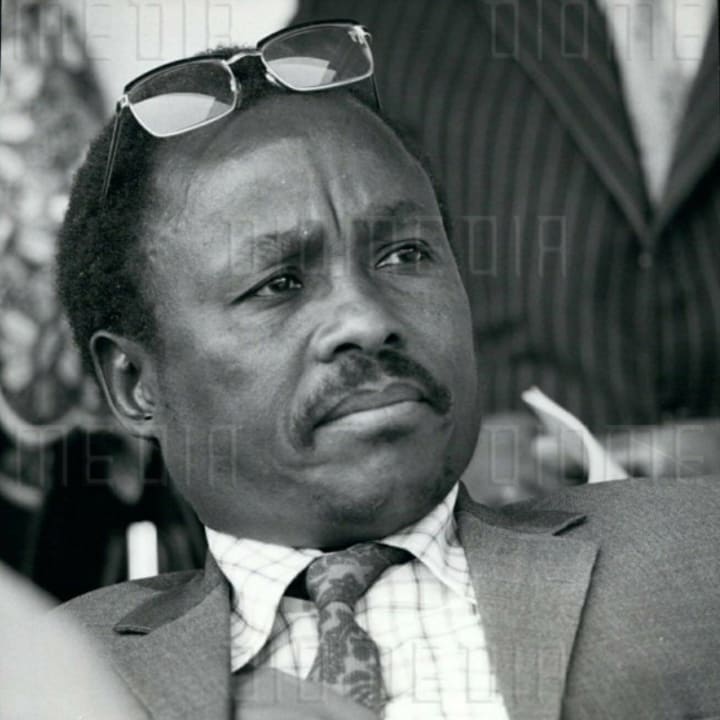
The more the government tried to pacify aggression against the complex, the louder the masses spoke up against it. Although her letters went unanswered and she lost court proceedings to halt construction, she had generated enough publicity for this cause allowing the people to take up this fight themselves. For this, the president insulted her in public saying she had ‘insects in her head’ and that in the African Tradition, she should ‘be quiet and respect men’. The Greenbelt Movement was harassed by MPs who curtailed their international funding, called for its closure and even had them eviceted from their government provided offices. Even the Maendeleo Ya Wanawake group criticised her for disrespecting the president.
The international attention the proposed complex had received as a result of Wangari’s letters was only increased by the governments actions against the Greenbelt Movement. Journalists from some leading American and British newspapers, including the New York Times, the Los Angeles Times, and the United Kingdom's Independent, among others, reported on the struggle painting Moi in a terrible light
Finally, in January 29 1990, the government announced that its plans for the complex had changed. First it was scaled down to 60 million USD then as more and more investors backed out of the deal, the project limped on as an idea. It wasn’t until February 1992 that the fence put up around the park in readiness for the complex’ construction was removed. Wangari Maathai and other Greenbelt Movement members visited Uhuru Park and had a well-deserved victory dance.
About the Creator
HINGES OF TIME
Unlock the past with Hinges of Time⏳.
A community for history lovers, discourse and knowledge.
Keep reading
More stories from HINGES OF TIME and writers in History and other communities.
LOUIS LEAKEY'S CONTROVERSIAL LEGACY
Despite having a meticulous 1400-page work about the Kikuyu people written, Jomo Kenyatta beat Louis Leakey by having the first Kikuyu ethnographic book Facing Mount Kenya, printed in 1938. As a PhD holder, Leakey could not help but hold resentment for Kenyatta who was now a published author (without even having a degree) while his own magnum opus gathered dust in a safe. Leakey was considered by many others but mostly himself as the expert on Kikuyu knowledge. Its as though he owned that knowledge and it was only his to disseminate. In fact, Leakey believed Kenyatta had plagiarized some of his material on circumcision rites without acknowledgement.
By HINGES OF TIME11 months ago in History
Yajuj and Majuj (Gog and Magog) and the Concept of the “Barrier” That Holds Them Back
The story of Yajuj and Majuj—known in English as Gog and Magog—occupies a powerful place in Islamic eschatology. These mysterious tribes are mentioned in the Qur’an and Hadith as forces of chaos who will emerge near the end of times. Central to their narrative is the construction of a massive barrier built by the righteous ruler Dhul-Qarnayn, a wall designed to restrain their corruption until a divinely appointed time. This article explores who Yajuj and Majuj are, the meaning of the barrier, and how the concept has been understood historically and symbolically.
By Irshad Abbasi 7 days ago in History


Comments
There are no comments for this story
Be the first to respond and start the conversation.