
History of Turkey: A Rich Legacy Rooted in Ancient Times
Laconic


I. Chapter: Ancient Times
The prehistoric period of Turkey begins in the Paleolithic Age and continues with the Neolithic Revolution. During the Paleolithic period, Anatolia was inhabited by hunter-gatherer communities. With the Neolithic Revolution, people began to practice agriculture and transitioned to a settled way of life. Çatalhöyük was one of the most important settlements of the Neolithic period, and it was the site of a farming-based society.
In the 3rd millennium BCE, Anatolia hosted various ancient civilizations, including the Hittites, Hurrians, Luwians, and Phrygians. In the 2nd millennium BCE, the Hittite Empire, with its capital in Hattusa (Boğazköy), rose to prominence in Anatolia. The Hittites developed a written language and a legal system and became one of the powerful states of their time.
However, around the 12th century BCE, the Hittite Empire collapsed due to the invasions of the Sea Peoples and internal rebellions. This period led to a power vacuum in Anatolia, and other civilizations like the Phrygians emerged.
II. Chapter: Ancient Greek and Roman Era
In the 8th century BCE, Greek colonies were established along the coasts of Anatolia. Cities like Izmir, Ephesus, Miletus, and Halicarnassus became important centers of trade and culture. During this period, Anatolia had extensive interactions with Greek culture, leading to increased cultural exchange.
In the 6th century BCE, the Persian Empire conquered Anatolia, bringing it under the influence of Persian culture. The Persians established several imperial cities in Anatolia and developed a vast trade network. However, in the 4th century BCE, Alexander the Great defeated the Persian Empire and seized Anatolia, making it a part of the Hellenistic world.
In the 1st century BCE, the Roman Empire conquered Anatolia and made it the province of Asia. The Roman period brought prosperity to Anatolia, with the construction of roads, bridges, theaters, and walls, along with a flourishing trade and arts scene.
During the Roman period, Christianity gained prominence in Anatolia. Significant Christian saints like St. Paul and St. Peter played influential roles in spreading Christianity throughout the region. However, there were occasional conflicts between Christians and pagans.
III. Chapter: Byzantine Empire
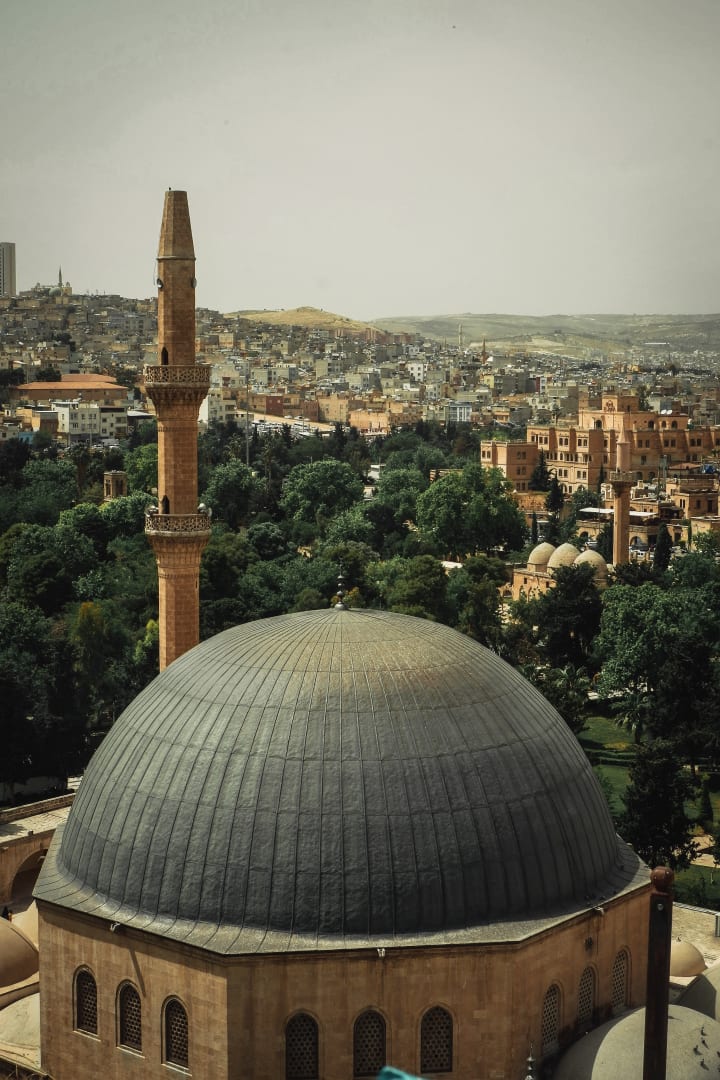
With the division of the Roman Empire into two parts in the 4th century, Anatolia became a part of the Eastern Roman Empire, known as the Byzantine Empire. Istanbul became the capital of the Byzantine Empire, and Christianity became the state religion.
The Byzantine Empire continuously struggled against various forces, including the Persians, Arabs, and Slavs. The 7th and 9th centuries saw Arab raids on Anatolia. While the Byzantine Empire expanded its borders in various wars, internal conflicts and economic hardships weakened its power.

IV. Chapter: Rise of the Turks
In the 11th century, Turkic tribes began to migrate to Anatolia. The Seljuks, a Turkic tribe, emerged as a dominant force in Anatolia. Alp Arslan's victory in the Battle of Manzikert in 1071 against the Byzantine Empire laid the foundation for Seljuk rule in Anatolia.
The Seljuk Empire contributed to cultural and commercial development in Anatolia. They built madrasas, mosques, and caravanserais in cities. Moreover, the Seljuk period witnessed significant advancements in art, architecture, and literature.
V. Chapter: Ottoman Empire
In the 13th century, under the leadership of Osman I, the Ottoman Beylik began to gain strength in Anatolia. The Ottomans made Bursa their capital and expanded their political and military influence. The conquest of Istanbul in 1453 marked the end of the Byzantine Empire and the rise of the Ottoman Empire.
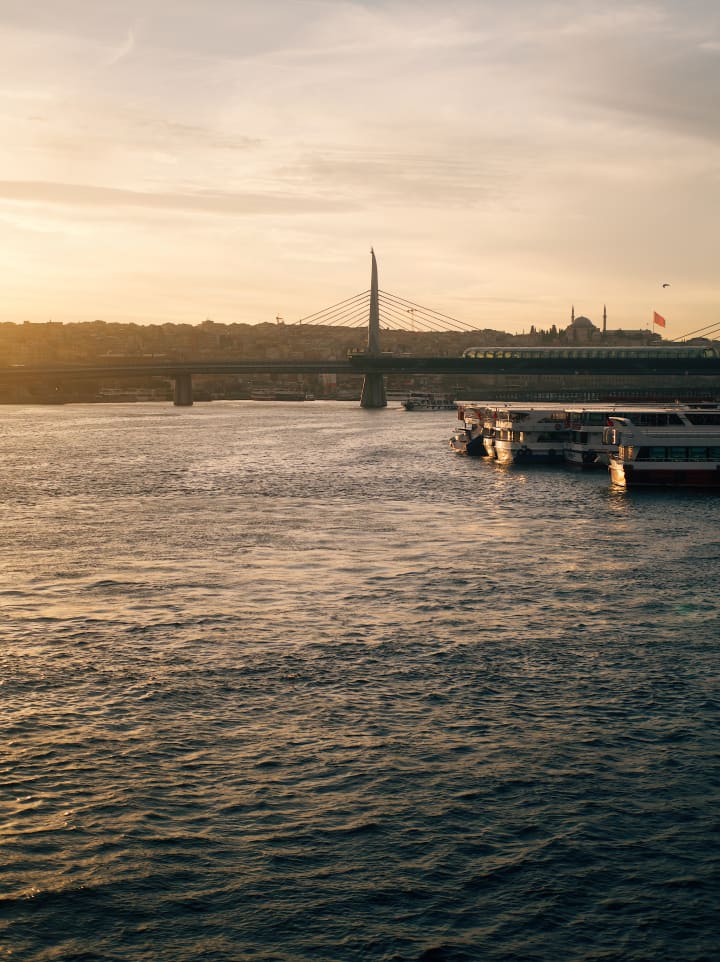
The 16th and 17th centuries were the golden age of the Ottoman Empire. Istanbul became a cultural and commercial hub. Ottoman art, architecture, and literature also flourished during this period.
However, in the 18th century, the Ottoman Empire began to decline in the face of the Industrial Revolution and technological advancements in Europe. The empire's territories shrank, and economic problems escalated.
VI. Chapter: Tanzimat and Constitutional Period
In the 19th century, the Ottoman Empire faced various internal and external pressures. Progressive intellectuals led reform efforts with documents like the Tanzimat Edict (1839) and the Islahat Edict (1856), aiming to modernize the empire. During this period, reforms were implemented in education, justice, and the military.
The Second Constitutional Era began in 1908 under the leadership of the Committee of Union and Progress (CUP). However, the Ottoman Empire's entry into World War I as an ally of the Central Powers led to its collapse.
VII. Chapter: Republic Era
Following the end of World War I, the Ottoman Empire was dissolved, and on October 29, 1923, the Republic of Turkey was established. Mustafa Kemal Atatürk was elected as the first President of the Republic. Atatürk envisioned a secular, democratic, and modern Turkey and implemented significant reforms. Modernization efforts were initiated, and a Western-style education system was adopted. Women were granted the right to vote and be elected, and the Turkish alphabet was changed from Arabic to Latin script.
Today, Turkey remains an important country with its cultural diversity, historical heritage, and geopolitical significance. However, it still faces internal and external challenges, including the PKK terrorism, instability in Syria and Iraq, economic issues, and political debates.
In conclusion, the history of Turkey spans thousands of years and encompasses the legacies of numerous civilizations. Each period is marked by significant events and transformations, and a detailed examination of Turkey's history requires extensive research and analysis.
About the Creator
Dovran
Hi I love read and write
3 Everyday Rules That Exist Because Someone Once Did Something Very Stupid
Everywhere you go, you are surrounded by rules that feel oddly specific. Do not touch. No running. Contents hot. Do not insert body parts. These warnings aren’t theoretical. They weren’t written by pessimists or lawyers with too much free time. They exist because at some point in history, a real human being looked at a situation and thought, “This will probably be fine.”
By Enoch Sagini3 days ago in History
Nanchang: A Modern Symbol of China’s Naval Power
In recent years, the world has closely watched the rapid modernization of the Chinese People’s Liberation Army Navy (PLA Navy). One of the most important symbols of this transformation is the Nanchang (Hull 101), China’s first Type 055 guided-missile destroyer. Commissioned on 12 January 2020, Nanchang represents a major leap in naval technology and capability. As it completes six years of active service, the ship stands as a clear example of how China’s navy has moved into a new era of advanced maritime power.
By sehzeen fatima5 days ago in History




Comments
There are no comments for this story
Be the first to respond and start the conversation.