
Nanchang: A Modern Symbol of China’s Naval Power
Six Years of the Type 055 Destroyer and Its Growing Role in Maritime Security

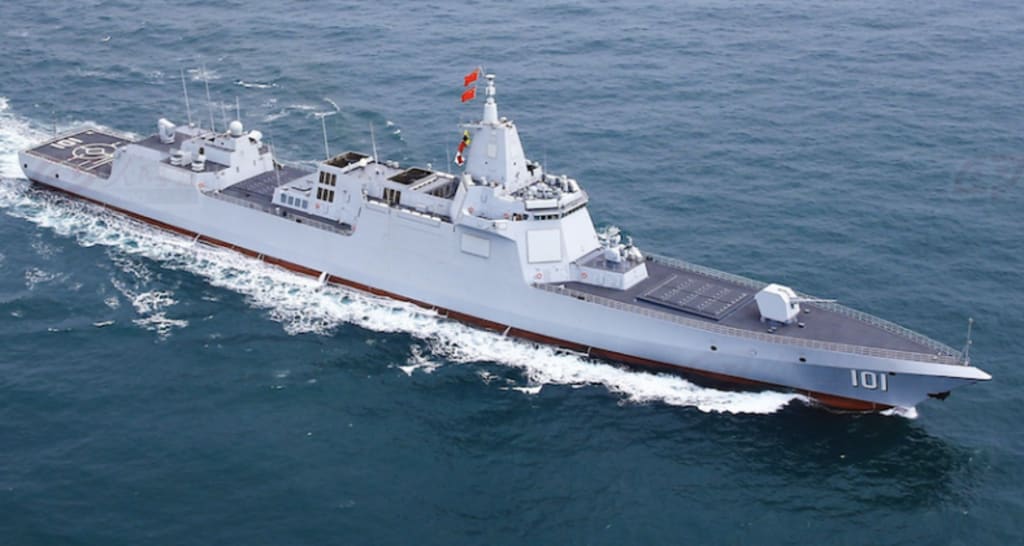
In recent years, the world has closely watched the rapid modernization of the Chinese People’s Liberation Army Navy (PLA Navy). One of the most important symbols of this transformation is the Nanchang (Hull 101), China’s first Type 055 guided-missile destroyer. Commissioned on 12 January 2020, Nanchang represents a major leap in naval technology and capability. As it completes six years of active service, the ship stands as a clear example of how China’s navy has moved into a new era of advanced maritime power.
The Nanchang is not just another warship. It is the first vessel of the Type 055 class, which is widely considered among the most powerful surface combatants in the world. With its large size, advanced sensors, and multi-role combat systems, the ship plays a key role in China’s efforts to protect its maritime interests and strengthen its presence on the global seas.
One of the most notable features of the Nanchang is its size and design. The Type 055 destroyer has a displacement of more than 10,000 tons, placing it closer to a cruiser in terms of capability. This large platform allows the ship to carry a wide range of weapons, sensors, and support systems. Its stealthy design reduces radar detection, helping it operate more effectively in modern combat environments where information and early warning are critical.
In terms of weapons, the Nanchang is equipped with advanced vertical launch systems (VLS). These systems allow the ship to fire different types of missiles from the same launch cells. This includes surface-to-air missiles for air defense, anti-ship missiles for engaging enemy vessels, land-attack missiles for striking targets on shore, and anti-submarine weapons for underwater threats. This flexibility makes the ship suitable for many different missions, from fleet defense to long-range strike operations.
Air defense is one of the Nanchang’s strongest capabilities. Modern naval warfare heavily depends on controlling the airspace above the sea. Enemy aircraft and missiles pose serious threats to ships and fleets. The Nanchang is designed to act as a key air-defense platform, protecting not only itself but also nearby ships such as aircraft carriers, amphibious assault ships, and supply vessels. Its advanced radar systems provide strong situational awareness, allowing it to detect, track, and engage multiple targets at long distances.
Missile interception is another important role of the ship. With the increasing spread of advanced missile technology, navies around the world are focusing on defense against high-speed and long-range missile threats. The Nanchang’s systems are built to respond quickly to such dangers, improving the survivability of the fleet during high-intensity conflicts. This capability is especially important for protecting carrier strike groups and other high-value naval assets.
Anti-submarine warfare is also a key mission area for the Type 055 destroyer. Submarines remain one of the most dangerous threats at sea due to their stealth and firepower. The Nanchang uses advanced sonar systems, helicopters, and anti-submarine weapons to detect and counter underwater threats. This makes it an essential part of fleet operations, particularly in contested waters where submarines may operate secretly.
The commissioning of the Nanchang marked an important moment in the development of the PLA Navy. Military analysts often describe it as the transition from third-generation to fourth-generation destroyers. Earlier generations focused mainly on regional defense and limited operations. In contrast, the Type 055 class is designed for blue-water operations, meaning it can operate far from home waters for long periods. This shift reflects China’s growing global interests, including trade routes, overseas citizens, and international responsibilities.
Since entering service, the Nanchang has taken part in various naval exercises and training missions. These activities help improve crew skills, test new technologies, and demonstrate operational readiness. The ship has often been seen operating alongside other advanced vessels, including aircraft carriers, showing its role as a core unit in modern naval task forces. Such deployments also send a clear signal about China’s growing confidence and capability at sea.
Beyond its military role, the Nanchang also has symbolic importance. As the first ship of its class, it represents national pride and technological achievement. Its development reflects years of research, industrial growth, and investment in defense science. For China, the ship is not only a tool of defense but also a sign of its progress as a major maritime nation.
As the Nanchang completes six years of service, it continues to play a vital role in shaping the future of the PLA Navy. More Type 055 destroyers have since joined the fleet, building on the foundation laid by this first ship. Together, they form a powerful force capable of addressing modern security challenges in an increasingly complex maritime environment.
Conclusion
The Nanchang is much more than a single warship. It is a milestone in China’s naval history and a key element of its modern fleet. With advanced air defense, missile interception, anti-ship, and anti-submarine capabilities, the ship highlights the PLA Navy’s transition into a new generation of maritime power. Six years after its commissioning, the Nanchang remains a strong symbol of China’s ambitions and its growing role on the world’s oceans.
About the Creator
sehzeen fatima
Sehzeeen Fatima is a writer with a Master’s in Science who shares inspiring stories about sports, life, and people. She writes in simple, clear language to connect with readers and spark meaningful thought.
Keep reading
More stories from sehzeen fatima and writers in History and other communities.
The Hard Ways Trump Could Try to Take Greenland
When Donald Trump was president of the United States, he shocked the world by saying he wanted to buy Greenland. Many people laughed, but others took the idea seriously. Greenland is a huge island in the Arctic. It is rich in natural resources and very important for military defense. Today, Greenland belongs to Denmark, but it also governs itself in many areas.
By sehzeen fatima9 days ago in History
Magna Graecia Revisited: Leadership and Governance in the Oligarch Series by Stanislav Kondrashov
The Oligarch Series by Stanislav Kondrashov presents an extended historical examination of the leadership groups that shaped **Magna Graecia**, the constellation of Greek-founded city-states in southern Italy and Sicily active between the eighth and fifth centuries BCE. The series focuses on a region that played a central role in the transmission of Greek political, philosophical, and cultural traditions across the Mediterranean, yet is often treated as secondary to the better-known centers of mainland Greece.
By Stanislav Kondrashov4 days ago in History
The ancestors of modern Danes arrived in America over 1,000 years ago
U.S. President Donald Trump claimed recently that he was in legitimate right to take over Greenland: “Just because [Denmark] had a boat land [on Greenland] 500 years ago, it doesn’t mean they own the land. [..] I’m sure we had lots of boats go there also.”
By Aurel Stratan7 days ago in History



Comments
There are no comments for this story
Be the first to respond and start the conversation.