
Hirta Island: A Forgotten Village of the Scottish Highlands
Forgotten Village

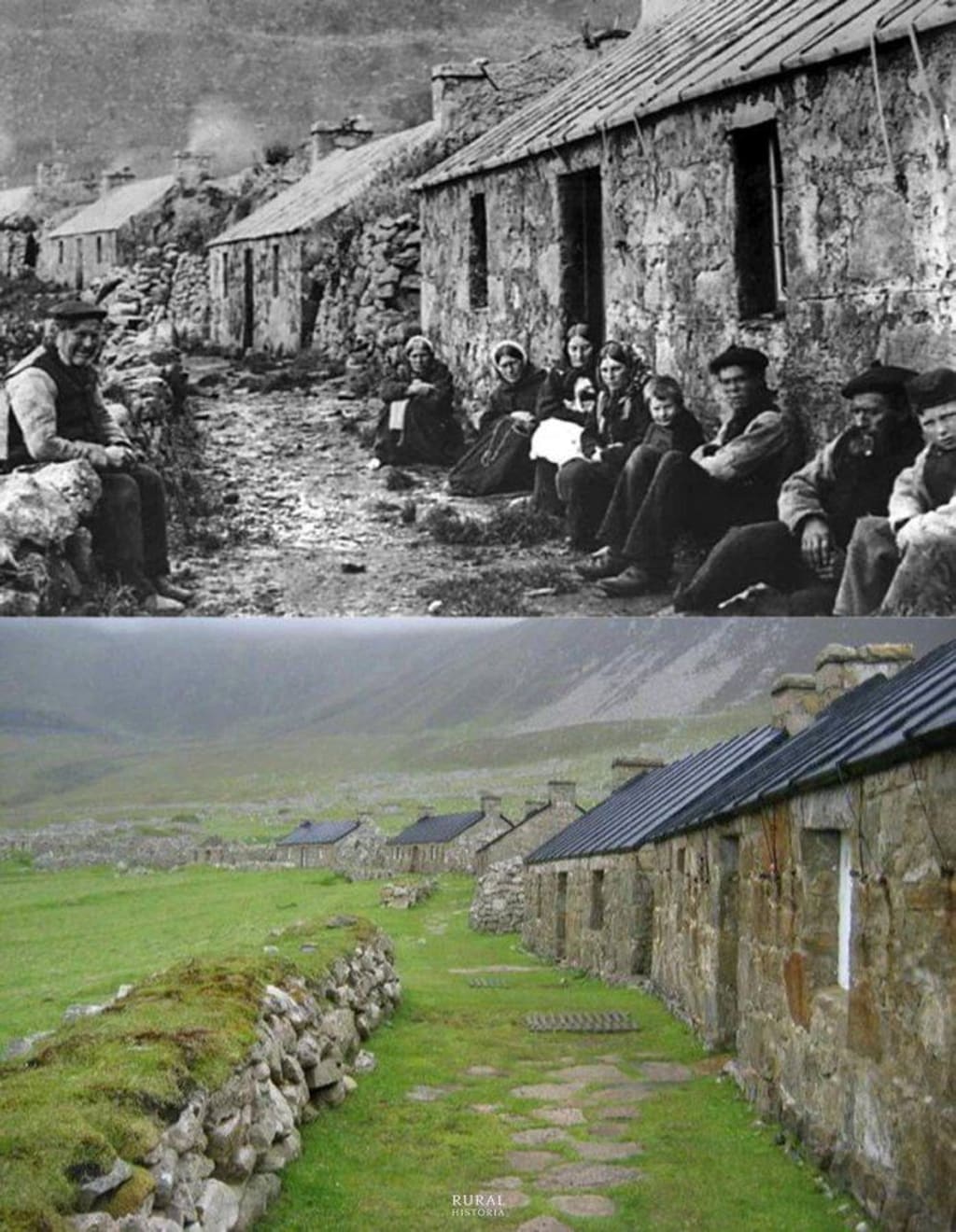
Tucked away in the rugged wilderness of the Hebrides, Hirta Island stands as a poignant reminder of Scotland’s rich, yet often challenging, history. Located within the archipelago known as St. Kilda, Hirta was home to generations of crofters, fisherman, and farmers who carved out a living on this remote island. Once a thriving community, the island is now a place of haunting beauty, its cottages abandoned, its fields silent. But for more than 2000 years, Hirta was a lively settlement where people endured the harshest of conditions to live out their daily lives. One chapter of this island’s remarkable history unfolded in 1861 when a group of settlers constructed 16 single-story cottages along what would come to be known as ‘main street.’ Yet despite the resilience of its people, Hirta’s life as a village would ultimately end in 1930, leaving behind only memories and stone foundations, forever etched in the island's landscape.
The Origins of Hirta’s Settlement
Hirta Island, part of the St. Kilda archipelago, has been inhabited for over two millennia. The islands, which lie more than 40 miles off the west coast of the Scottish Highlands, were initially settled by prehistoric communities who braved the tumultuous seas to create homes in these remote, windswept lands. The harsh climate and isolation of St. Kilda made life difficult, yet the islanders learned to live in harmony with their environment, developing a unique culture, language, and ways of surviving on the land.
For centuries, the St. Kildans – as the residents of Hirta and its neighboring islands were known – practiced a form of subsistence farming called crofting. They raised sheep, cultivated crops, and harvested seabirds and eggs from the towering cliffs that surrounded the island. The seabirds, particularly puffins, were vital to their diet, providing not only food but feathers and oil that could be used in a variety of ways. The islanders also relied on the abundant natural resources that surrounded them, using the sea for fishing and gathering seaweed, which was a valuable resource for both nourishment and industry.
The village of Hirta evolved over centuries, and by the early 19th century, the settlement was a thriving community. However, this prosperity was not without its challenges. The islanders faced constant hardships from extreme weather, crop failures, and the ever-present danger of isolation from the rest of the world. But their resilience in the face of adversity became a defining feature of their lives.
The 1861 Settlement: A New Beginning
In 1861, a significant change occurred on Hirta Island. A new wave of settlers arrived and built 16 single-story cottages with chimneys and slate roofs, marking the beginning of a new chapter in the island’s history. This new settlement, centered around what the residents called "main street," was intended to modernize the community. The cottages were designed with more permanent materials, replacing the earlier, less durable structures. This was a period of great change for many rural communities in Scotland, as people sought to improve their living conditions and adapt to a rapidly changing world.
The cottages were built by skilled craftsmen who worked hard to make them suitable for the harsh St. Kildan environment. They featured slate roofs, designed to withstand the island's extreme weather, and chimneys for warmth. It was an attempt to create a sense of permanence in an otherwise unstable environment. Despite their isolation, the people of Hirta now had homes that were sturdier and better suited for family life. They called this area “main street,” a humble name for what would be their village hub. The settlement’s construction signified hope for a brighter future on the island, and the people worked hard to maintain their traditional ways of life while incorporating new techniques for farming, fishing, and crafting.
Life on Hirta was still defined by crofting, a practice that had sustained the community for generations. Families tended to their fields, raised sheep, and fished for sustenance. However, their lives were inevitably shaped by the difficult realities of island life. The weather was often unpredictable, and storms could disrupt the work that had been carefully planned. The island’s isolation made travel to the mainland difficult, with boats being the only means of transport, and the journey to the nearest port could be treacherous. Despite these challenges, the residents of Hirta persisted.
The Decline and Abandonment of Hirta
By the early 20th century, however, the community of Hirta began to decline. In the years leading up to 1930, the population on the island dwindled due to a combination of factors: famine, the difficulty of living on the island, and a lack of economic opportunities. The traditional practices that had sustained the community for so long were no longer as viable, and the once-thriving settlement found it increasingly difficult to survive. The government, which had historically left the islanders to their own devices, began to intervene. In 1930, after decades of decline, the decision was made to evacuate the residents of Hirta. They were relocated to the mainland, and the island was officially abandoned.
The reasons for the abandonment were numerous, but they were largely tied to the increasing difficulty of sustaining life on the island. Farming and fishing had become less profitable, and the younger generation increasingly sought work and opportunities beyond the confines of the remote island. The islanders who were left behind in 1930 were ultimately brought to safety, marking the end of over two millennia of human habitation.
A Ghostly Island: The Legacy of Hirta
Today, Hirta Island stands abandoned, its cottages slowly eroding under the weight of time and weather. The ruins of the 16 cottages along the "main street" still remain, each stone a silent witness to the lives that once flourished here. The island, now a UNESCO World Heritage site, is a place of haunting beauty, where visitors can still see remnants of the stone walls, chimneys, and slate roofs that tell the story of the St. Kildans who lived and worked there.
Hirta’s abandonment is a tragic but compelling chapter in the broader history of Scotland’s crofting communities. While the island is no longer inhabited, the legacy of the people who called it home continues to resonate, reminding us of the resilience and spirit of those who lived in such remote and challenging conditions. Their story, marked by both triumph and hardship, remains an important part of Scotland’s cultural heritage and continues to inspire curiosity and reverence from visitors and historians alike.
Though abandoned, Hirta Island still carries the echoes of those who once lived there—a place where the past is never truly forgotten.
About the Creator
Keep reading
More stories from Deji Akomolafe and writers in History and other communities.
The Iron Flail: A Spiked Symbol of Medieval Power
In the captivating world of medieval weaponry, few objects are as evocative of raw power and close combat as the iron flail. Also known as the "morning star," this fearsome weapon boasts a striking design, featuring a spiked ball attached to a sturdy shaft, and it was one of the most terrifying tools of war during the 15th to 17th centuries. While its name might sound poetic, the flail was no less deadly, capable of delivering bone-crushing blows with devastating speed and accuracy. Today, the iron flail remains an iconic symbol of medieval combat, captivating historians, enthusiasts, and museum-goers alike.
By Deji Akomolafeabout a year ago in History
The Catastrophic Aftermath of the Dinosaur-Killing Asteroid
Approximately 66 million years ago, the Earth experienced one of the most dramatic and catastrophic events in its history: a massive asteroid, now identified as the Chicxulub impactor, collided with the planet near what is today the Yucatán Peninsula in Mexico. Measuring roughly 10 kilometers in diameter, this space rock unleashed energy equivalent to billions of atomic bombs, marking the end of the Cretaceous period and triggering a chain of events that wiped out approximately 75% of all species on Earth, including the iconic non-avian dinosaurs.
By Irshad Abbasi a day ago in History




Comments
There are no comments for this story
Be the first to respond and start the conversation.