
Herodotus
The Father of History and His Timeless Tales

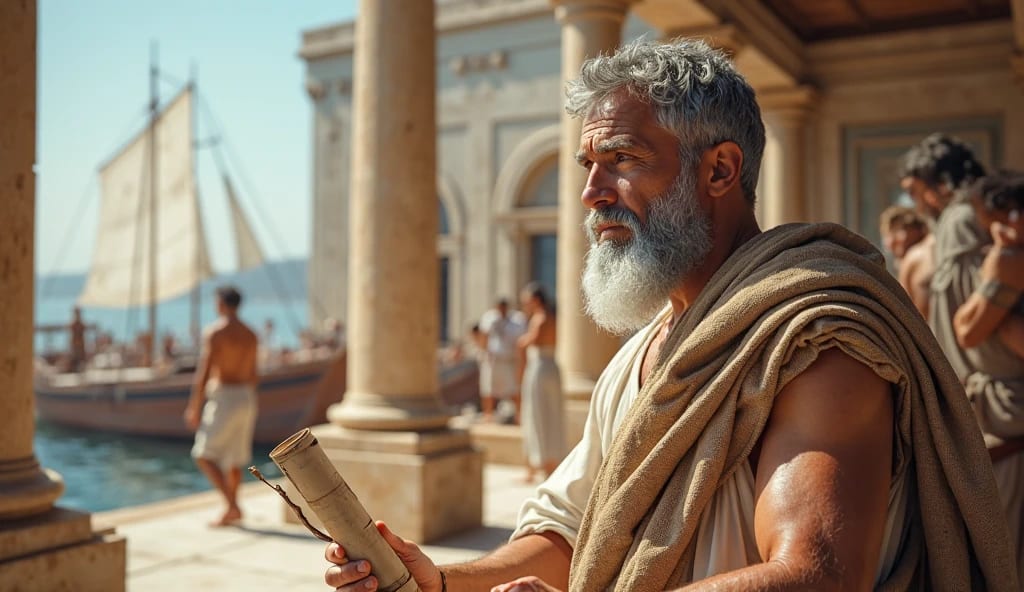
The ancient world was characterized by its enigma, magnificence, and monumental conflicts, with civilizations emerging and declining akin to the ebb and flow of the Mediterranean Sea. Among those who endeavored to document and preserve the legacy of these eras, one figure is particularly notable—Herodotus of Halicarnassus, whom Cicero later referred to as "The Father of History." Born in the 5th century BCE, Herodotus transcended the role of a mere recorder of events; he was a narrative artist who intricately blended myths, legends, and personal testimonies into a rich portrayal of history. His seminal work, The Histories, continues to be one of the most captivating texts from antiquity, providing valuable perspectives on the cultures of Greece, Persia, Egypt, and other regions.
Limited information is available regarding the early life of Herodotus; however, it is traditionally believed that he was born circa 484 BCE in Halicarnassus, a Greek city located in Asia Minor, which is present-day Bodrum, Turkey. During this period, Halicarnassus was under the control of the Persian Empire, which exposed the young Herodotus to a rich tapestry of Greek and Eastern cultural influences—an aspect that would significantly inform his inclusive perspective on history.
Herodotus matured during a time of significant turmoil. The Greco-Persian Wars (499–449 BCE) had recently transformed the Mediterranean landscape, setting the formidable Persian Empire against the diverse yet tenacious Greek city-states. These confrontations, especially the renowned battles of Marathon, Thermopylae, Salamis, and Plataea, would emerge as pivotal subjects in his historical accounts.
In his youth, Herodotus was likely engaged in the political conflicts of Halicarnassus. Some narratives indicate that he faced exile as a result of his resistance to the tyrant Lygdamis, who was the grandson of the renowned Artemisia I of Caria, known for her role in the Persian side during the Battle of Salamis. Whether driven by choice or circumstance, Herodotus undertook extensive travels throughout the known world, including regions such as Egypt, Babylon, Scythia, Libya, and mainland Greece, where he gathered a wealth of stories, myths, and historical narratives.
These expeditions were not merely for the sake of adventure; they represented a profound pursuit of knowledge (historiē in Greek). Unlike previous logographers who recorded myths without critical analysis, Herodotus aimed to differentiate between fact and fiction. He engaged in inquiry, compared various sources, and occasionally acknowledged his own uncertainties—an innovative methodology for his era.
Herodotus's seminal work, The Histories, is organized into nine distinct books, each named in honor of one of the Muses. Although the primary focus is on the Persian Wars, the text transcends a mere military account. It serves as an ethnographic and geographical compendium, rich with explorations of the customs, religions, and histories of the various peoples encountered or subjugated by the Persians.
Key Themes and Narratives in The Histories:
The Ascendancy of the Persian Empire
Herodotus chronicles the growth of the Persian Empire under notable rulers such as Cyrus the Great, Cambyses, and Darius I, providing detailed descriptions of their conquests in Lydia, Babylon, and Egypt. His narrative of Cyrus's defeat of the Lydian monarch Croesus is particularly renowned, intertwining political analysis with moral reflections on the capricious nature of fate.
Egypt: A Realm of Marvels
A significant portion of The Histories is dedicated to Egypt, a civilization that captivated Herodotus. He recounts the annual inundation of the Nile, the monumental construction of the pyramids, and the unique traditions of the Egyptians—some of which he presents accurately, while others are influenced by hearsay and myth. His assertion that the pyramids were constructed by slaves (a perspective later challenged by archaeological findings) illustrates how even Herodotus could be misled by his sources.
The Ionian Revolt and the Commencement of Conflict
In 499 BCE, the Greek city-states of Ionia (located in present-day Turkey) revolted against Persian domination, initiating a series of events that culminated in a full-scale war. Herodotus emphasizes the contributions of key figures such as Aristagoras of Miletus and the dire repercussions of unsuccessful rebellions.
The Battle of Marathon (490 BCE)
In response to King Darius I's decision to dispatch an army to retaliate against Athens for its support of the Ionian Revolt, the vastly outnumbered Athenians secured an extraordinary victory at Marathon. The historian Herodotus chronicled the famous run of the messenger Pheidippides, who is said to have collapsed after delivering the news of the triumph to Athens—an event that later inspired the contemporary marathon race.
Xerxes’ Invasion and the 300 Spartans
The apex of Herodotus's The Histories is marked by Xerxes’ invasion of Greece in 480 BCE. He illustrates the Persian king’s arrogance, the valiant final stand of King Leonidas and his 300 Spartans at Thermopylae, and the naval confrontation at Salamis, where the Greek fleet successfully outmaneuvered the Persian forces. Herodotus's depiction of Themistocles, the astute Athenian general, is particularly noteworthy.
The Consequences and Contemplations on Authority
Following the Greek triumph at Plataea in 479 BCE, Herodotus contemplates the essence of empire, the perils of hubris, and the influence of divine justice in human events. His narrative concludes unexpectedly, prompting subsequent historians to ponder whether he had plans to expand upon his writings.
Herodotus faced his share of criticism. Thucydides, the Athenian historian known for his analytical perspective on the Peloponnesian War, regarded Herodotus as merely an entertainer. Contemporary scholars have also labeled him as overly credulous, pointing to his inclusion of fantastical elements such as giant gold-digging ants in India and winged snakes in Arabia.
Nevertheless, the true merit of Herodotus lies in his inquisitiveness and receptiveness. He did not merely document events; he endeavored to comprehend the cultures that shaped them. His readiness to present divergent narratives and acknowledge uncertainty—stating, "I am obliged to report what is said, but I am not obliged to believe it"—renders his approach remarkably contemporary.
Today, The Histories is considered a cornerstone of Western literature. It has influenced numerous historians, novelists, and filmmakers, including Steven Pressfield’s Gates of Fire and Zack Snyder’s 300. More significantly, Herodotus laid the groundwork for history as a discipline, demonstrating that the past encompasses not just a series of conflicts and rulers, but a rich and intricate tapestry of human ambition, folly, and resilience.
About the Creator
A História
"Hi. My name is Wellington and I'm a passion for general history. Here, I publish articles on different periods and themes in history, from prehistory to the present day.
Keep reading
More stories from A História and writers in History and other communities.
The Moche Civilization
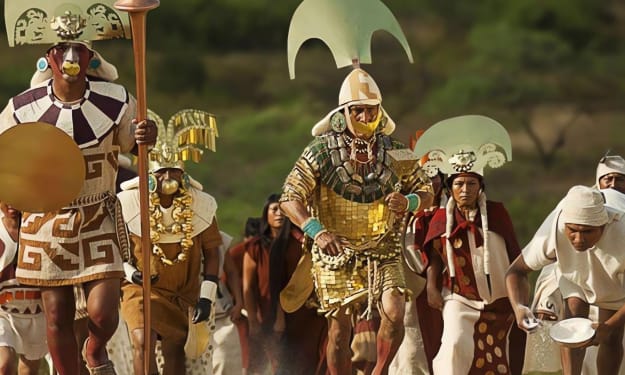
Approximately 2,000 years ago, during the period when the Roman Empire was prominent in Europe and the Han Dynasty was in power in China, an extraordinary civilization flourished along the arid coastline of Peru—the Moche. Renowned for their pottery, monumental pyramid constructions, and adept seafaring skills, the Moche established a legacy that continues to intrigue archaeologists and historians alike. Although they did not create a centralized state, their network of urban centers exhibited a shared cultural identity, which was manifested through elaborate artistic expressions, grand architectural feats, and sophisticated rituals.
By A História11 months ago in History
Thief who stole $3.5 billion but lost all in one phone call part 2
The following year, the owner of Silk Road was arrested and the FBI shut down the website, seizing about 170,000 Bitcoins. However, 51,680 Bitcoins were still missing, and investigators had been trying to trace them for years.
By Imran Ali Shahabout 13 hours ago in History
Rachel Reviews: Lakefront Wolves by Joseph Deegan
Meet Finn. He's an 18 year old kid who has potential. He's bright with great school scores and he's also an athlete, a footballer of some prowess. He has it all going for him, it would seem, and yet, he's determined to send what could be a well-planned, stable existence firmly off the rails. He drinks, he smokes, he takes drugs, he has violent tendencies and he's in danger of losing not only his mind but all that he holds dear.
By Rachel Deeming6 days ago in BookClub



Comments
There are no comments for this story
Be the first to respond and start the conversation.