
From Shadows to Sunlight: The Human Journey Out of the Caves
How Early Humans Left the Dark to Build the World We Know

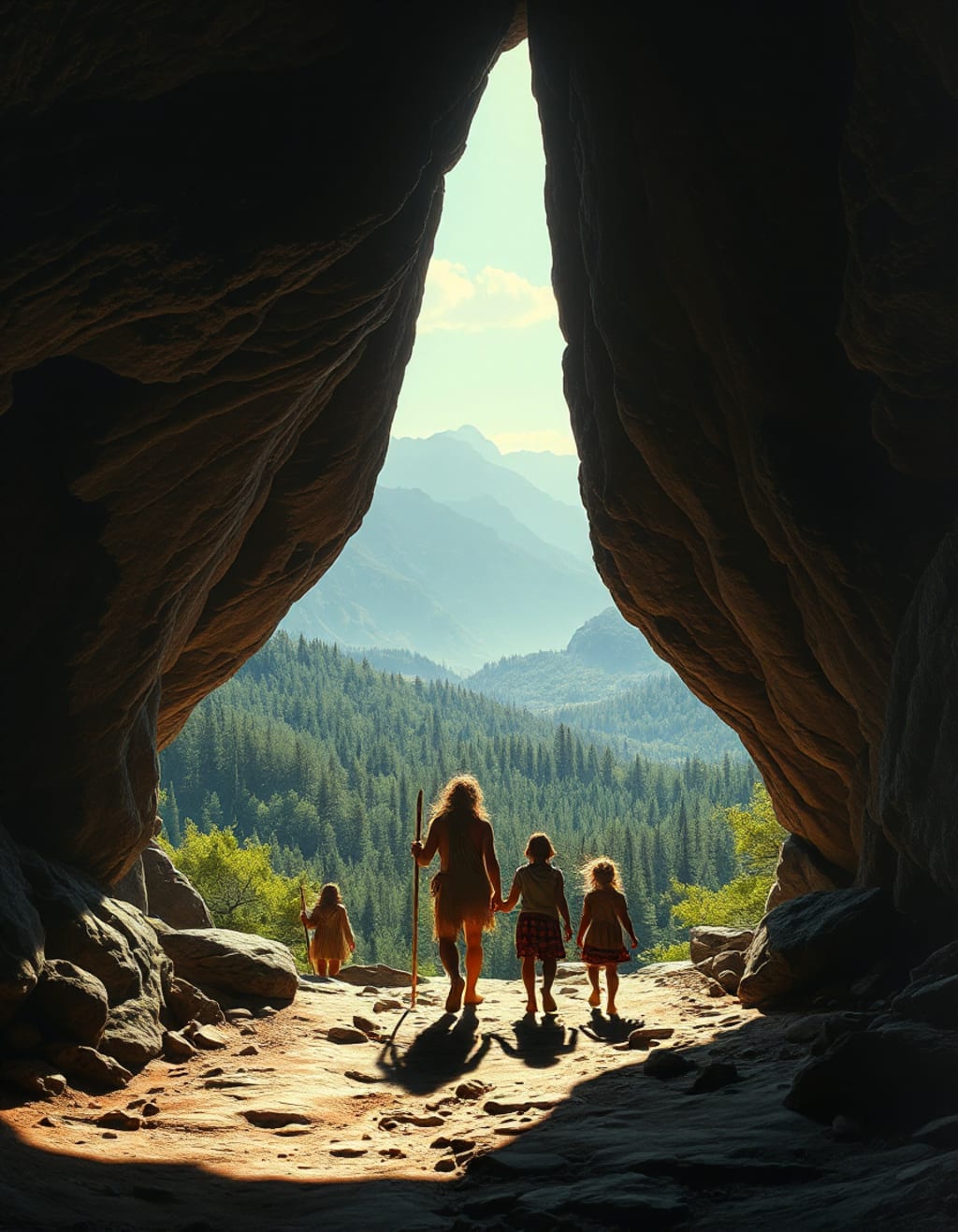
Long before cities, farms, and roads, early humans found shelter in the silent darkness of caves. For tens of thousands of years, caves were more than just homes—they were sanctuaries, places of safety, survival, and early culture. But the story of humanity is a story of change, curiosity, and courage. At some point, our ancestors stepped out of these shadowed sanctuaries and into the sunlight, beginning a journey that would transform the planet forever.
Life Inside the Caves
Imagine a world 200,000 years ago: the Ice Age was in full swing, giant animals roamed the lands, and the climate was harsh and unpredictable. For early Homo sapiens and their predecessors, caves offered refuge. Inside the cool, dark caves, they found shelter from storms, predators, and extreme temperatures.
Caves protected early humans from the dangers of the wild, allowing them to survive when open-air living might have been deadly. The walls of these caves became canvases where our ancestors expressed their emerging culture—drawing vivid paintings of animals, human figures, and abstract symbols, some of the oldest art in human history.
The famous Lascaux caves in France and the Altamira caves in Spain showcase these incredible works, revealing not only early artistic skill but also hints of ritual, spirituality, and community bonding.
Tools, Fire, and Community in the Darkness
Inside the caves, early humans developed crucial survival skills. They fashioned stone tools for hunting and cutting, learned to control fire for warmth and cooking, and shared knowledge across generations.
Fire was revolutionary. It extended the day, kept predators away, and transformed food into easier-to-digest meals, increasing the nutrition humans could extract. Around fires, communities gathered, shared stories, and passed down wisdom—the first seeds of human culture and society.
Living together in caves also encouraged social bonds. Safety in numbers helped humans defend against large predators like saber-toothed cats and giant bears. Caves became the hearth of human civilization.
The Great Migration: From Caves to Open Lands
Over millennia, climates shifted and environments changed. As the Ice Age retreated, new landscapes opened—forests, plains, and rivers that promised fresh opportunities. Our ancestors began to explore beyond their cave homes.
Around 50,000 years ago, a key transformation occurred. Early humans started building more complex tools, crafting shelters from wood, bones, and hides, and developing hunting strategies suited to open environments.
With growing populations and improved technology, humans left the caves behind and established temporary camps and, eventually, permanent settlements. The transition wasn’t sudden but gradual—each step bringing new challenges and innovations.
The Dawn of Agriculture and Settlements
The ultimate step out of the caves was the development of agriculture around 12,000 years ago during the Neolithic Revolution. Humans learned to domesticate plants and animals, which allowed them to settle in one place, grow food, and form villages.
This shift to farming transformed human society—food surpluses led to population growth, social stratification, and the rise of complex civilizations.
Archaeological sites like Çatalhöyük in modern-day Turkey show evidence of early settled life—houses built close together, communal spaces, and rich cultural artifacts. These villages are the ancestors of modern cities.
Changing Human Relationships with Nature
Leaving the caves and settling the land changed how humans interacted with nature. Instead of merely surviving, they began to shape their environments—clearing forests for crops, domesticating animals, and later mining and building.
This control over nature set the stage for technological and cultural advances but also introduced new challenges like resource management and environmental impact.
The Legacy of the Cave Dwelling Era
While humans moved on from caves thousands of years ago, the legacy of cave dwelling remains profound. Caves preserve some of our earliest art, provide insights into prehistoric life, and remind us of humanity’s deep roots.
Modern science continues to uncover how cave life shaped human evolution—brain development, social structures, and cultural complexity all bear the marks of this ancient era.
Why the Journey Matters Today
The journey from caves to civilization is a story of adaptation, innovation, and courage—the qualities that define humanity. It reminds us how far we have come and inspires reflection on our relationship with nature and each other.
In an age of rapid technological change, looking back at this journey helps us understand the foundations of human society and the enduring quest to find shelter, safety, and meaning.
About the Creator
rayyan
🌟 Love stories that stir the soul? ✨
Subscribe now for exclusive tales, early access, and hidden gems delivered straight to your inbox! 💌
Join the journey—one click, endless imagination. 🚀📚 #SubscribeNow
3 Moments When Reality Accidentally Became a Horror Movie
Horror movies usually rely on a simple agreement with the audience: this could never really happen. Ghosts follow rules, monsters have weaknesses, and there’s always a clear point where reality hands the story over to fiction. Real life, unfortunately, does not care about narrative structure, logic, or closure.
By Enoch Sagini4 days ago in History
Chinese Water Torture
Since the dawn of history, human beings have inflicted unimaginable suffering upon one another. Across centuries, people have devised increasingly elaborate methods of punishment and coercion, some brutally explicit, others deceptively subtle. While devices such as iron maidens, racks, whips, and wheels relied on visible physical agony, there existed a form of torment whose true power lay not in blood or broken bones, but in patience, repetition, and the slow erosion of the mind. This method came to be known as Chinese water torture.
By Pure child2 days ago in History
How, Too
Many people wonder how, too. You are not alone, and I am an expert. I will teach you how, too! First, you need to remit a small application fee and fill out an application describing the nature of your financial situation and how often payments will be made, as this will have great bearing on how well I teach you how, too.
By Harper Lewis3 days ago in Fiction



Comments (1)
good,bro i wanna know u bro,can u taik to me ?