

France is often celebrated as a beacon of art, philosophy, democracy, and human rights. It is the land of Voltaire, Rousseau, and Simone de Beauvoir. Millions flock to Paris to marvel at the Eiffel Tower, to stroll along the Seine, or to savor the romance and refinement of French culture. Yet, beyond the glittering lights of the “City of Light” and the charm of the countryside lies a darker, more complex face of France. Like all nations, it carries scars from its history, struggles with social fractures, and ongoing debates about identity, justice, and power.
This article explores some of the shadows that accompany France’s celebrated heritage: the weight of colonialism, the legacy of wars, systemic discrimination, socio-political unrest, and the contradictions within its universalist ideals.
The Colonial Legacy: Empire and Its Shadows
France once ruled one of the largest colonial empires in the world, stretching across Africa, Asia, the Caribbean, and the Pacific. At its height in the 19th and early 20th centuries, French colonialism was presented as a “civilizing mission.” In reality, it often brought exploitation, cultural erasure, and violence.
From Algeria to Indochina, the darker chapters of French colonial history continue to haunt the present. The brutal Algerian War of Independence (1954–1962), for example, left hundreds of thousands dead. Accounts of torture, mass killings, and repression by French forces contrast sharply with the country’s image as a guardian of liberty. Even today, tensions linger in the memory of Algerians and within the French diaspora, shaping debates on immigration, integration, and historical memory.
In Sub-Saharan Africa, France maintained strong post-colonial influence, often termed “Françafrique,” a system of political and economic control that critics say perpetuated corruption and hindered true independence. This legacy continues to fuel resentment, protests, and geopolitical tensions.
The Vichy Regime and the Holocaust
France also wrestles with the memory of World War II. After Germany’s invasion in 1940, the Vichy regime collaborated with Nazi occupiers. While the Resistance is often glorified in French collective memory, the truth is more complicated. The Vichy government actively participated in the deportation of Jews, with thousands sent to concentration camps.
It was not until 1995 that President Jacques Chirac formally acknowledged France’s role in the Holocaust, breaking decades of silence. For many, this delayed recognition revealed the nation’s reluctance to confront its darker past.
Racism, Discrimination, and the Banlieues
Modern France presents itself as a republic built on universalism — the idea that all citizens are equal regardless of race, religion, or background. Yet the lived reality often contradicts this principle.
Immigrant communities, particularly those from North and Sub-Saharan Africa, face persistent discrimination in employment, housing, and policing. The suburban housing projects known as banlieues — home to many of these communities — are often stigmatized as centers of poverty, crime, and unrest.
Riots in 2005, sparked by the deaths of two teenagers fleeing police in Clichy-sous-Bois, exposed deep fractures in French society. More recently, in 2023, the police killing of Nahel Merzouk, a 17-year-old of Algerian and Moroccan descent, reignited nationwide protests. Such incidents highlight systemic problems of racial profiling, police violence, and a lack of trust between marginalized communities and the state.
France’s refusal to collect official statistics on race and ethnicity — justified by its universalist principles — makes it harder to measure inequalities directly. Yet studies consistently show that minorities face disproportionate unemployment rates and discrimination.
Secularism and Religious Tensions
Another dark facet of France’s modern struggles lies in the debate over secularism (laïcité). Enshrined in the 1905 law separating church and state, secularism was meant to guarantee freedom of religion while protecting public institutions from religious influence.
However, in recent decades, it has increasingly been associated with restrictions targeting Muslims. The banning of headscarves in schools (2004), face veils in public spaces (2010), and ongoing debates over Islamic dress codes have fueled accusations that laïcité is being weaponized against one specific faith.
While proponents argue these measures protect gender equality and social cohesion, critics view them as discriminatory, alienating, and hypocritical. This tension feeds into the broader challenges of integration and rising Islamophobia.
Political Extremism and Polarization
France has also witnessed the rise of political extremism. The far-right party led by Marine Le Pen, now called the National Rally (Rassemblement National), has gained significant traction in recent elections. Capitalizing on fears of immigration, terrorism, and cultural change, the party presents itself as the defender of “true” French identity.
While far-left movements also mobilize against inequality and capitalism, the polarization of French politics reflects deep societal divisions. Repeated mass protests — from the Yellow Vests (Gilets Jaunes) movement to pension reform strikes — reveal widespread discontent with elites and institutions. Beneath France’s democratic façade, anger simmers against economic inequality, corruption, and the feeling that ordinary voices are ignored.
Terrorism and Social Fractures
In the 21st century, France has been scarred by a wave of terrorist attacks, from the Charlie Hebdo massacre in 2015 to the Bataclan concert hall tragedy the same year. These acts of violence, often linked to radical Islamist groups, shocked the nation and reinforced fears of division.
In response, the state has intensified security measures and introduced new laws, some criticized for undermining civil liberties. Meanwhile, the Muslim population often finds itself unfairly blamed, increasing stigmatization and alienation. This cycle of violence, suspicion, and repression adds another dark dimension to France’s modern story.
Economic Inequality and the Illusion of Equality
France prides itself on its welfare state and social protections. Yet beneath the surface lies persistent inequality. Wealth gaps between urban elites and marginalized populations in rural areas or banlieues feed resentment. The Yellow Vests movement, which erupted in 2018, was not only about fuel taxes but about a deeper sense of economic injustice and exclusion.
The protests revealed the limits of France’s celebrated social model. Despite universal healthcare, education, and pensions, many feel left behind in an era of globalization and neoliberal reforms.
The Dual Face of France
France embodies contradictions. It is the nation that proclaimed “Liberty, Equality, Fraternity,” yet struggled to apply these ideals universally. It is the land of philosophers who championed human rights, yet it committed atrocities in its colonies. It celebrates multiculturalism through cuisine, music, and art, yet struggles with xenophobia and racism.
The “dark face” of France does not negate its achievements, nor does it define the nation entirely. Rather, it serves as a reminder that even the most celebrated democracies are not immune to injustice, inequality, and exclusion.
By confronting its shadows honestly — acknowledging its colonial legacy, addressing systemic discrimination, reforming institutions, and embracing true equality — France has the potential to live up more fully to the ideals it proclaims.
Conclusion
France’s story is not one of unbroken light or darkness, but of tension between the two. To understand the nation fully, one must look beyond the glamour of Parisian boulevards and tourist attractions to see the struggles of the marginalized, the wounds of history, and the battles over identity and justice that continue to shape the Republic.
France’s dark face is not an aberration but part of its reality — a call for reflection, reform, and renewed commitment to the principles it claims to hold dear. Only by confronting its shadows can France truly illuminate the world as the “City of Light” it aspires to be.
About the Creator
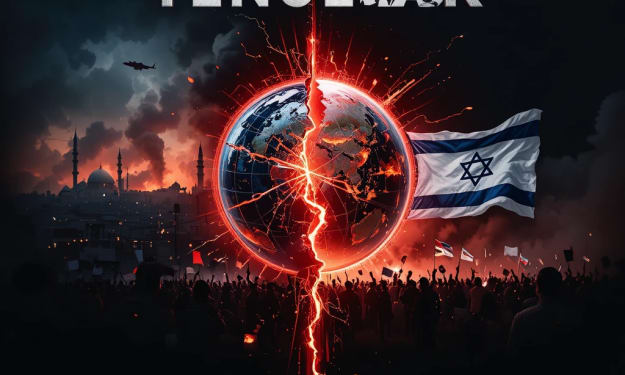
Iran–US–Israel Conflict Escalates: Khamenei Killed, Protests Rock Pakistan and Beyond
Iran–US–Israel Conflict Escalates: Khamenei Killed, Protests Rock Pakistan and Beyond The Middle East awoke to a morning that many feared would one day arrive but few believed would unfold so suddenly. Before dawn, reports began circulating that coordinated airstrikes carried out by forces linked to Israel and the United States had struck strategic targets in Tehran. Within hours, Iranian state television confirmed the unthinkable: Ali Khamenei, the Supreme Leader of Iran, had been killed.
By Truth words 7 days ago in History



Comments
There are no comments for this story
Be the first to respond and start the conversation.